Get Full Government Meeting Transcripts, Videos, & Alerts Forever!
Get email alerts on the Public Pensions topic
No spam. Unsubscribe anytime.
PERS board seeks $35.7 million to shore Highway Patrol pension plan to 90% funding
Summary
The North Dakota Public Employees Retirement System requested a $35.7 million cash infusion to raise the Highway Patrol defined‑benefit plan to 90% funded by Jan. 1, 2026; the board proposes using SIF funds but said alternative sources would be considered.
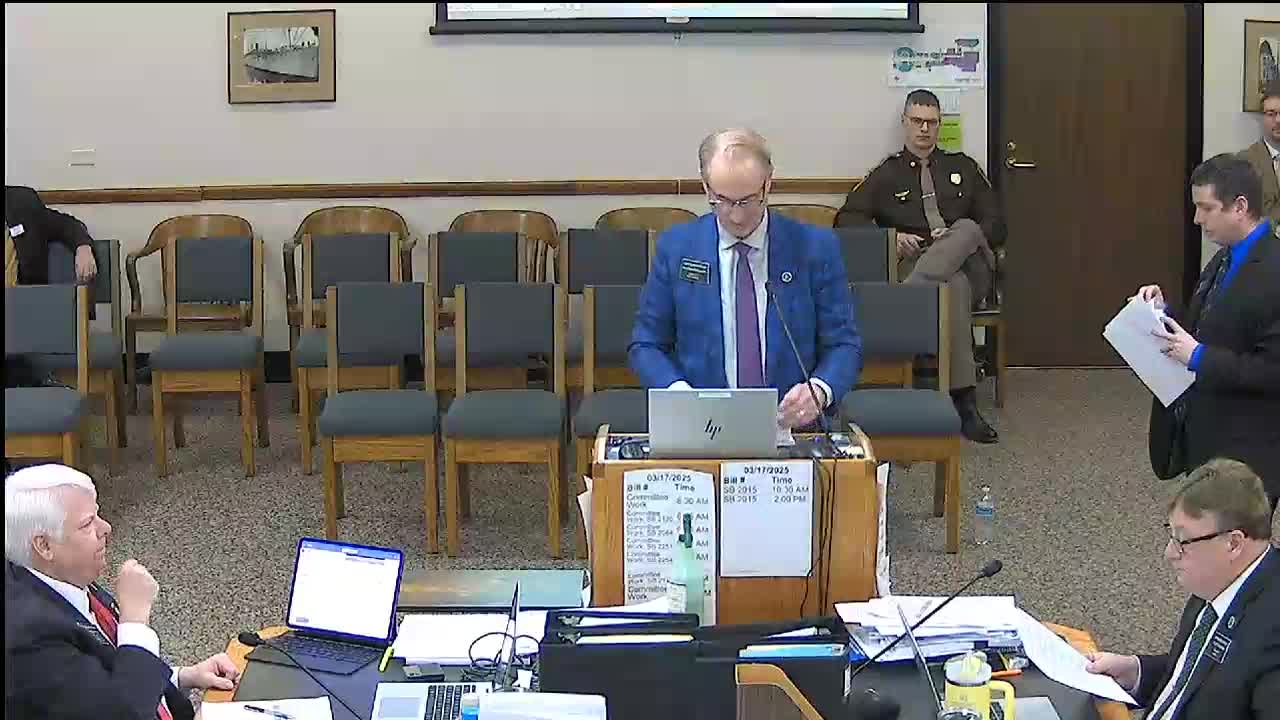
The North Dakota Public Employees Retirement System (PERS) urged the House Appropriations Committee on March 17 to approve a $35.7 million one‑time cash infusion to stabilize the Highway Patrol defined‑benefit (DB) plan.
Austin Shower, who presented the bill request as a committee sponsor, said Senate Bill 2120 was drafted at the PERS board’s request to provide immediate funding stability for the Highway Patrol DB plan. "The Highway Patrol DB plan is the primary retirement benefit to 147 retirees and 167 active employees," Shower told the committee, and he said the infusion would move the plan toward a 90% funded ratio by Jan. 1, 2026.
PERS testimony and rationale Derek Holbein, chief operating and financial officer for PERS, told the committee the 90% threshold is a pragmatic target for a very small plan: "Because the plan is so small . . . even at that funding level, it still takes 25 years for us to hit 100% funding. So that's why the 90% threshold was chosen. It just so happens that $35,700,000 is the number that it takes to get us to that spot." Holbein said the board views a 90% level plus a move to an actuarially determined employer contribution (ADEC) process on a biannual basis as the long‑term fix to avoid future underfunding.
Plan specifics presented to committee - Active and retired members: PERS noted 167 active employees and 147 retirees in the Highway Patrol DB plan. - Current contributions: As of January 2025, employees contribute 15.3% of pay and the employer contributes 21.7% of pay into the plan. - Average benefit: PERS said the average monthly benefit paid to retirees in the plan is $4,346. - Current funded status and risk: PERS reported the plan’s funded ratio at about 68.6% (questioned by members during the hearing), and actuaries project the small plan could deplete without additional funding or changes.
Board strategy and alternatives PERS told members the board is open to alternatives for the funding source; the presentation used the State Infrastructure Fund (SIF) as the proposed source because a prior, smaller lump sum ($3 million) was paid from SIF in the previous session. Holbein and other witnesses said the board’s top priority is to address the funding hole now, noting that spreading the required amount over many future biennia would materially increase the long‑term cost.
Questions from members Committee members asked whether a partial infusion or phased approach had been analyzed. Holbein said actuaries modeled multi‑biennial approaches and found the longer the spread, the greater the total cost — for example, ten biennial payments would roughly double the total cost compared with the one‑time deposit. Members also asked about the plan’s mortality, investment return and salary assumptions; Holbein said the most important assumptions are mortality, investment return (PERS uses a long‑term 6.5% return assumption) and salary growth.
Status SB 2120 was presented for committee consideration and PERS staff offered technical answers. The transcript records testimony and committee Q&A but no final committee vote on SB 2120 during this meeting.
Ending PERS officials told the committee they intend to follow up with actuarial and funding details and may return with implementation options that would allow contribution settings to move to a biannual ADEC process if the infusion is approved.