Get Full Government Meeting Transcripts, Videos, & Alerts Forever!
Get email alerts on the Education topic
No spam. Unsubscribe anytime.
Senate committee hears bill to require school districts to report legal spending
Summary
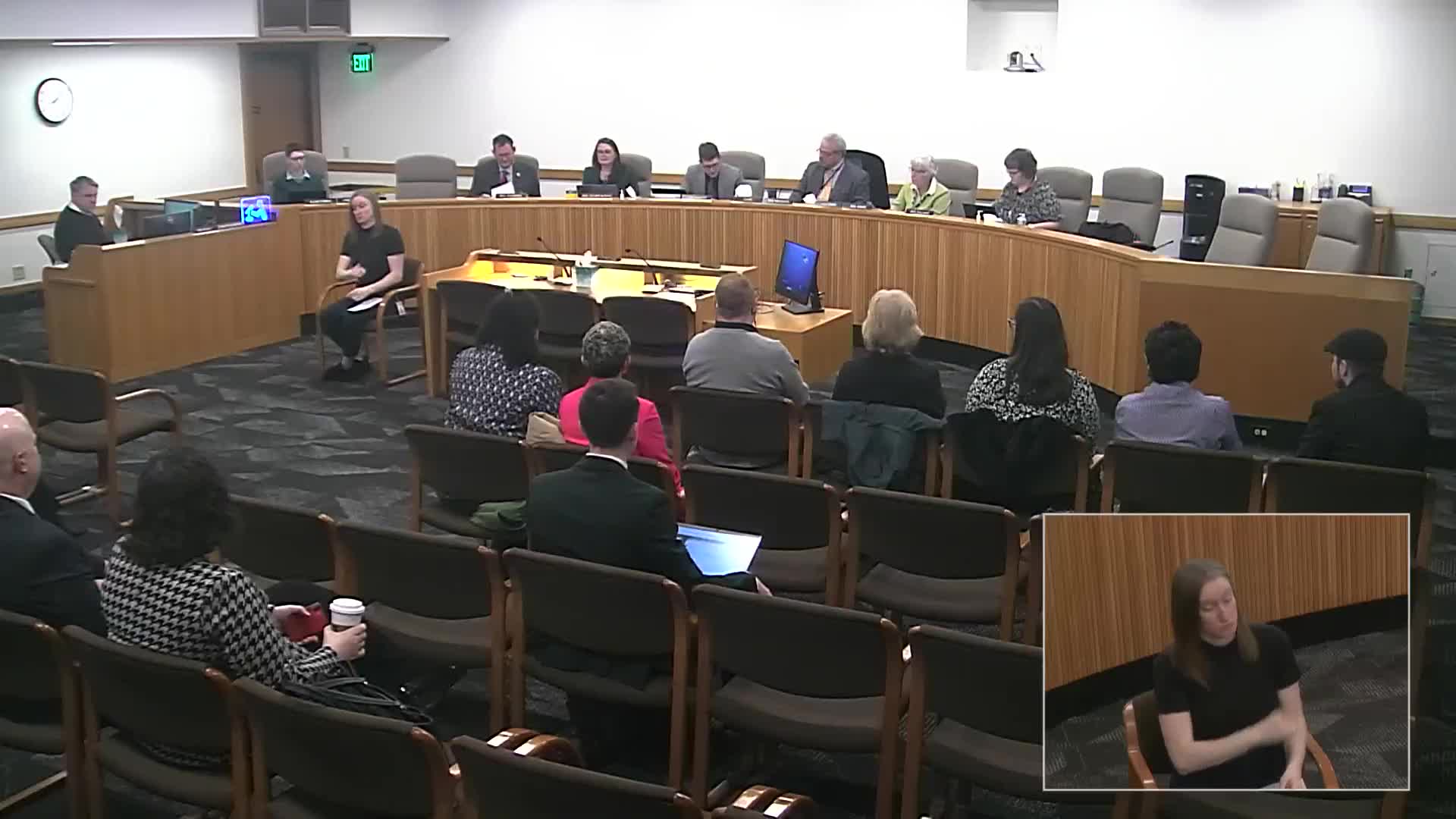
Senate Committee on Education Chair Frederick called a public hearing March 17 on Senate Bill 9‑78, a bill that would require school districts and education service districts (ESDs) to prepare and publish annual reports summarizing district legal expenditures and the legal processes involved.
Senate Committee on Education Chair Frederick called a public hearing March 17 on Senate Bill 9‑78, a bill that would require school districts and education service districts (ESDs) to prepare and publish annual reports summarizing district legal expenditures and the legal processes involved.
The bill would require districts to publish the report and provide copies to their governing board and the Oregon Department of Education (ODE) by Oct. 15 each year; ODE would compile district reports into a single statewide report, publish it on ODE’s website and submit a summary to the Legislative Assembly by Jan. 15 of the following year. The measure as presented would become operative in the 2025–26 school year.
Why it matters: Proponents said the bill would make it possible to see how much taxpayer dollars are spent on attorneys and legal services instead of direct student supports, and would inform future decisions about funding special education and other services. Opponents said much of the required data already is reported under ODE’s Budgeting and Accounting Manual (PBAM) and warned the bill could increase costs and risk disclosure of privileged or confidential student and personnel information.
"Transparency and accountability in school spending matter," said State Representative Leslie Munoz, House District 22, who testified in support. "Every dollar spent on attorneys is a dollar that isn't going to classrooms, to educators or to student support services." Munoz said the measure is intended to "get the facts" about how public-education dollars are prioritized.
State Senator Sarah Gelser Bleuen of Corvallis, a proponent, described specific concerns in special education: "When there is a mediation with the school district around a special education matter, the school district will be supported and represented by a taxpayer-funded attorney. The family often will be there by themselves." Gelser Bleuen said parents face procedural barriers to filing complaints and that the bill would help quantify how legal spending affects services.
The Oregon Education Association, represented by Cynthia Bronger Munoz, urged support for SB 9‑78, saying OEA represents more than 41,000 educators and that without disaggregated data the state cannot assess whether legal expenses are diverting funds from classrooms and student programs.
Opposition and implementation concerns: Morgan Allen, testifying for the Confederation of Oregon School Administrators (COSA), said the information requested is already reported to ODE through PBAM and the Chart of Accounts, citing PBAM codes including 382 (legal services) and 384 (negotiation services). Allen argued that the bill as drafted would require review of privileged attorney-client communications to separate hours and expenditures by subject area (for example, special education versus construction bond counsel), potentially increasing legal costs for districts and creating privacy risks.
Adrienne Anderson of the Oregon School Boards Association, an attorney and OSBA representative, echoed concerns about confidentiality and the burden of producing the level of disaggregation the bill requests. Anderson said PACE, OSBA’s insurance/legal affiliate, provides services to many districts in ways that are not billed line-by-line, and noted the risk that reporting detailed legal expenditures in very small rural districts could allow the public identification of individual students or families.
Iris Hodge, director of government relations and communications for the Oregon School Employees Association, testified in strong support. Hodge described special-education staff shortages and said classified school employees and families deserve clarity about whether legal spending is crowding out direct services.
Committee questions probed both the bill’s intent and implementation: Senators asked whether the existing PBAM process could be used or updated to give the desired transparency; COSA and OSBA suggested working with ODE’s PBAM Chart of Accounts Committee as an alternative to the bill’s reporting approach. Supporters pressed for data specifically about attorney presence at IEP meetings and other special-education settings where families may feel intimidated even when no formal litigation is pending.
No formal action was taken during the hearing; the committee closed the public hearing on SB 9‑78 and moved to other agenda items.
Ending note: Witnesses on both sides said they are willing to continue to negotiate the scope and form of reporting. Supporters emphasized the bill’s stated purpose — to make public how district legal spending may affect services for students — while district associations asked for safeguards to protect privileged communications and student confidentiality.