Get Full Government Meeting Transcripts, Videos, & Alerts Forever!
Get email alerts on the Education Tag topic
No spam. Unsubscribe anytime.
Senate approves bill to standardize referrals for talented-and-gifted testing; some senators warn of burden on districts
Summary
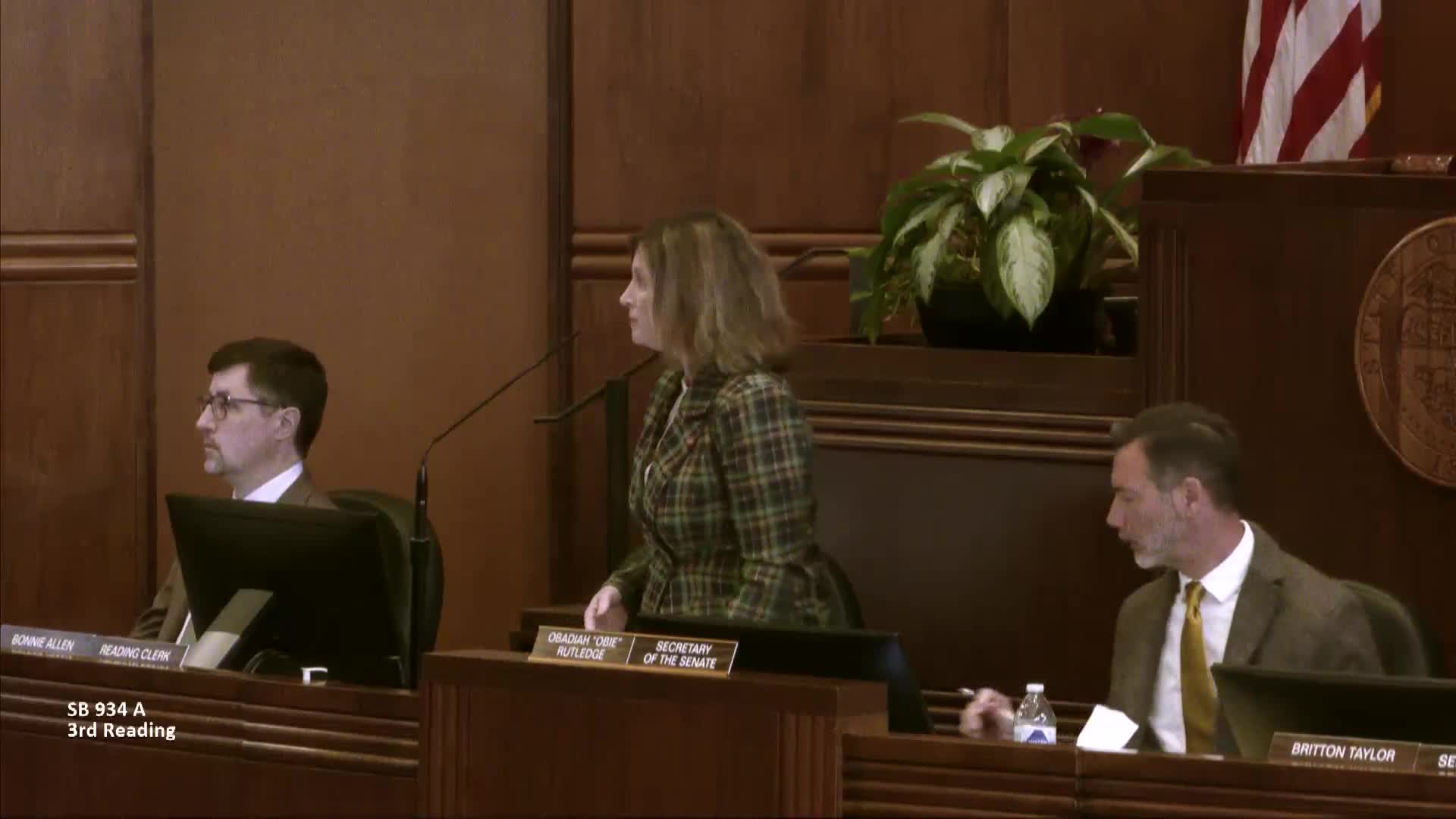
Senate Bill 9 34 A passed third reading after floor debate. The measure allows any person to recommend a student for talented-and-gifted (TAG) screening and requires districts to notify parents; supporters said it will increase equity in identification, opponents warned about district costs and administrative burden.
The Oregon Senate voted to pass Senate Bill 9 34 A on March 17, a measure from the Senate Education Committee that allows any person — not only teachers or parents — to recommend a student for TAG (talented-and-gifted) screening and requires school districts to notify parents about the recommendation and testing process.
“Allowing anyone to start the recommendation process helps . . . students who are overlooked, especially those on free and reduced lunch, who speak English as a second language, or are disabled,” Senator Deb Taylor told colleagues while sponsoring the bill, arguing the change would make TAG identification more equitable across districts.
Supporters said many Oregon districts currently rely on inconsistent referral rules and that universal or easier referral is a best practice recommended by experts. Senator Gerard, speaking in support, said underfunding and inattention to TAG programs can have long-term harms: “These are the kids that are gonna be the engine for our economy,” he said.
Senator Solman reiterated his committee opposition and said allowing “any person” to request testing could create burdens on districts and consume scarce staff time and resources. “The idea that anyone can request that testing be done . . . can be a burden to our districts,” Solman said on the floor.
Senator Taylor and supporters highlighted that the bill complements ongoing efforts to strengthen TAG services statewide and urged Republican and Democratic senators to back the measure as a step toward equitable identification.
The clerk recorded the bill as having received a constitutional majority and declared Senate Bill 9 34 A passed on third reading. In floor debate, the transcript recorded at least one senator voting no; the chamber declared the bill passed with a constitutional majority.
Senators asked for continued attention to funding and implementation so that referral changes do not create unfunded administrative burdens for school districts. The Education Committee and school-district administrators will be the next contact points for rules and guidance if the measure moves to the governor.