Get Full Government Meeting Transcripts, Videos, & Alerts Forever!
Get email alerts on the Transportation topic
No spam. Unsubscribe anytime.
New WSDOT secretary outlines priorities: workforce, preservation, safety, ferries and fish‑passage funding
Summary
Julie Meredith, the new Washington State Secretary of Transportation, briefed the House Transportation Committee on agency priorities including workforce development, system preservation, safety goals, ferry operations, and fish passage delivery. Meredith said the department faces revenue declines, an aging workforce, and rising project costs and
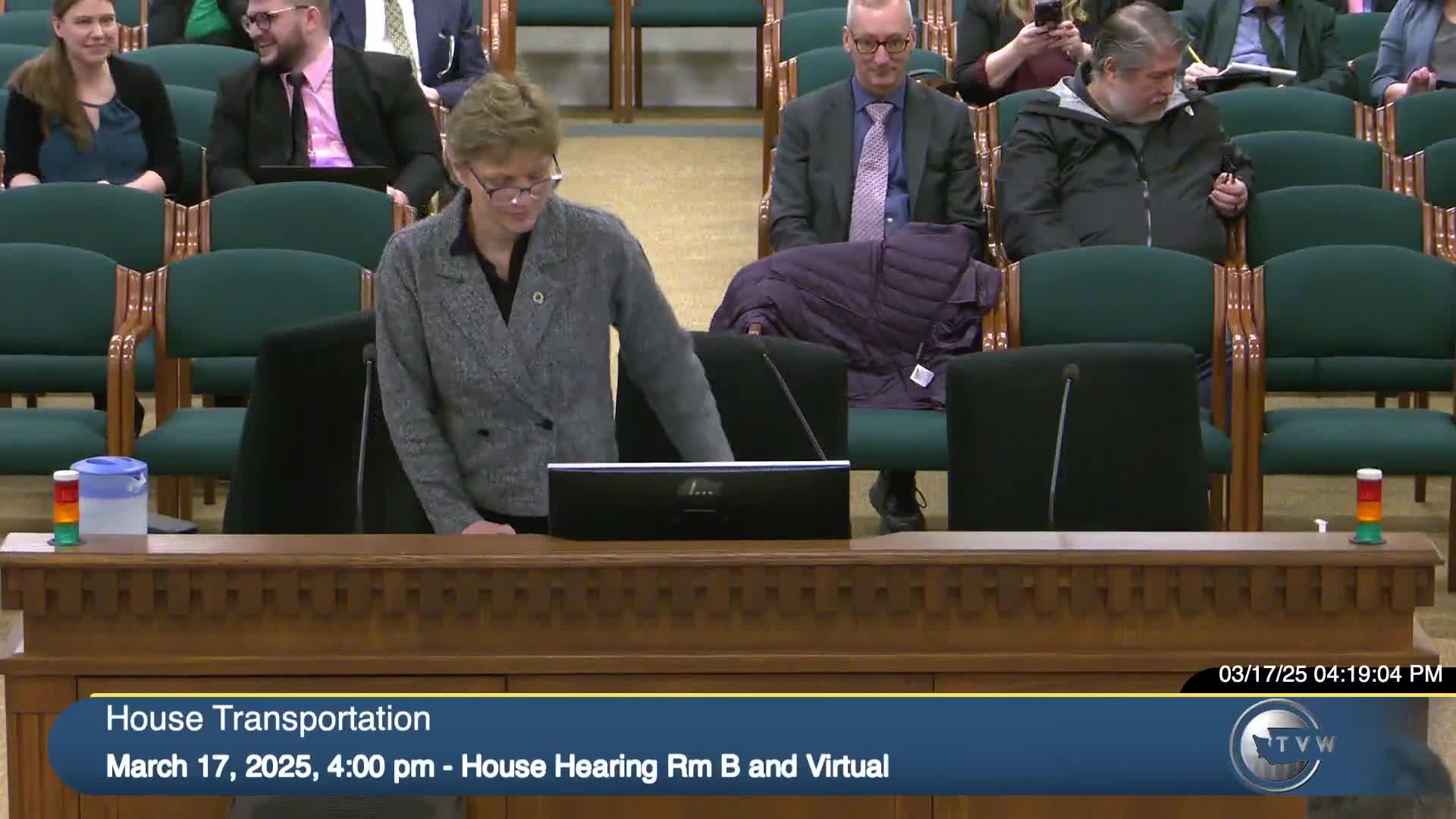
Julie Meredith, the newly confirmed secretary of the Washington State Department of Transportation, told the House Transportation Committee she intends to focus on workforce development, preservation of existing assets, safety, ferry reliability, and fish‑passage work amid a constrained state budget.
“WSDOT’s mission is to provide safe, reliable and cost‑effective transportation,” Meredith said, introducing herself and noting she has worked at WSDOT for more than 36 years. She told lawmakers the department manages a multimodal system with a replacement value she described as “a quarter of a trillion dollar state transportation system.”
Meredith said WSDOT’s workforce has become less experienced in recent years: median tenure in a current job is about six years, nearly 40% of staff have been in their current job for a year or less, and almost 60% have two years or less in their position. She said recruitment and retention — including competitive salaries and outreach to schools and universities — will be priorities.
On funding, Meredith told the committee that fuel‑tax revenue forecasts used for the 2024 adopted budget have since dropped by “over $530,000,000” across the 2023–25 and 2025–27 biennia, and that project and operating costs have risen. She described preservation, operations and maintenance, safety, fish passage, and ferries as the agency’s largest unfunded needs.
Meredith described safety work and the department’s “target zero” goal to reduce deaths and serious injuries on state roadways. She praised expanded programs such as complete streets and a new work‑zone speed camera program; she said the first camera will go live soon.
On the Washington State Ferries system, Meredith said service is improving: “more than 98% of scheduled sailings are being completed each week and on time performance is rising as well,” and that delaying two ferry conversions until after the 2026 World Cup will help return the system to pre‑pandemic service levels with 18 ferries in service.
Meredith said the state and tribes are in court‑approved mediation over the state’s obligation to remove fish barriers. As of June 2024, she said 146 injunction barriers have been corrected, opening about 570 miles of potential habitat, and another 155 barriers are under contract. She said additional funding is necessary to complete the program and that WSDOT will continue to work with tribes and partners.
Committee members asked questions about workforce pipelines, use of consultants and technology, fish‑passage decision tools, and intercity passenger rail. Meredith said WSDOT will continue outreach to universities and high schools to recruit new workers, will use consultants for specialized expertise, and sees passenger rail as an important future mode that requires stronger staffing and coordination.
Meredith closed by asking legislators for partnership on both near‑term and long‑term solutions given current budget constraints. The committee did not take formal action on the briefing; members asked for follow‑up briefings and data, including a requested breakdown of the $7.5 billion funding shortfall referenced by one representative.
Why this matters: WSDOT manages critical transportation assets across modes. The secretary’s briefing highlights personnel turnover, reduced fuel‑tax revenue, and program delivery pressures — factors that will shape the department’s budget requests and legislative priorities in the coming biennia.