Get Full Government Meeting Transcripts, Videos, & Alerts Forever!
Get email alerts on the Hb 2035 Liquor Fees topic
No spam. Unsubscribe anytime.
Committee hears opposition as bill would raise nearly all liquor license fees 50%
Summary
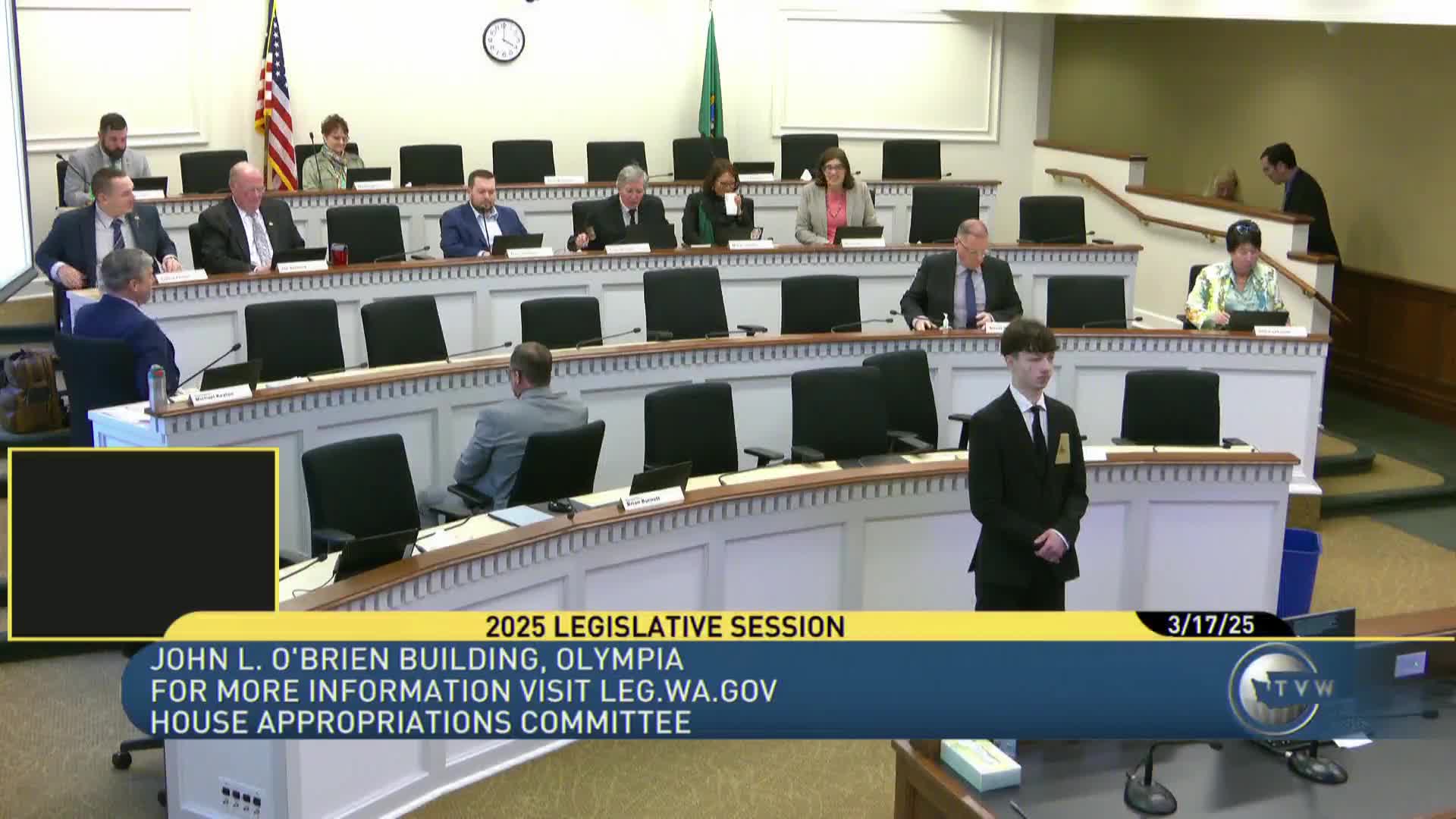
The House Appropriations Committee held a public hearing on House Bill 2035, which would raise nearly all liquor license, permit and endorsement fees by 50 percent; the Liquor and Cannabis Board estimates roughly $8.1 million in annual revenue, while retail and producer groups urged rejection or targeted adjustments.
The Appropriations Committee held a public hearing on House Bill 2035, which would raise nearly all liquor license, permit and endorsement fees by 50%, generating an estimated $8.1 million a year, committee staff said.
Staff to the committee Matt Mazerhart summarized the bill and the fiscal note, telling the panel, “This bill would increase those fees by 50%.” He said the Liquor and Cannabis Board administers about 52 separate license, permit and endorsement types that allow businesses and nonprofit organizations to sell, distribute, manufacture and store alcohol, and that the board estimates the fee changes would produce about $8,100,000 a year in new revenue, of which about $7.6 million would go to the general fund and roughly $500,000 would be directed to the University of Washington and Washington State University for alcoholism and substance-abuse research. Mazerhart also said the Liquor and Cannabis Board estimates a one-time IT cost of about $164,000 from the liquor revolving fund to update systems with the new fees.
The bill drew broad opposition from retail and producer groups at the hearing. Brad Tower of the Washington Liquor Store Association said stores already remit large amounts to the state and described the proposal as an unnecessary additional burden. “We bought those rights and have been remitting a significant amount of license issuance fees and other licensing fees to the state,” Tower said.
Craft distillers, brewers, distributors and hospitality groups warned a 50% across-the-board increase would hit small businesses recovering from the pandemic and could be inequitable across license classes. Jim Hedrick, representing craft distillers, said a 50% increase “would be devastating and would cost us jobs.” Daniel Olson, executive director of the Washington Brewers Guild, said the increase represents a significant financial impact for many small breweries.
Groups urged alternatives: targeted adjustments tied to agency workload, fee-setting tailored by license type, or prior stakeholder engagement. Nora Blattau Burns of the Washington Beer and Wine Distributors Association said stakeholders were not consulted and asked for transparency showing how additional revenue would improve Liquor and Cannabis Board services. Amber Carter of the Washington Retail Association argued fees should cover regulatory services rather than serve as a general tax.
Committee members asked staff when fees were last adjusted and about where additional revenue would flow. Mazerhart said updates vary by license and that a similar across-the-board adjustment last appeared in 1997 for most major license categories. Representatives pressed staff on how liquor revolving account receipts are used; staff said some receipts fund local government or Liquor and Cannabis Board administration while the additional revenue in the bill is modeled to flow to the general fund and to higher-education research under existing statutes that direct a share to UW and WSU.
No formal action or vote was taken during the hearing. The bill’s public record includes multiple written and in-person statements in opposition and several industry witnesses asking the committee to reject or amend the measure.
The committee invited further questions and later moved to other bills on its agenda.