Get Full Government Meeting Transcripts, Videos, & Alerts Forever!
Get email alerts on the Public Defense Budget topic
No spam. Unsubscribe anytime.
Oregon lawmakers hear budget overview as Public Defense Commission seeks staffing, rate and IT investments
Summary
An informational hearing on House Bill 5,031 examined the Oregon Public Defense Commission's proposed 2025–27 budget, highlighting a $645.2 million current-service level, requests to add attorney FTE, stabilize hourly rates and fund a new financial case management system amid an ongoing 'unrepresented persons' crisis.
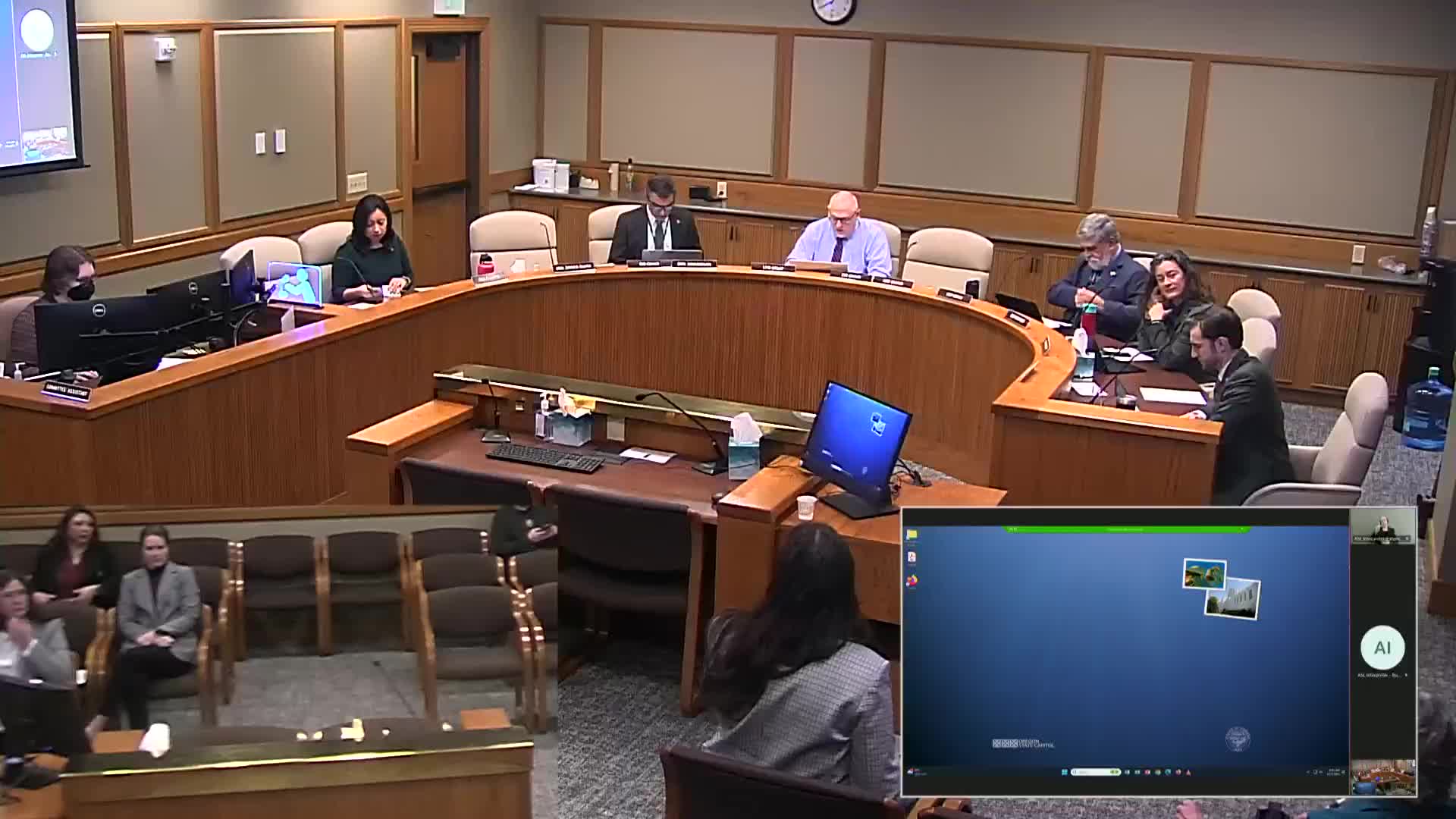
House Public Safety Subcommittee co-chair Broadman opened an informational hearing on House Bill 5,031 on March 17, 2025, to review the Oregon Public Defense Commission's budget request and agency progress.
The Legislative Fiscal Office analyst John told the committee, “The agency's current service level budget for the 2025–27 biennium totals 645,200,000.0 total funds, which includes 624,400,000.0 general funds and 20,800,000.0 other funds.” That figure, he said, includes 172 positions (171.8 FTE) and reflects a current-service-level shortfall the agency expects to cover as economic and caseload forecasts are updated.
The hearing focused on three linked challenges: a statewide shortage of public defense capacity that the commission calls the unrepresented persons crisis; implementation of workload and hourly‑rate reforms enacted in 2023; and the agency's transition from the judicial to the executive branch, including procurement and IT work needed to stand up a statewide financial and case management system.
Susan Mandeburg, vice chair of the Oregon Public Defense Commission, said the commission's analysis shows the reforms and national standards cannot be implemented under current service levels. “We need to hire approximately 80 additional lawyers, over the next 6 years in order to service the amount of demand that is anticipated,” Mandeburg told the subcommittee.
Jessica Kampey, executive director of the Oregon Public Defense Commission, described progress since the 2023 reforms and the agency's new state trial offices. “Oregon Public Defense Commission is the guardian of the legal rights and interests of public defense clients and the champion for effective public defense service,” Kampey said, and reported that the commission has opened three state-run trial offices in the past year that have taken hundreds of cases in communities with high unmet need.
Allison Daniel of the Department of Administrative Services Chief Financial Office summarized the governor's recommended budget and its priorities for OPDC. Daniel said the governor's budget “makes several critical investments across the agency to address the unrepresented persons [crisis], update the state's case management system, extend the temporary hourly increase program through December 2025 and increase the number of public defenders employed by the state.” Specific GRB items noted in testimony include funding to stabilize provider rates, funding for additional FTE in state trial offices, and dollars for the financial case management system.
Committee members pressed staff and the commission about trade-offs and delivery models. Representatives and senators asked for clearer, comparable per‑case cost figures across delivery models (contracted firms, nonprofit firms, hourly panels and state trial attorneys) so the legislature can evaluate short‑term efficiency versus long‑term sustainability. Kampey and Mandeburg said some costing appears in forecasts prepared with the Department of Administrative Services Office of Economic Analysis, and staff committed to providing more detailed comparisons.
Witnesses described several specific investments and one‑time appropriations already enacted by the legislature: an increase in standard hourly rates for contractors in 2023, temporary incentive payments to improve retention, the temporary hourly increase program (FIP) used to address in‑custody unrepresented cases, and special‑purpose appropriations to stand up state trial offices and to begin the financial case management system procurement. Kampey said the case management project is in stage‑gate 3 with vendor proposals under review.
The commission and staff told the subcommittee that, while the governor's recommended budget contains some elements of the commission's six‑year plan (for example, state trial office expansion and stabilized hourly rates), it does not fully fund the workload reductions envisioned in the commission's plan. Mandeburg and Kampey emphasized that implementation depends on continued legislative investment and improved caseload forecasting.
No formal votes were taken during the March 17 session. The co‑chair closed the hearing and said the subcommittee will continue work, including expected public testimony and a potential work session later in the week to review the commission's report on non‑unanimous jury convictions and updated forecasts.
Information requests and next steps noted on the record included: more detailed cost‑per‑case comparisons across delivery models, updates to the DAS Office of Economic Analysis caseload forecast (next forecast due in April 2025), procurement timelines and vendor details for the financial case management system, and clarification of ongoing contracts with outside consultants (Moss Adams involvement in workload and economic surveys was confirmed).