Get Full Government Meeting Transcripts, Videos, & Alerts Forever!
Get email alerts on the Producer Responsibility Epr topic
No spam. Unsubscribe anytime.
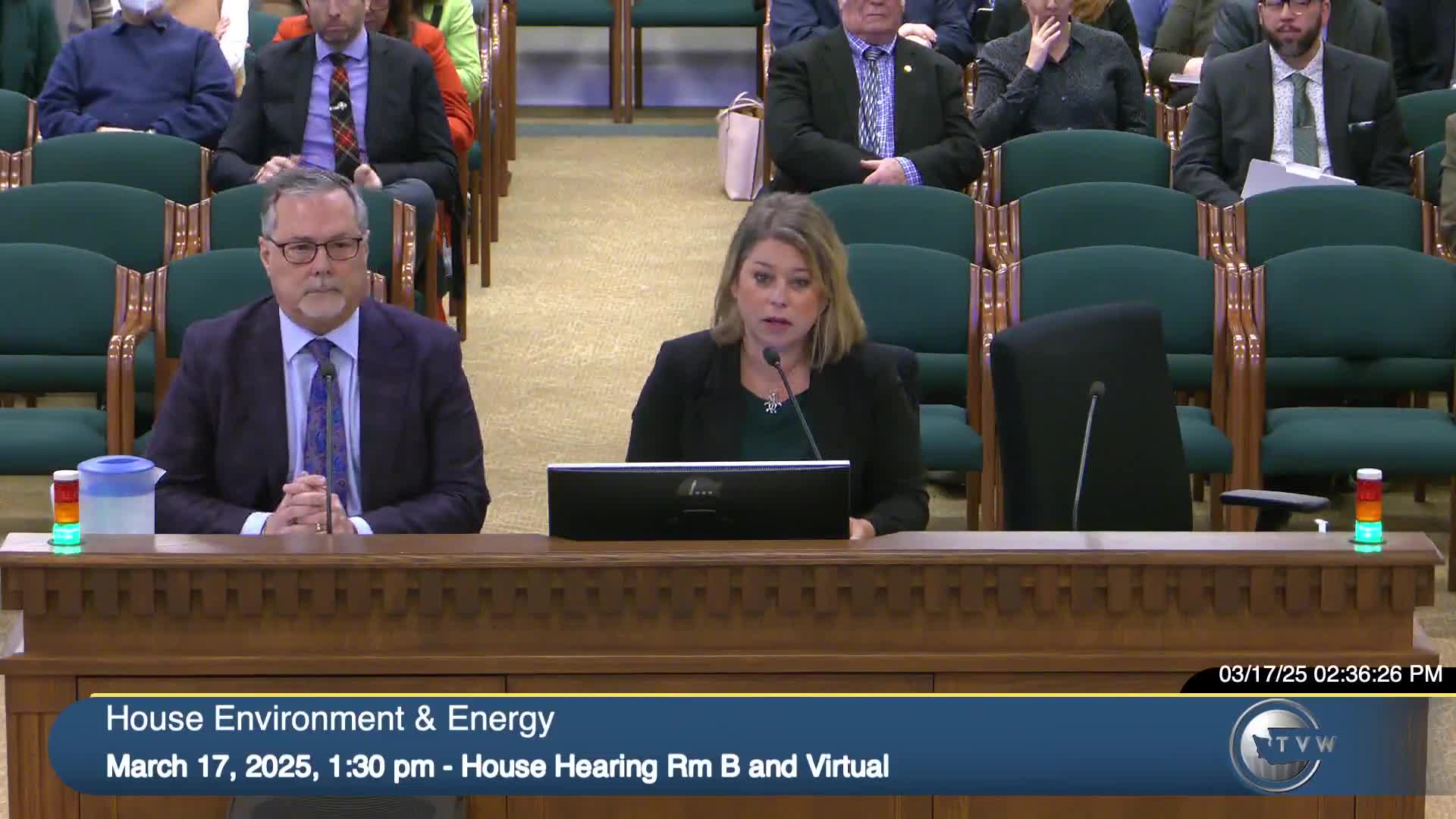
Debate over producer responsibility bill centers on costs, needs assessment and jobs
Summary
Senate Bill 5,284 (Packaging Product Stewardship / EPR) drew broad testimony: supporters said EPR would expand recycling access, improve recovery rates and create green jobs; opponents warned about high implementation costs and urged a comprehensive needs assessment before moving forward.
Senate Bill 5,284, the Recycling Reform Act (packaging product stewardship/extended producer responsibility), was presented to the committee as a stakeholder-negotiated bill modeled on Minnesota’s EPR approach and intended to shift financial responsibility for recycling packaging to producers.
Supporters — including the Washington Beverage Association, the Washington State Labor Council and environmental groups — said the bill would extend curbside recycling to hundreds of thousands of households, raise the statewide residential recycling rate and create green jobs in collection and processing. Christophe Mayer (Washington State Labor Council) said the bill would “boost high quality green jobs” and include labor standards that “ensure workers at sorting facilities have adequate workplace protections.” Megan Lane (Coalition for High Performance Recycling) and Rebecca Thomas (Glass Packaging Institute) said EPR paired with potential future deposit-return systems would improve material quality and supply for recycling markets.
Opponents including collectors and processors, grocery and retail groups, counties and some waste companies raised concerns about cost and implementation. Brad Loves (Washington Refuse and Recycling Association) said the California rollout estimate was “over $36,000,000,000” and warned the cost would be passed to households; Jay Blaspas (Basin Disposal) and Mark Johnson (Washington Retail Association) urged a needs assessment before adopting a program they said could drive up consumer prices. Several county representatives, including Travis Dutton (Washington State Association of Counties), requested clear funding mechanisms to replace lost disposal fee revenues that counties rely on.
A number of industry witnesses asked the committee for specific clarifications and targeted amendments: manufacturers and packaging trade groups supported the negotiated funding formula and needs assessment language in the draft but asked for workable fee structures and flexibility in goal-setting. Producers’ coalitions argued the bill follows lessons from other states and that empirical studies do not show substantial consumer-price impacts.
Department of Ecology (Peter Lanyon) said Ecology supports the bill in its present form and that the bill is included in the governor’s budget; Ecology estimates the Packaging Product Stewardship policy could raise residential recycling from about 39% to 65% if implemented.
No formal vote occurred during the hearing; members heard extensive pro and con testimony and several asked for further analysis of costs, needs assessment results and funding options before moving the measure.
Ending: The committee closed the hearing on SSB 5,284 after lengthy testimony and signaled further work would be required on cost estimates, the needs assessment, and funding safeguards before the bill advances.