Get Full Government Meeting Transcripts, Videos, & Alerts Forever!
Get email alerts on the Electric Transmission topic
No spam. Unsubscribe anytime.
Committee considers state transmission authority to speed upgrades and reconductoring
Summary
Gross substitute Senate Bill 5,466 would establish a Washington Electric Transmission Authority to coordinate planning, assist permitting, and, as a last resort, own or acquire transmission facilities to address congestion and unlock new clean-power connections.
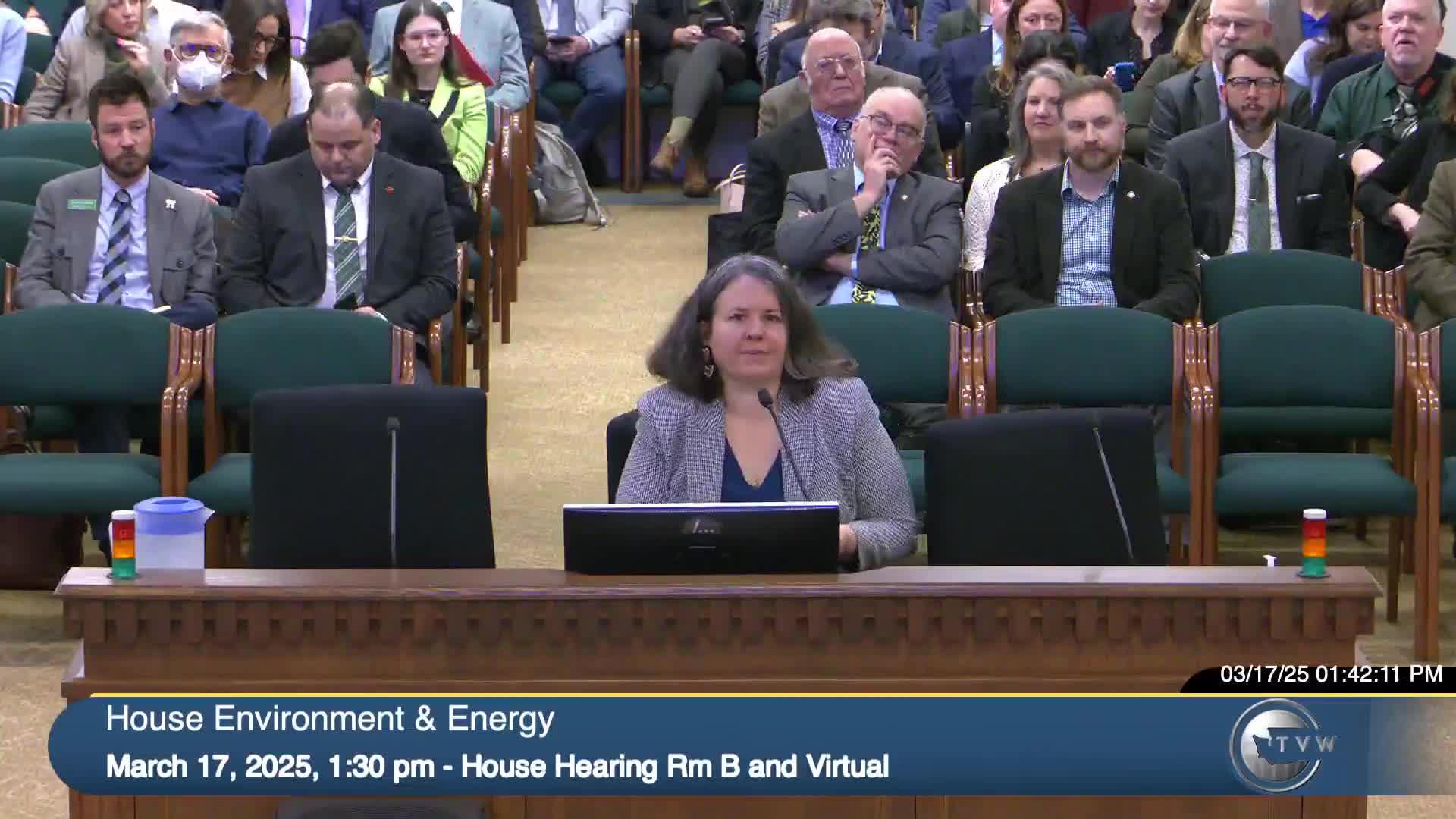
Megan McFadden (staff to the committee) briefed gross substitute Senate Bill 5,466, which would create a Washington Electric Transmission Authority with powers to enter contracts, engage in transmission planning, own and develop facilities as a last resort, and report regularly on needs and activities. The bill requires a transmission needs assessment every five years and amends the state review process for certain upgrades.
Senator Shoemake (bill sponsor) told the committee the authority is modeled on entities in New Mexico and Colorado and said the state needs tools to unlock transmission capacity so clean-energy and industrial projects can connect to the grid.
Supporters said the bill would accelerate reconductoring and targeted upgrades on existing lines and provide permitting assistance to local and tribal governments. Cassie Bordelon (Climate Jobs Washington) and Alta Kharesipun (Climate Solutions) backed categorical SEPA exemptions for limited upgrades and said tribal checklists and NEPA alignment should be considered. Casey McClain (Renewable Northwest) and Jason Hudson (IBEW Local 77) urged passage to address capacity constraints.
Labor and clean-energy groups emphasized both climate and jobs benefits; multiple utility and industry witnesses endorsed reconductoring and advanced conductors as a near-term capacity option. Peter Brown (CTC Global) and others recommended refining the bill’s definition of “advanced conductors” to ensure reconductoring yields meaningful capacity gains.
Opponents and cautious stakeholders raised governance and cost-allocation concerns. Brandon Huskeeper (Alliance of Western Energy Consumers) opposed Section 3 that would allow the Utilities and Transportation Commission to approve incentive rates of return for certain reconductoring work, saying it could raise costs for ratepayers. PacificCorp (Jay Velasquez) and PacifiCorp representatives questioned whether state ownership of FERC-jurisdictional transmission facilities would be appropriate. The Washington Public Utility District Association (Nicholas Garcia) urged the authority include members directly from consumer-owned utilities and investor-owned utilities to provide technical and operational expertise.
State officials urged creation of the authority now. Kate Bruns (Climate and Energy Policy Adviser to the Governor) and Joe Wynne (Director, Department of Commerce) said federal constraints at the Bonneville Power Administration have increased the need for a state-capacity mechanism. Several tribal representatives expressed concern about SEPA exemption language and sought clearer coordination and protection for fish and cultural resources.
No final action or vote occurred; committee members and witnesses indicated continued negotiations over board composition, definitions, SEPA-exemption scope and financing mechanisms.
Ending: The committee closed the hearing on SSB 5,466 after extensive testimony from labor, environmental groups, utilities and state agencies and signaled more refinements would be needed on board membership, SEPA language and rate/revenue implications before the Legislature advances the bill.