Get Full Government Meeting Transcripts, Videos, & Alerts Forever!
Get email alerts on the Biosolids Pfas topic
No spam. Unsubscribe anytime.
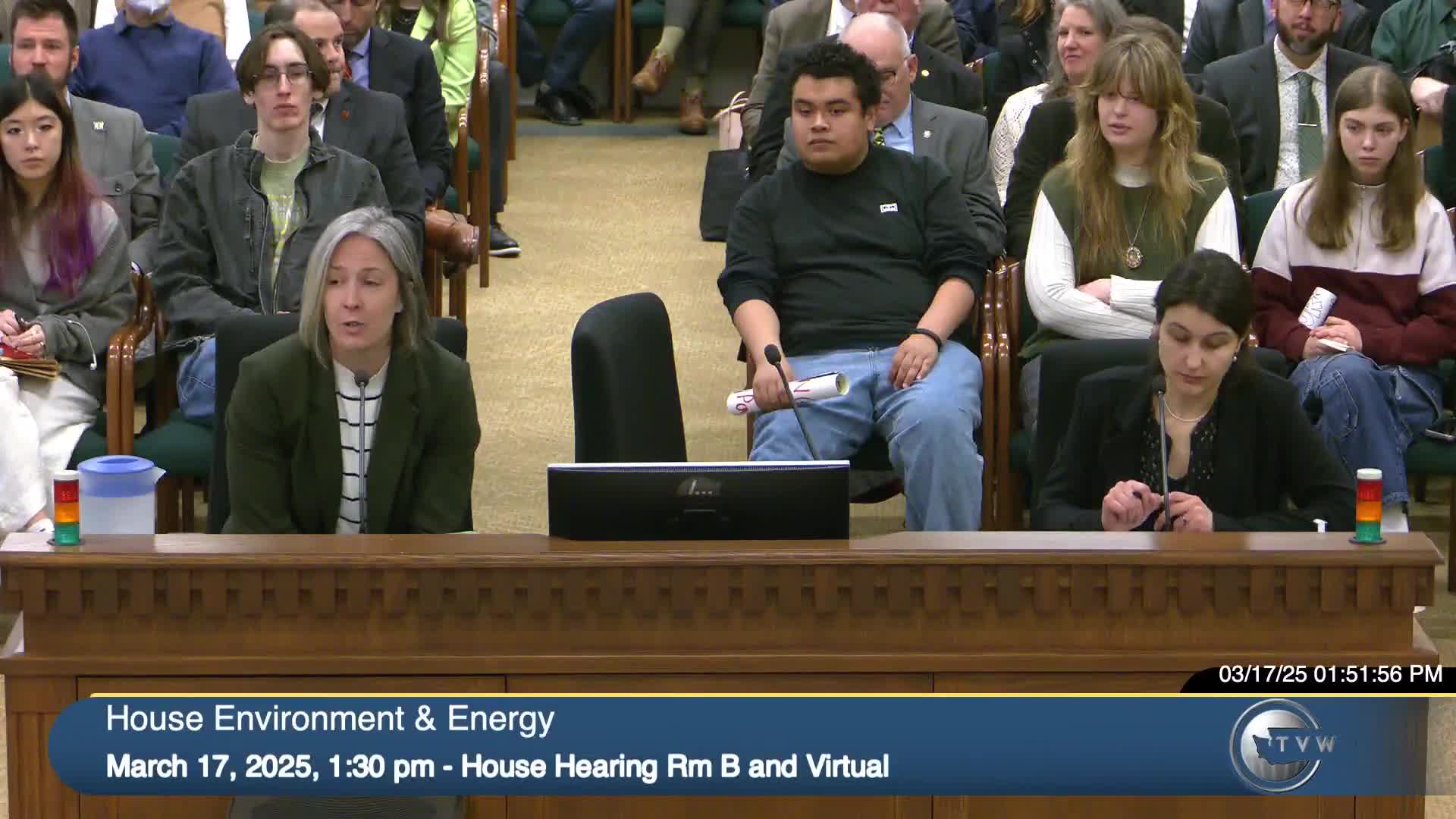
Committee hears bill to study PFAS levels in biosolids before setting limits
Summary
A committee heard testimony on Substitute Senate Bill 50 33, which would require the Department of Ecology to convene an advisory committee and develop sampling, testing and a statewide analysis of PFAS in biosolids, with interim deadlines through 2029.
Meg McFadden, staff to the committee, briefed Substitute Senate Bill 50 33, saying the bill would require the Department of Ecology to establish PFAS sampling and testing requirements for biosolids after consulting a new advisory committee and to analyze PFAS levels and biosolids produced in Washington by July 2029.
The bill text links Ecology’s existing biosolids management program and the federal Clean Water Act, and would direct Ecology to convene an advisory committee that includes farmers, toxicologists, utilities that produce soil amendments, and local governments. Ecology would report its analysis and recommendations to the Legislature by December 2029.
Senator Jeff Wilson (Washington State Senator, 19th Legislative District), sponsor of the bill’s briefing, framed the measure as establishing a baseline to determine whether “forever chemicals” are being transferred onto farmland and other lands via biosolids. Wilson said the bill does not aim to curtail beneficial uses of soil amendments but to set standards and gather data.
Members and witnesses pressed for practical details. Representative Dye asked where PFAS in wastewater and biosolids typically come from; Wilson and witnesses cited legacy uses such as firefighting foams, nonstick cookware, some industrial components, and textiles. Scott Hazelgrove (Washington Association of Sewer and Water Districts) said wastewater districts support the bill because it balances protection of drinking water with the need for safe disposal or reuse of biosolids.
Environmental and community groups urged faster action. Heather Trim (0 Waste Washington) said the state does not yet know whether PFAS in biosolids is “a big problem, a little problem, or not much of a problem,” and called for timely testing. Wyatt Golding (attorney for the Nisqually Delta Association) said his group successfully appealed a biosolids permit on grounds that PFOS was not being accounted for and urged a quicker timetable than the bill’s 2028–2029 deadlines.
Peter Lyon (Department of Ecology, Solid Waste Program manager) provided technical context: Ecology currently regulates biosolids under permits that implement federal Clean Water Act pollutant standards; PFAS are not among the nine primary pollutants currently regulated in the agency’s biosolids permits. Lyon said the bill would provide specific data to inform policy decisions and noted the bill has a fiscal impact not included in the governor’s budget.
Local growers, public-health and civic groups also testified. Anne Murphy (League of Women Voters of Washington) and Phyllis Farrell (individual) supported the data collection but said the timelines are too long and urged inclusion of public-health representation on the advisory committee. Kyle Dorsey (Coalition for Clean Water) and John Clowers (Snohomish Water District Coalition) said beneficial use of biosolids remains an important management option for many utilities, and collecting PFAS data will fill vital information gaps.
No formal votes were taken during the hearing; committee members and staff indicated the bill remains under consideration and that stakeholders expect further work on advisory committee composition and timelines.
Ending: The committee closed testimony on SSB 50 33 and left the bill pending further deliberation and possible amendments; Ecology and multiple stakeholders asked for clearer near-term steps while acknowledging the bill would provide a statewide data baseline for PFAS in biosolids.