Get Full Government Meeting Transcripts, Videos, & Alerts Forever!
Get email alerts on the Mandated Reporting Exemption Law Clinics topic
No spam. Unsubscribe anytime.
Bill would exempt law‑school clinical representation from mandated‑reporting rule
Summary
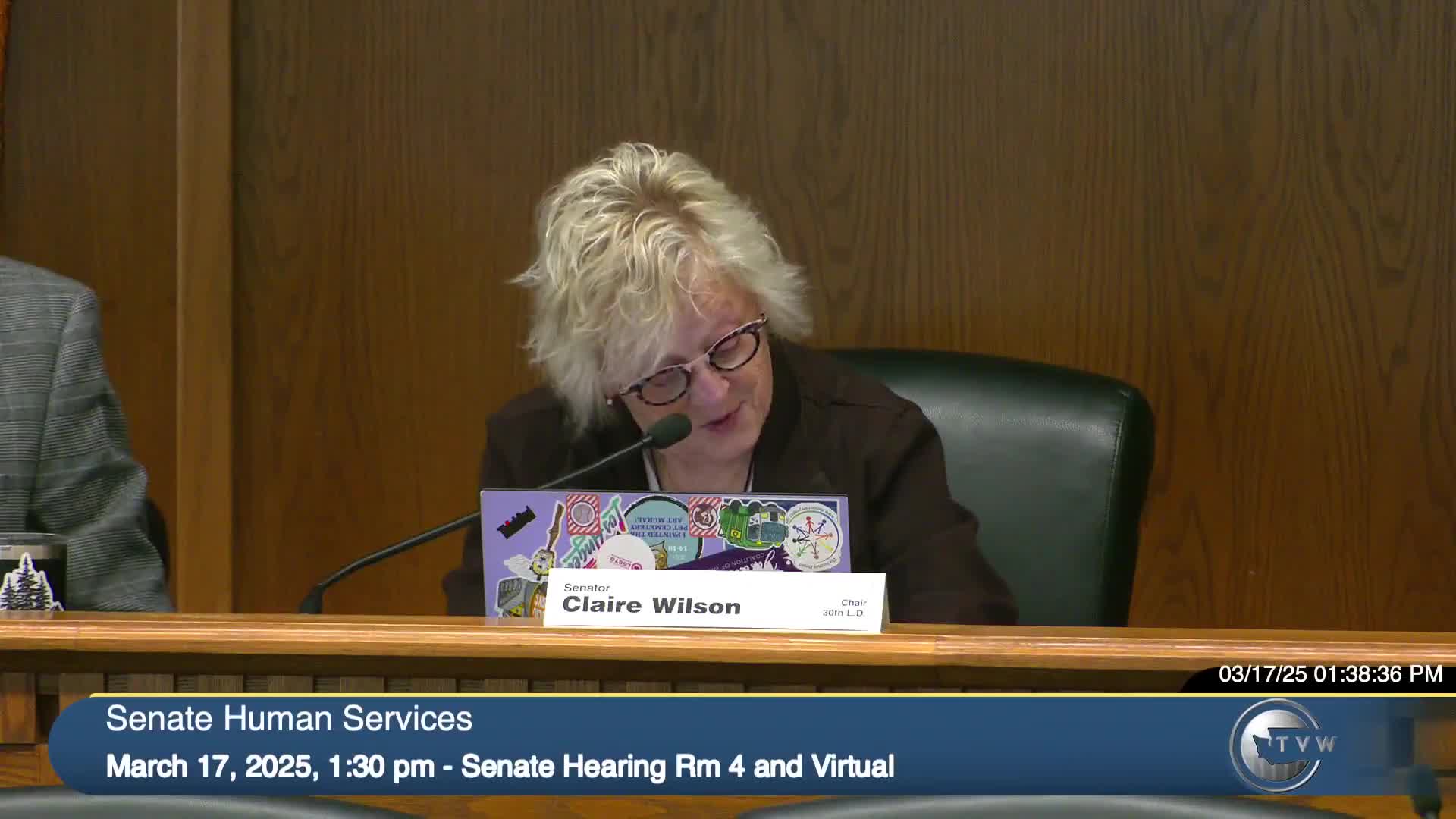
Substitute House Bill 1171 would add a narrow exception to the state’s mandated‑reporting law to preserve attorney‑client confidentiality for legal representation conducted through law‑school clinics, lawmakers heard March 17.
Substitute House Bill 1171 would create a targeted exception to Washington’s mandated‑reporting statute so law‑school clinic faculty attorneys and supervised law students may preserve attorney‑client confidentiality when the information arises in the course of legal representation. Allison Mendiola, committee staff, informed the Senate Human Services Committee that the bill passed the House on a vote of 95‑0.
Paul Holland, a faculty member at Seattle University School of Law, told the committee the current statute has forced clinic faculty to alter case selection because the statutory reporting requirement can conflict with the Rules of Professional Conduct and the attorney’s duty of confidentiality. “This dilemma has forced me to alter my case selection with the result that indigent clients who could receive our free services do not get them,” Holland testified.
Representative Gerry Pollet, sponsor of the substitute bill, explained that law students in supervised clinics practice under faculty supervision and are bound by the rules of professional conduct that govern privilege and confidentiality. He said the bill is narrowly drawn: it does not remove mandatory‑reporting duties outside the privileged relationship and mirrors language used in other states to protect clinical training and legal services while maintaining protections for children.
Ria Yeo of Legal Counsel for Youth & Children, Aubrey Stahl representing the Washington Defender Association and the Washington Association of Criminal Defense Lawyers, and other clinic alumni and faculty testified in support, stressing that confidentiality enables honest communication between children and their attorneys and that clinics are a critical pathway to increasing access to justice and to training future attorneys.
Senator Christian questioned the scope of the exemption, asking why clergy are not included; speakers replied that this bill responds specifically to lawyer confidentiality and does not modify clergy exceptions. The hearing record closed after testimony from clinic faculty and stakeholders; no committee vote was recorded in the transcript.