Get Full Government Meeting Transcripts, Videos, & Alerts Forever!
Get email alerts on the Child Protection topic
No spam. Unsubscribe anytime.
House committee hears bill to criminalize AI‑generated sexual depictions of minors and extend statute of limitations
Summary
The House Community Safety Committee held a public hearing March 17 on Engrossed Substitute Senate Bill 5105, which would expand Washington's criminal laws to cover digitally fabricated sexual depictions of minors, change related defenses and immunities, and increase the felony statute of limitations from three to ten years.
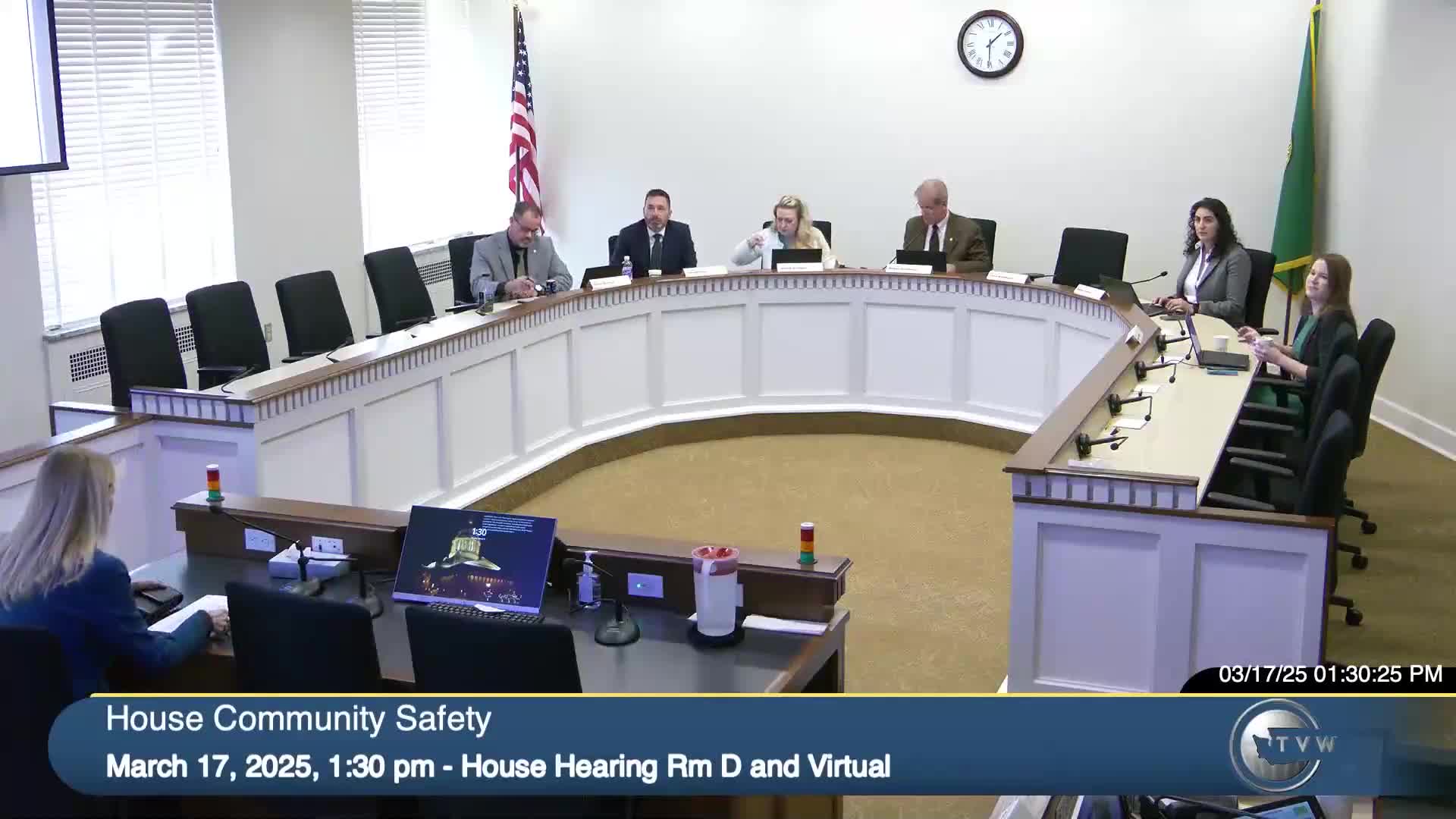
Olympia, March 17 — The House Community Safety Committee on Monday held a public hearing on Engrossed Substitute Senate Bill 5105, which would broaden state criminal laws to cover digitally fabricated or altered sexual depictions of minors and change related defenses, immunities and time limits for prosecution.
The bill's sponsor, state Senator Tina Orwell, said the measure is intended to give law enforcement new tools to address a growing volume of child sexual abuse material on the internet, including images altered or produced with artificial intelligence. "This bill is about giving [law enforcement] the tools they need to do that work and about protecting kids," Orwell said.
Corey Patton, staff to the committee, summarized the bill's principal changes: (1) expand offenses involving depictions of minors so they include digitally created or altered images that are obscene even when no identifiable minor appears; (2) make the defenses and immunities for prosecutions involving fabricated depictions generally the same subject to two exceptions tied to whether a victim is identifiable; and (3) lengthen the statute of limitations for felony offenses relating to dealing, sending, possessing and viewing depictions of a minor from three years to ten years. The bill also adds a fourth way to commit the separate crime of sexual exploitation of a minor: causing a minor to be photographed or recorded while the minor is unconscious or unaware.
Proponents from law enforcement and victims'advocacy groups said the change is needed because modern tools easily alter images and can hide abuse from automated detection. "We find no policy distinction between fabricated or digitized depictions of minors engaged in explicit conduct and actual children," James McMahon, policy director for the Association of Sheriffs and Police Chiefs, said. Laura Harmon, a senior deputy prosecuting attorney and statewide ICAC (Internet Crimes Against Children) attorney, told the committee that AI and other alterations defeat hash‑matching systems used by social platforms and investigators, and that prosecutors need the authority to pursue obscene fabricated material when a child cannot be identified.
Opponents and some criminal justice experts urged caution. Ramona Brandes of the Washington Association of Criminal Defense Lawyers warned that portions of the bill that criminalize possession of fabricated depictions may collide with First Amendment case law, and urged removing or narrowing those provisions. Brad Merhugh, chair of the Washington Sex Offender Policy Board and a defense attorney, said evidence suggests treatment and targeted interdiction may be more effective than broader criminal penalties for some possession cases and opposed extending the statute of limitations to 10 years. "Moving that out to 10 years creates a horrible input for those individuals who are accused," Merhugh said, urging the committee to preserve the existing three‑year period or consider a shorter extension.
The bill uses the obscenity standard derived from the U.S. Supreme Court's Miller v. California decision, making prosecution of nonidentifiable fabricated images contingent on a Miller test finding that the material is obscene. Patton told lawmakers the bill keeps a requirement that, when the image depicts an identifiable minor, the state must prove the victim's identity; that requirement is not necessary when the underlying material is obscene and nonidentifiable.
Several mental‑health and treatment providers who testified said people who possess illicit images but have no prior contact offenses can be amenable to treatment and that sentencing alternatives should be considered for first‑time offenders. Others, including victims'service advocates, said fabricated images inflict real harm and that perpetrators should face full accountability even when the depicted child cannot be identified.
No committee action or vote was taken Monday; the hearing was held open for further amendment and followup. Committee staff and stakeholders indicated additional technical language on immunity, narrowness of an immunity clause for legitimate investigations, and first‑amendment concerns would be circulated to address constitutional questions noted by opponents and the sentencing commission.
A decision timetable was not announced; committee members said they expect further drafting and followup meetings before any executive action.