Get Full Government Meeting Transcripts, Videos, & Alerts Forever!
Get email alerts on the Child Advocacy Centers topic
No spam. Unsubscribe anytime.
Bill would expand Child Advocacy Centers to serve children who witness violence
Summary
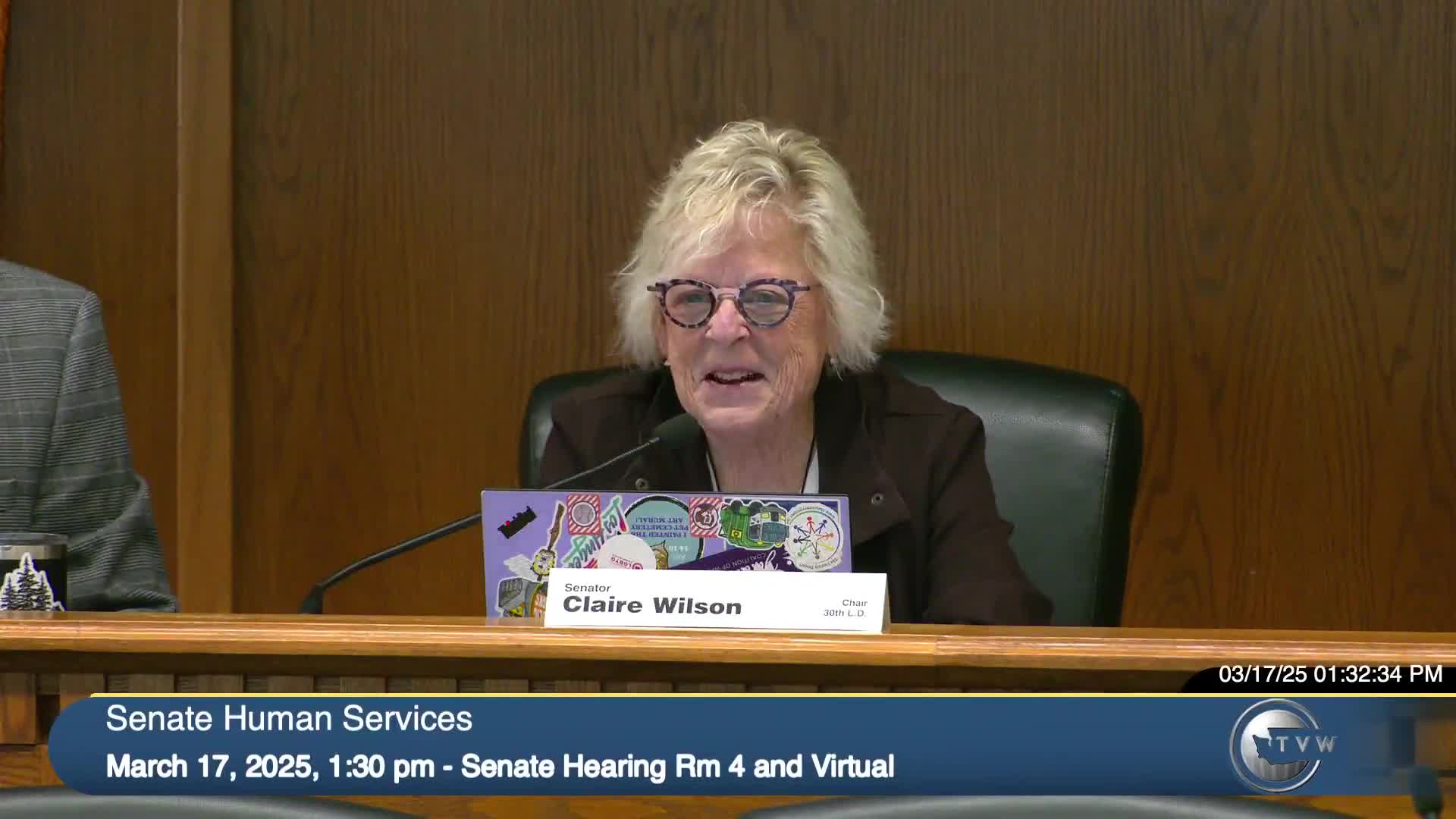
Representative Raquel Goodman told the Senate Human Services Committee on March 17 that House Bill 1028 would explicitly allow Children’s Advocacy Centers to serve children who witness or are exposed to violence and would authorize confidential peer review of closed forensic interview recordings.
Representative Raquel Goodman testified before the Senate Human Services Committee on March 17 about House Bill 1028, which would expand the statutory scope of Children’s Advocacy Centers (CACs) to explicitly include children who have witnessed or been exposed to violence. Allison Mendiola, committee staff, told the committee the bill passed the House on a vote of 94‑2 and that staff prepared a fiscal note reporting no fiscal impact.
The bill updates definitions of CACs and child forensic interviews and authorizes the use of forensic interview recordings from closed cases for confidential peer review, with the hosting organization’s consent and adherence to its parental‑consent policies. “Peer review maintains interviewer consistency and fidelity to the protocol and minimizes interviewer drift,” Paula Reid, executive director of Children’s Advocacy Centers of Washington, testified in support of the bill.
Representative Goodman said the statutory language has been unclear about whether CACs can help children who witnessed violence and argued that exposure to violence can produce traumatic effects. “We’ve discovered a lot about the traumatic effects of witnessing violence, which is actually worse than actually being a physical victim because you have no control and you never know when it’s going to happen again,” Goodman said.
Testifying from the field, Stephanie Whitholm, director of the Children’s Advocacy Center in Spokane, and Hillary Gladden, a child forensic interviewer in Snohomish County, described the practical effects: CACs offer a neutral, child‑friendly location for developmentally and culturally responsive interviews, reduce repeated recounting of trauma and can connect children to evidence‑based treatment. Gladden said peer review using recorded, closed interviews would help interviewers “maintain and improve their skills and adhere to best practices standards.”
Committee members asked how children would be brought to CACs after an incident and how confidentiality is protected in peer review. Reid and others said CACs typically receive children brought by law enforcement, caregivers or child protective services and that participation in peer review would require a confidentiality agreement and specific parental or caregiver permission for use of closed‑case recordings.
The hearing closed after testimony from the panel. Staff noted the bill had passed the House and offered to answer additional technical questions for the committee as it prepares next steps.