Get Full Government Meeting Transcripts, Videos, & Alerts Forever!
Get email alerts on the Agritourism Open Space Tax topic
No spam. Unsubscribe anytime.
Senate committee hears bill to protect agritourism, limit tax penalties on open‑space farms
Summary
A bill that clarifies allowable incidental uses on farmland enrolled in the open‑space tax program and shortens the look‑back period for rollback taxes drew bipartisan support and farmer testimony in the Washington Senate Agriculture Committee.
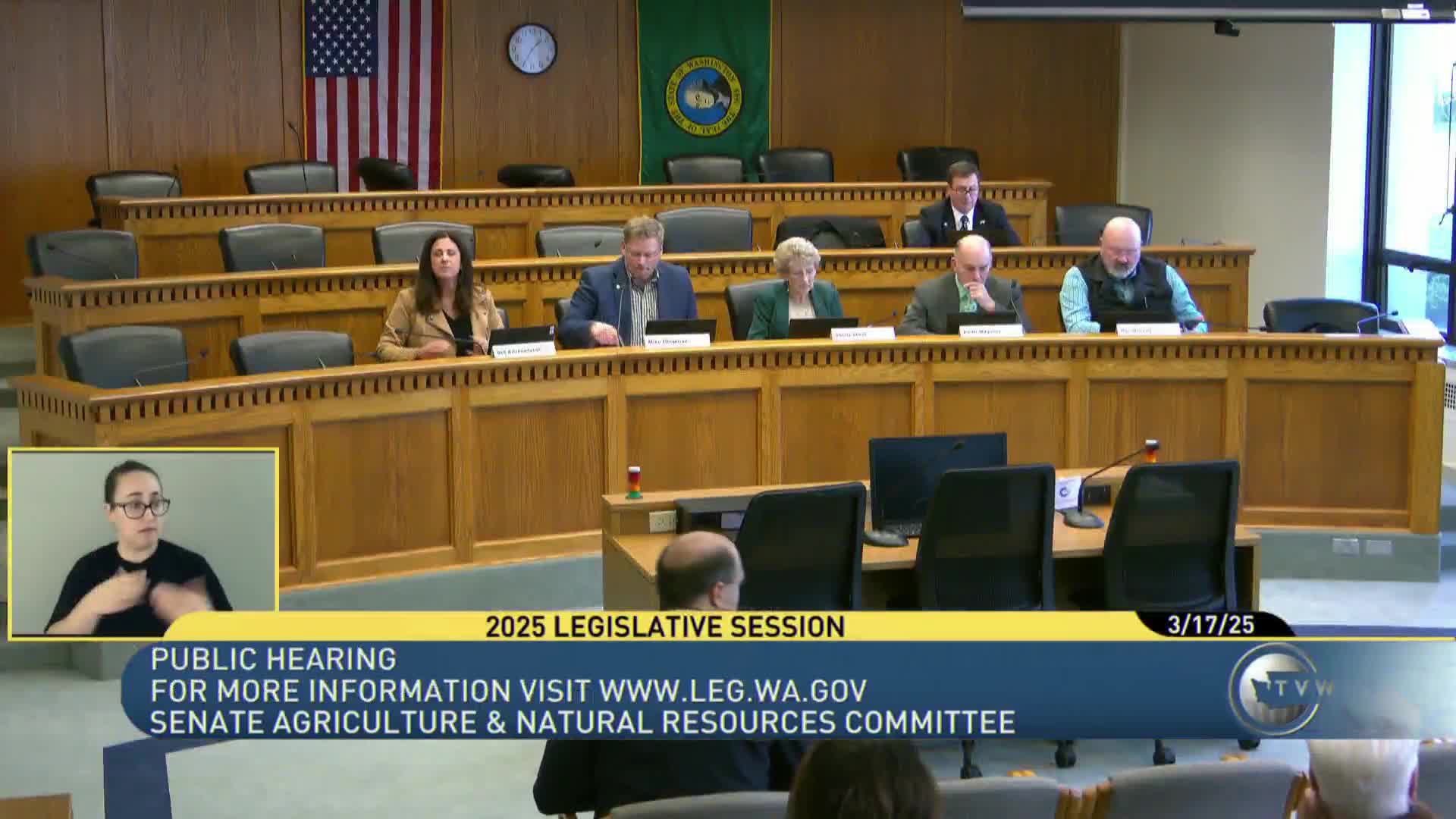
The Washington State Senate Agriculture, Water, Natural Resources & Parks Committee on Monday, March 17, heard Substitute House Bill 12 61, which would expand allowable incidental uses on land classified as open space and reduce the period for calculating rollback taxes when a parcel is removed from the program.
Jeff Olson, staff to the committee, told members the bill would add the wholesale value of agricultural products sold to consumers participating in “harvest‑your‑own” operations to the definition of qualifying income for open‑space classification. Olson said the bill also would prevent removal of land from open‑space classification because of minor upgrades to existing appurtenances and permit limited, compatible uses — including educational or recreational farming programs, seasonal farm festivals and celebratory gatherings — without triggering reclassification. The bill would reduce the look‑back period used to calculate back taxes from seven years to four beginning Sept. 1, 2025, Olson said. He noted a fiscal note estimating about $37,000 to implement the bill in the 2025–27 biennium and that local impacts were indeterminate.
The bill’s prime sponsor, Rep. Sam Lowe, R‑39, said the measure responds to county assessor actions that in some cases produced large rollback tax bills for farmers. “When we don't give our farmers a little bit of flexibility and we tax them out of their farms, they have little to no choice but to sell,” Lowe said, describing cases in Snohomish County where some farmers faced penalties “tens of thousands of dollars” and, he said, “as high as $90,000.” Lowe said the bill aims to provide clarity about incidental uses commonly used to support farm businesses, often called agritourism.
Farm and agricultural stakeholders who testified in support described agritourism and small‑scale events as an essential revenue stream for small farms. Linda Nunzick, Snohomish County’s agriculture coordinator, said agriculture in her county produces roughly $280 million in annual economic activity but that most farms are small; she urged passage to provide stability and predictability for farmers. Scott Lucky, owner of Lucky Farms in Snohomish County, told the committee the clarification would help small family farms survive development pressure and diversify revenue.
Brad Tower, representing the Christmas Tree Growers of Washington, noted the bill had passed the House unanimously and that Department of Revenue changes had addressed prior refund language in the bill.
The committee did not take a vote during the hearing. The bill’s fiscal note and local impact estimates will remain part of record as members continue deliberations.