Get Full Government Meeting Transcripts, Videos, & Alerts Forever!
Get email alerts on the State Legislation topic
No spam. Unsubscribe anytime.
State Rep. Vanessa Hartman briefs Oregon City commission on transportation, childcare and water bills
Summary
Representative Vanessa Hartman (District 40) gave a legislative update at the Oregon City commission work session on March 11, 2025, outlining priorities including a transportation funding package, childcare access and workforce issues, a state low‑income water assistance proposal and bills addressing elder services and squatters’ eviction rules.
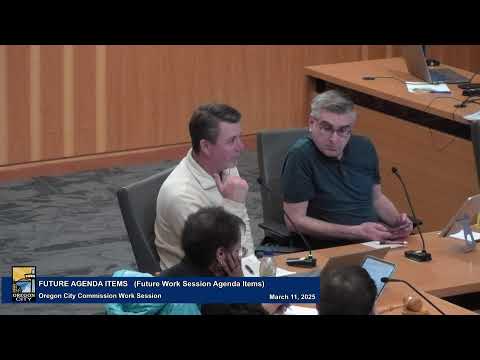
Representative Vanessa Hartman (District 40) provided a legislative update to the Oregon City Commission at its March 11 work session, summarizing bills and priorities she and colleagues are tracking in the 2025 session.
Hartman said legislators are watching a large package of bills this session — she noted 2,551 bills had been filed so far and that her office authored about 27 — and flagged a transportation funding package intended to stabilize maintenance, operations and safety funding and to prioritize unfinished projects from House Bill 2017 (2017). She said her office and colleagues are opposing new tolling proposals and are advocating for a comprehensive audit of the Oregon Department of Transportation (ODOT). "My office as usual is always going to be fighting against tolling and the implementation of tolling and calling for a comprehensive audit of ODOT," Hartman said.
Hartman said she was recently named chair of the House Early Childhood and Human Services Committee and identified employment‑related daycare (ERDC) as a priority. She said about 4,000 families are approved for ERDC stipend payments but remain on a wait list because they cannot be connected to providers; the committee will study infrastructure and zoning barriers and options to improve connections between families and childcare providers.
On housing and development, Hartman described several bills under consideration: a bill to allow System Development Charge (SDC) deferral for up to 180 days after a certificate of occupancy (a bill that died in the last long session but is being refiled), legislation intended to close a loophole in eviction law for so‑called squatters, and a bill to allow certain churches to pursue housing development on their property (including grants for predevelopment costs). She said some of the church‑housing proposals emerged from unincorporated Clackamas County stakeholders.
Hartman also discussed water and human‑services items. She identified a proposed state Low‑Income Water Ratepayer Assistance Program (LIHWAP; cited as House Bill 3527 in the presentation) intended to replace an ended federal program so families could avoid shutoffs and utilities would be reimbursed via state funding. She said House Bill 3497 would create a task force and state plan to prepare for a rapidly growing population aged 65 and older and that hearings are scheduled. Hartman said legislators are monitoring possible federal cuts to VOCA (Victims of Crime Act) funding and working to preserve victim services in the district.
Commissioners asked for clarifications during the update, including how the state would define a "major" utility rate increase that would require Public Utility Commission review. Hartman said negotiations are ongoing on that definition and offered to follow up with bill sponsors.
Hartman closed by offering to stay in contact with the city on district priorities and thanking commissioners for the opportunity to brief them.
Why it matters: The transportation and water funding proposals could affect local project schedules and municipal revenues; early‑childhood and human‑services legislation may affect service access for thousands of families in Clackamas County.
Next steps: Hartman and commissioners agreed to follow up on specific bills and definitions (notably the PUC authority on major utility rate increases and details on LIHWAP eligibility), and to share constituent input with bill sponsors where requested.