Get Full Government Meeting Transcripts, Videos, & Alerts Forever!
Get email alerts on the Land Use Zoning topic
No spam. Unsubscribe anytime.
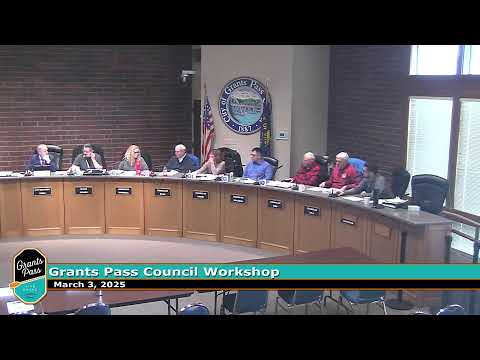
Council directs staff to draft code amendments raising allowed building heights in core areas
Summary
Planning staff proposed modest increases to maximum building heights and a height-buffer approach; council directed staff to draft a text amendment and hold a UAPC hearing.
City planning staff presented a proposal to increase maximum building heights in multiple zoning districts as a way to expand housing choices and support economic development in the city’s central areas.
Brad, a planning staff member who opened the presentation, said many of the city’s residential and commercial zoning districts currently carry a 35-foot maximum height that dates to mid-20th-century code limits. Associate planner Lori said the Central Business District already allows buildings up to 100 feet, and staff recommended modest increases elsewhere combined with a ‘height buffer’ — i.e., upper floors set back from property lines where higher structures abut lower-density residential zones — to preserve neighborhood compatibility.
Staff cited recent development requests that required variances — including a four-story hotel and a three-story medical facility — and argued that predictable code standards would reduce delays and costs for builders. Lori said modern building and fire-safety codes make taller structures feasible, and staff showed sample buffer and setback approaches to reduce shading and privacy impacts on adjacent residences.
Councilors asked about solar setbacks, streetscape impacts, emergency response and utility capacity. A City staff member from the fire department said the ladder truck can reach approximately 100 feet depending on setbacks and placement, noting that fire and building codes (international building code and the Oregon/International Fire Code) govern construction and fire-protection requirements. Staff said the city’s recently adopted solar setback rules would remain in force and act as an additional compatibility safeguard.
Councilor Victoria moved to direct staff to draft a text amendment and schedule a UAPC (planning commission) hearing; the motion received a second and passed by roll call vote with all seven council members recorded as voting in favor (Seth — yes; Rob — yes; Joel — yes; Eric — yes; Kathleen — yes; Rick — yes; Victoria — yes). Staff said the next step would be to prepare draft code language for the UAPC and return to council after the public process.
The discussion flagged trade-offs: staff emphasized that embedding reasonable height limits in code reduces uncertainty for developers and shortens permitting timelines, while councilors pressed for buffers, solar protections and review of infrastructure and emergency-response capacity before adoption.
Any final code change would come through the formal public-process steps (UAPC hearing, public notice and council consideration) and would not alter the state building code, which remains controlled by the state.