Get Full Government Meeting Transcripts, Videos, & Alerts Forever!
Get email alerts on the Parking Policy topic
No spam. Unsubscribe anytime.
City staff outlines state-mandated Climate Friendly & Equitable Communities rules; parking minimums questioned
Summary
City staff presented proposed local code changes to comply with the state's Climate Friendly and Equitable Communities program, including removing parking minimums within a half-mile of frequent transit and the regional center, new parking-area tree/solar requirements for large lots, and a 40% EV conduit requirement for multiunit developments.
City staff presented the State of Oregon’s Climate Friendly and Equitable Communities (CFEC) administrative rules and described options for Oregon City to comply, including prescriptive changes the city must adopt and several items where local choices remain.
The program comes from the Department of Land Conservation and Development and aims to reduce climate pollution by changing local parking and design rules. Staff said Oregon City must choose among several compliance routes; the option the city previously signaled it prefers would eliminate parking minimums within a half-mile of frequent transit and in the regional center, add parking-area design standards for large lots, and increase required EV-ready conduit for multiunit developments.
Staff explained key elements of the proposed compliance package: the city cannot require certain parking minimums for specific uses (smaller residential units, mixed-use development, schools and childcare, bars and taverns, historic buildings, small commercial projects and developments seeking LEED certification). Large new parking areas (over half an acre) would need trees, pedestrian connections and a 40% tree canopy/solar generation requirement or a fee-in-lieu option. Bike-parking requirements would increase and the city would be expected to provide public bike racks in the regional center.
On EV readiness, staff said the administrative rule requires conduit for charging at 40% of new spaces for certain multiunit projects, up from an earlier 20% requirement for some developments. Staff described shared parking, parklets and reduced barriers for redeveloping underused parking as part of the policy toolkit.
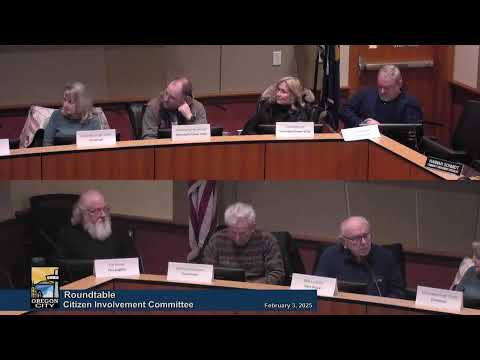
Residents and committee members asked about practical effects. Aquila, the presenter, noted developers would still be able to build parking but the city “cannot require any minimum parking within that half mile area.” Several attendees expressed concern that removing minimums could worsen neighborhood street parking and urged incentives or flexibility for developers to provide parking. Staff said the city will pursue outreach, including an open house on Monday, February 10 (6–7 p.m., LibKey Public Safety Building lobby) and a planned formal adoption process in March–May, funded in part by a DLCD grant that paid for a consultant.
The city staff requested feedback on specific choices — whether to allow a fee-in-lieu for tree/solar requirements (advisory committee recommended discouraging fees) and whether to set a citywide maximum consistent with the half-mile buffer maximums or allow different maximums outside the buffer. Staff also noted TriMet’s frequent-transit alignment influences the half-mile buffer and that any changes would be codified through the formal legislative process.
No final adoption occurred at the meeting; staff requested input and described the upcoming public open house and outreach process.