Get Full Government Meeting Transcripts, Videos, & Alerts Forever!
Get email alerts on the City Budget topic
No spam. Unsubscribe anytime.
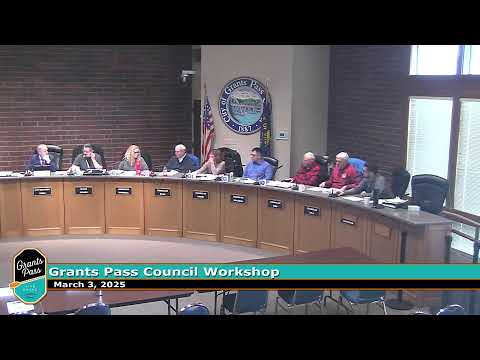
Grants Pass staff brief budget committee on structure, timelines and key constraints
Summary
City staff told the budget committee the municipal budget is a legal, balanced financial plan built on funds and fund types; committee meetings are set for May 13, 15 and 20 and the committee will receive the proposed budget 5–7 days before the first meeting.
City staff told the Grants Pass budget committee at a workshop that the municipal budget is a legal, balanced financial plan that gives the city authority to spend public dollars and must be adopted before expenditures occur.
The orientation, led by a staff presenter identified in the meeting as Aaron and finance director JC, walked committee members through the budget’s legal role, fund structure, accounting basis and schedule. Aaron said, “The budget for the city is a legal document. It's a key piece because it makes lawful appropriations that give the city the authority to spend public dollars.” JC described the accounting basis: “we use a modified accrual accounting … it recognizes revenues when they become available and measurable.”
The presenters explained the committee’s role: review, revise and approve the proposed budget before the City Council holds a public hearing and adopts the final budget. The committee consists of the eight city councilors and eight members of the public, and the committee must take public comment at each hearing. Staff told the committee the first budget meeting is scheduled for May 13, with follow-up meetings on May 15 and May 20; committee members will receive the recommended budget document roughly five to seven days before the first meeting.
Staff reviewed how the budget is organized by fund — general, enterprise (water/wastewater/stormwater), special revenue, capital project, debt service, internal service and fiduciary funds — and emphasized that restricted revenues must be spent in the fund for which they were collected. JC said the general fund’s largest revenue source is property tax and described the difference between program-generated and general support revenues.
Presenters also described longer-term policy context: the city’s permanent property tax rate (described in the presentation as the “4.13 per thousand permanent property tax rate”) and a longstanding public safety local option levy that staff said began at 85¢ per $1,000 of assessed value and had since risen to $1.79 per $1,000. Staff reviewed prior service-level reductions and a utility fee adopted for public safety and noted that contingencies, fund balance policies and reserve targets help protect creditworthiness and cash flow. JC pointed attendees to key pages of the published budget book for new members and said the full budget document is over 300 pages; staff provided a condensed packet for orientation and said the complete book is online.
Committee members asked procedural questions about receiving printed copies; staff said hard copies can be made available on request and reiterated the timeline that the recommended budget and supporting materials will be provided several days before the first hearing.
Staff framed the budget as a policy tool tied to the city’s strategic plan and capital budgeting process, and asked committee members to focus their review on proposed allocations back to council priorities. The session closed with staff offering to answer further questions ahead of the May meetings.
Looking ahead: the budget committee will nominate a chair and vice chair at the first meeting, adopt ground rules, receive the full proposed budget and hear department presentations as planned for the May schedule.