Get Full Government Meeting Transcripts, Videos, & Alerts Forever!
Get email alerts on the Diversity Equity Inclusion topic
No spam. Unsubscribe anytime.
Oconee County council adopts ordinance prohibiting county funding for DEI programs after heated public hearing
Summary
On March 4, 2025, Oconee County Council approved Ordinance 20 25-05, barring use of county funds for diversity, equity and inclusion initiatives. The public hearing drew extended comment from residents on both sides of DEI and related immigration enforcement concerns.
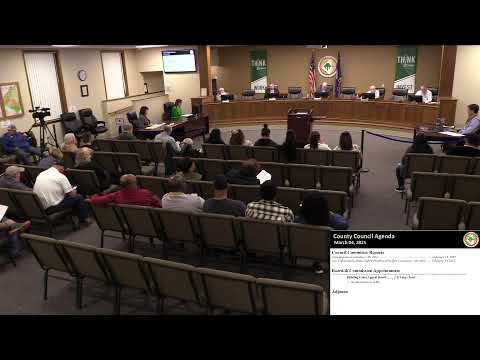
Oconee County Council on March 4, 2025 adopted Ordinance 20 25-05, prohibiting the use of county funds for diversity, equity and inclusion (DEI) initiatives. The ordinance passed on third and final reading after a public hearing that drew more than a dozen speakers representing views for and against the measure.
Supporters of the ordinance argued DEI policies promote division and can undermine merit-based hiring. Valerie McCarthy told the council, “It’s about control. It’s about deciding who gets ahead and who gets left behind based on identity rather than individual merit.” Similar concerns were voiced by several speakers who said DEI was unnecessary or had become politicized.
At the same time, multiple speakers urged the council not to ban DEI and cautioned about the broader effects of enforcement-focused immigration policies referenced by members of the public. Tracy Chapel, identifying herself as a retired psychology professor, said, “We need to do better. White people need to do better,” and framed DEI as a tool to address long-standing exclusion. Speakers offering research summaries described studies they said showed harms to children and communities when local agencies partner with federal immigration enforcement.
Members of the public also disputed how widespread DEI activity has been in Oconee County. Bruce Williams said there was no current county funding for DEI and called the ordinance a “politically motivated sideshow,” while Valerie McCarthy and others said the county previously funded a DEI position in the sheriff’s office and that local schools or municipalities had implemented trainings. Those factual claims were presented to the council during the hearing and were not independently adjudicated during the meeting.
After the public hearing, a motion to adopt the ordinance was made and seconded. The council voted in favor; the clerk recorded the result as a unanimous affirmative vote (5–0). The ordinance caption was read aloud prior to the vote.
The hearing included explicit reminders from the county attorney about public hearing procedure and time limits; the council temporarily set a four-minute limit per public commenter earlier in the meeting to allow all who signed up to speak.
The council did not receive new staff reports at the hearing that changed the ordinance language; speakers on both sides urged commissioners to consult constituents and review implementation implications. The meeting record includes multiple public comments tying DEI to local hiring, school training, and to broader debates about cooperation with federal immigration enforcement, but the ordinance text enacted by the council restricts only county fund use for DEI initiatives.