Lee County approves split increase to solid waste assessment after debate over $6.8M shortfall
Summary
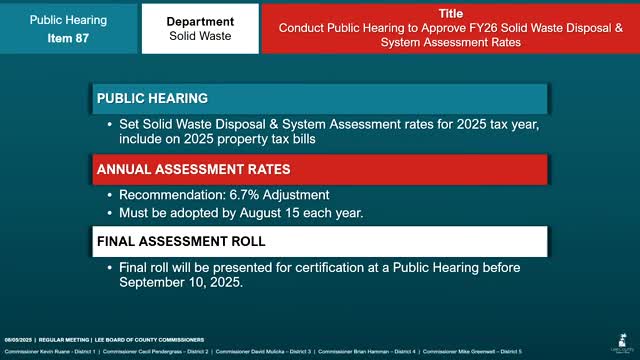
After a lengthy discussion about rising collection costs and reserve use, the Lee County Commission approved a two-year, phased assessment increase (12% option split over two years) aimed at closing a projected $6.8 million collection shortfall while protecting reserves and capital needs.
The Board of Lee County Commissioners voted 3–2 on Aug. 5 to adopt a phased increase in the county’s residential solid-waste assessment after more than an hour of questions and public comment about reserves, rate design and long-term landfill planning.
The adopted motion implements the board’s direction to pursue a 12% average assessment increase in two steps (a phased approach over two years) that staff said would reduce the department’s projected 2026 collection shortfall and move the collection side toward cost neutrality earlier than the glide path previously proposed. Staff estimated a 2026 shortfall of approximately $6.8 million under the lower-rate scenario; commissioners who supported the 12% split said the higher near-term adjustment would reduce reliance on enterprise reserves and free funds for capital projects such as recycling equipment and landfill life-extension work.
Rebecca Rodriguez, Lee County solid waste director, told commissioners that the 2026 shortfall on collection costs with the lower rate would be about $6.8 million, and that prior reserve draws had covered multi-million-dollar increases in collection contract costs in fiscal year 2023–24. Commissioners pressed staff for reserve balances and debt covenant implications; county finance staff reported total enterprise reserves of about $105 million but cautioned that a portion of those funds is designated for capital projects and storm recovery. Staff also noted the last solid-waste bond payment falls in 2026 and that a coverage covenant is 1.2.
Commissioners discussed alternatives including a larger immediate increase, a more gradual glide path and potential indexing mechanisms (CPI-based or predictable multi-year adjustments). Several commissioners argued for staggering the increase to avoid a single large rate shock for residents; others argued that the county should stop using reserves to cover recurring operating shortfalls.
Motion and vote: A motion (mover: Commissioner Mullica) to adopt the 12% combined option split over two years and to direct staff to return with a plan for routine increases (including possible CPI indexing) was seconded and carried 3–2. The board directed staff to return with additional details about reserve designations and a follow-up agenda item on whether an annual indexing approach should be adopted.
Public comment during the hearing stressed both sides: some residents said a higher rate would unfairly burden households and commercial customers; others, including commissioners, stressed the risk of depleting enterprise reserves needed for capital projects and recovery after storms.
Ending: Staff will finalize the assessment roll for the adopted rates and return to the board with detailed reserve accounting and a proposal for a policy to manage routine future rate adjustments.