Get Full Government Meeting Transcripts, Videos, & Alerts Forever!
Get email alerts on the Board Actions Roundup topic
No spam. Unsubscribe anytime.
Board approves construction guidelines, loans and educator testing option; other items cleared
Summary
At the same meeting the Board approved amended School Construction Assistance Program guidelines, four Literary Fund loans, two advisory‑committee nominees and the ETS Praxis Bridge alternative assessment option; staff also accepted proposed updates to the multi‑division online provider (MOP) process for first review.
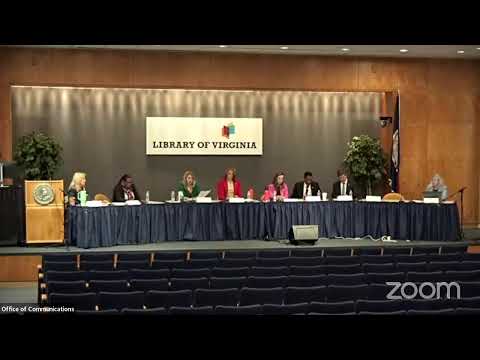
The Virginia Board of Education approved several consent and action items at its meeting in Richmond: amended School Construction Assistance Program (SCAP) guidelines for the 2024–2026 biennium, four Literary Fund loans for school construction and renovation projects, two nominations to an advisory committee, and adoption of ETS’s Praxis Bridge alternative assessment pathway for candidates narrowly below Praxis cut scores. The board also accepted proposed updates to the multi‑division online provider (MOP) process for first review.
SCAP guideline changes The board approved amendments to the School Construction Assistance Program guidelines. Staff said the revisions encourage flexible learning space concepts, permit blending and braiding of funds (including industry in‑kind contributions), remove age of building as a scoring criterion, require that schools funded by SCAP be scheduled to remain open for at least five years, and add application points for divisions that have not recently received awards. Christina Berta, the Department’s chief operations officer, presented the item and said webinars and technical assistance would follow to help divisions understand changes.
Literary Fund loans The board waived first review and approved four Literary Fund loan requests from school divisions: - Giles County: $12,000,475 loan, 30‑year term, 2% annual interest; project to renovate classrooms, replace modulars, upgrade elevator and safe‑school entrance at Macy McClarty Elementary School. - "Pennsylvania County" (as presented in the application): $8,228,000 loan, 18‑year term, 2% interest for John L. Hurt Elementary School HVAC, electrical and related work. - "Pennsylvania County" (second application): $7,018,000 loan, 18‑year term, 2% interest for Chatham Elementary School HVAC, windows and related work. - Culpeper County: $25,000,000 loan, 20‑year term, 3% interest to build a new 89,000‑square‑foot elementary school with capacity of approximately 650 students. The department said the loans are administered through the Literary Fund and must be repaid on approved schedules.
Advisory committee nominations The board approved two nominees to the Virginia Advisory Committee for Advanced Learning (VACAL): Christopher Tabey (region 6, employer/administrator) and Gail Staten (region 8, employee/administrator). The nominees were recommended by staff after an August committee review.
Praxis Bridge alternative assessment approved The board voted to waive first review and approve the Praxis Bridge alternative assessment option from ETS for candidates who scored within one standard error of the cut score on a Praxis exam. Under the program discussed and approved by the board, eligible candidates would complete targeted remediation and a limited reassessment on the specific areas where they fell short; meeting a defined threshold on that reassessment would satisfy the content test requirement. The board also authorized a one‑time notification to candidates who met the eligibility window during the prior three years. Board members said the option could reduce cost and retesting burdens for near‑passing candidates.
MOP process: first review accepted The Department presented proposed updates to the multi‑division online provider (MOP) process (originally adopted in 2010). Staff said revisions modernize application timelines, expand review committee expertise, require annual monitoring (rather than every three years), tighten provisional‑status procedures, and align MOP requirements to new legislation and accessibility expectations. The board accepted the MOP revisions for first review and staff said the department will return with any adjustments after further stakeholder input.
Votes and next steps All items listed above were moved, seconded and approved by roll call of members present. Department staff will publish guidance, finalize loan documents, provide technical webinars for SCAP applicants, notify eligible Praxis candidates, and continue stakeholder engagement on MOP changes.