Get Full Government Meeting Transcripts, Videos, & Alerts Forever!
Get email alerts on the Standards Of Quality topic
No spam. Unsubscribe anytime.
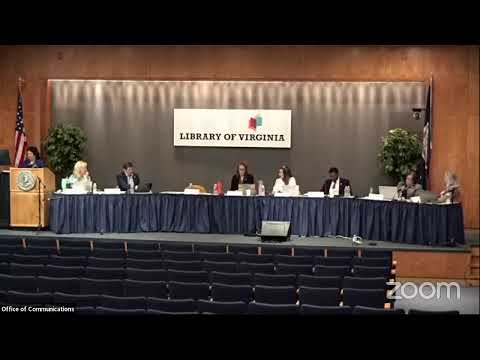
Board begins shaping Standards of Quality requests for 2026 General Assembly; discusses background checks, tutoring and lab‑school placement
Summary
Board and staff discussed possible Standards of Quality prescriptions for the 2026 General Assembly, including periodic rechecks for employee background screenings, codifying an all‑in tutoring model, targeting lab schools to underserved communities, and improving data systems and school construction metrics.
Board members and agency staff opened a discussion about potential changes to the Standards of Quality (SOQ) to recommend to the General Assembly for the 2026 session.
Melissa Velasquez, the department’s assistant superintendent for government relations, asked the board whether any prior 2023 prescriptions remain unaddressed and whether members wished to advance new prescriptions. Members offered several priorities.
Board members and staff discussed proposing periodic rechecks of employee background screens (fingerprint and child‑abuse registry checks) on a recurring basis, with one member suggesting a three‑ to five‑year recheck. Members also raised codifying the state’s “all‑in” student‑centered tutoring model that the department has been piloting and described as effective in improving outcomes.
On lab schools, board members asked that any expansion explicitly prioritize underserved communities and state‑designated schools rather than a broad regional placement alone. Several members discussed strengthening data systems so divisions and the department can access more timely, integrated data across pre‑K through postsecondary pipelines and reduce reliance on inconsistent platforms.
Board members also urged continued attention to school construction assistance metrics to ensure funding priorities do not unintentionally favor new construction that displaces or consolidates under‑served schools. The board asked staff to refine and return proposed language that could be forwarded to the governor and General Assembly.
Members raised related priorities including teacher‑pipeline innovations, educator residency programs, gifted‑and‑talented identification and support, and special‑education practitioner pathways. Staff said they would compile proposals and offer revised language for board review.