
Broward’s infill program nears 100 homes; 12 more units slated for nonprofit builders
Get AI-powered insights, summaries, and transcripts
Subscribe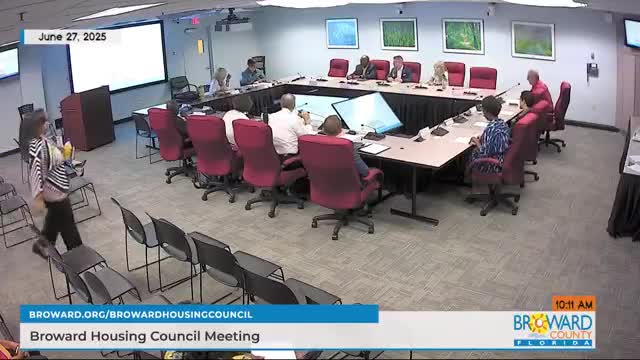
Summary
Ralph Stone described the county’s long-running infill homeownership program that turned vacant lots in the Broward Municipal Services District into housing for first‑time buyers; three nonprofits were awarded four lots each and are expected to produce 12 homes by next year.
Ralph Stone presented the Broward Municipal Services District infill homeownership program to the Broward Housing Council, describing its origins after the 2010 recession, the program’s housing product and an upcoming tranche of homes to push the program over 100 completed units.
Stone said the program began after the county identified nearly 100 vacant lots in the unincorporated Broward Municipal Services District (BMSD) that were dragging down neighborhoods; the county created an infill program for first‑time homebuyers that initially built roughly 20 homes and has since grown.
“We originally went out with the private side and then we did kind of a combo thing. But recently, we've done a nonprofit solicitation for the lots,” Stone said. He described awarding three nonprofit builders four lots each; those organizations are conducting predevelopment work and are expected to produce 12 new homeowners by about this time next year, after which the program should exceed 100 homes.
Stone described the county’s product standards: the homes are three bedrooms, two baths, with a two‑car garage, fenced backyard and a minimum of about 1,500 square feet. He said income eligibility for the units is generally capped at 120% of area median income (AMI), with gap financing targeted so roughly one of every four units will be at the 120% AMI level and the remaining units at about 80% AMI. Stone said Habitat for Humanity’s subsidy model can reach much lower incomes — he cited examples of homeowners at roughly 30% AMI through Habitat.
Stone said the program ran into a significant technical constraint when recently updated flood‑elevation requirements increased development costs; county staff, building and public‑works personnel worked for roughly a year to find options, and projects ultimately had to meet the new elevations, increasing costs.
Stone invited council members to a ribbon cutting when the next homeowners move in and welcomed questions about eligibility and differences among nonprofit builders’ models.
No formal action on the infill program was taken at the meeting. The council later approved routine minutes and conducted other agenda business.