Get Full Government Meeting Transcripts, Videos, & Alerts Forever!
Get email alerts on the Transportation Finance topic
No spam. Unsubscribe anytime.
Broward officials warn gas-tax buying power shrinking as county trims transportation work
Summary
County budget staff told commissioners gas-tax revenue has been effectively flat for years and, after inflation, buys far less; staff said the county is already prioritizing projects and maintaining safety-critical work while some "nice-to-have" items are being deferred.
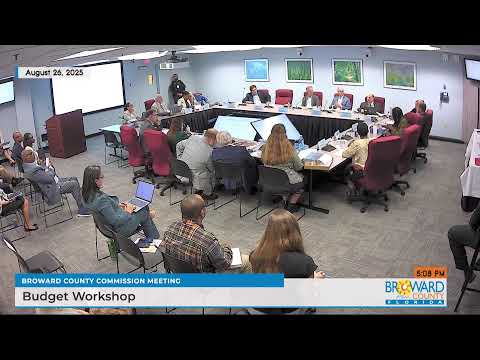
Broward County budget staff told commissioners Wednesday that constitutional and local gas-tax receipts have held roughly flat in recent years but, after inflation and rising construction costs, buy substantially less. That erosion in purchasing power has forced staff to prioritize critical bridge and roadway repairs and defer nonessential projects.
Sunjun Zanker, program manager for the Office of Management and Budget, presented the county's recommended five-year transportation capital program and said the county is budgeting a conservative gas-tax projection of $79.5 million for fiscal 2026 and holding that figure flat across the five‑year plan. Zanker said the gas-tax recurring revenue in the five‑year program totals roughly $378.5 million, with additional one‑time reserves and interest used to reach a five‑year program appropriation of about $446 million.
Zanker and county staff outlined how the gas tax is spent: constitutionally eligible road maintenance and highway/bridge programs, plus local-option revenue used for traffic engineering, bridge maintenance, transit operations and signalization. Staff also highlighted major projects already under way, including the Convention Center Bypass Road and several large bridge rehabilitation projects.
Commissioners pressed staff on two lines of concern: whether the county could trace declines in gas‑tax receipts to electric‑vehicle adoption and other mileage trends, and where cuts would occur if revenues fell further. Zanker said the county uses national vehicle‑miles‑traveled and EV‑penetration statistics to inform projections, but regional data are harder to obtain; he said staff monitors revenues monthly and have already prioritized projects based on criticality. County Administrator Monica Sapero told commissioners the county is not in "crisis mode" for life‑safety road needs and would bring forward warning and recommendations if critical infrastructure needed to be deferred.
What matters: county staff say gas tax revenue is stable in nominal terms but declining in real purchasing power; commissioners asked for inflation‑adjusted revenue charts and clearer project‑by‑project impacts if revenue drops further. Staff said those materials could be provided in follow‑up briefings.
Ending: Zanker and staff also noted that gas‑tax dollars support transit and equipment replacement and that projected interest earnings and one‑time reserves have been used to smooth the five‑year program. Commissioners signaled they want more detail — including inflation‑adjusted trends and specific project tradeoffs — before budget adoption hearings in September.