Get Full Government Meeting Transcripts, Videos, & Alerts Forever!
Get email alerts on the Grocery Tax topic
No spam. Unsubscribe anytime.
Council sets special order to consider local grocery tax after state repeal; staff warned of tight October deadline
Summary
City staff told the Evanston City Council on Aug. 25 that Illinois Public Act 103‑0781 eliminates the state grocery tax on Jan. 1, 2026 but allows municipalities to adopt a 1% local replacement; the council voted to place a special order of business on Sept. 8 to consider an ordinance.
City staff presented options Aug. 25 for replacing a state grocery tax that will be eliminated effective Jan. 1, 2026 under Public Act 103‑0781, and the council voted to add a special order of business on Sept. 8 to consider a local grocery tax ordinance. Finance staff said the city currently collects about $2.5 million annually from the grocery tax and that the Illinois Department of Revenue requires a community to adopt a 1% local tax (or 0%) and to submit certified ordinances by Oct. 1 to enable collection by the state.
Why it matters: Adopting a local grocery tax would largely preserve current revenue for the general fund. Staff said the tax’s burden is split between residents and nonresidents: “56% of grocery sales in Evanston come from non residents,” staff said, and some large grocery stores draw shoppers from outside the city. Staff estimated the average household impact at about $66 per year if the tax were applied to a household’s groceries exclusively within Evanston.
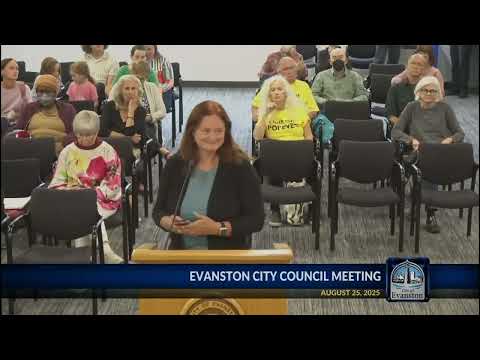
Council debate and positions: Dr. Therese Maguire, a Kellogg School professor who spoke during public comment, warned that retail sales taxes on groceries are regressive and described policy tradeoffs. Councilmembers split over options: several members said the grocery tax is the “least bad” alternative because it preserves revenue without placing the entire burden on Evanston property owners; others said the regressivity outweighed the revenue argument and suggested property‑tax or home‑rule sales tax alternatives.
Council action: Councilmember Newson moved—and the council adopted—a motion to create a special order of business for Sept. 8 to introduce an ordinance to adopt a local grocery tax; the motion passed 5–3. Staff warned the Oct. 1 submission deadline is tight, and that the council would need to introduce an ordinance at the Sept. 8 meeting and adopt it at the council’s second September meeting to meet the Department of Revenue timeline.
Alternatives discussed: Staff summarized other revenue options—raising the property‐tax levy (which would shift the entire burden to Evanston residents), increasing the home‑rule sales tax (which does not apply to groceries), or deeper spending cuts—and cautioned each alternative carries tradeoffs. Staff also noted SNAP purchases are not taxed, and presented peer comparisons showing many similar municipalities adopted local grocery taxes after the state change.
Next steps: The special order will place a grocery‑tax ordinance for introduction on Sept. 8; if the council pursues the tax, staff said it must return the certified ordinance to the state by Oct. 1 to preserve the city’s ability to collect the revenue locally after Jan. 1, 2026.