
Effingham County planners propose tighter rules, inspections and annual renewals for home occupations and residential businesses
Get AI-powered insights, summaries, and transcripts
Subscribe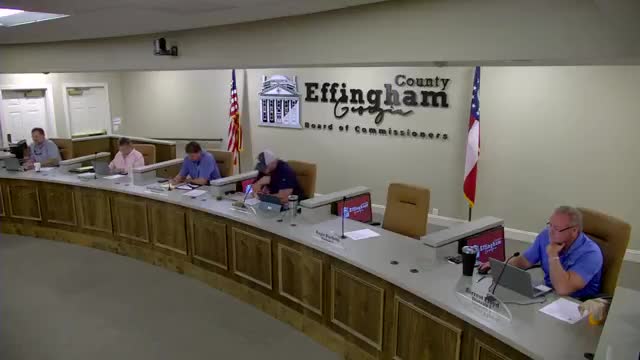
Summary
County planning staff presented draft changes to the home-occupation and residential-business sections of the zoning ordinance that add definitions, annual renewals, limits on activity and vehicle size, nuisance-based noise enforcement, inspection and appeal procedures and stronger penalties for hazardous-materials violations.
Effingham County planning staff presented updates to the county’s home-occupation and residential-business rules at an Aug. 14 zoning work session, proposing clearer definitions, annual renewals and new enforcement tools aimed at keeping low‑impact office uses in homes while limiting operations that could disrupt neighborhoods.
The draft separates a modest “home occupation” — largely administrative activity conducted inside a dwelling with no customers — from a more intensive “residential business” that can accommodate a nonresident worker or limited on‑site outdoor activities but would require conditional approval by the Board of Commissioners. Jennifer Rose, Planner I, told the commissioners the goal is “to create a clear, enforceable standard” distinguishing small‑scale home offices from uses that change a neighborhood’s character.
Why it matters: The changes are intended to allow residents to register small businesses without turning single‑family blocks into de facto commercial strips, while giving the county tools to address complaints such as noise, outdoor equipment, visible materials and hazardous waste.
Key proposals and limits - Home occupation: must be inside the principal dwelling or a code‑compliant accessory structure; work area limited to no more than 25% of heated floor area or 500 square feet, whichever is less. No customers or clients allowed on site for a home occupation. - Business vehicles and trailers: current one business vehicle limit (no greater than 1‑ton capacity) remains; draft adds allowance for one noncommercial utility trailer no larger than 5-by-8 feet that must be stored in a garage or rear yard and not display visible equipment. - Deliveries: staff removed a strict numeric cap on daily deliveries because of enforcement impracticalities (staff noted parcel carriers’ variable routes) but preserved the restriction that delivery vehicles be small passenger‑type vehicles or light two‑axle trucks. - Noise, nuisance and hours: the draft moves noise enforcement to a nuisance standard tied to the county noise ordinance rather than an absolute “no noise” rule. Proposed hours for business operations in residential business cases are limited (staff proposed 7 a.m.–7 p.m. weekdays, Saturday 9 a.m.–5 p.m., no Sunday business activity without board approval). - Renewals and inspections: home‑occupation approvals would require annual renewal linked to the county business license; residential businesses require an annual conditional‑use renewal. County agents would have authority for periodic and unannounced site inspections. - Enforcement and penalties: the draft adds an enforcement and appeal section permitting warnings, fines, suspension and revocation of approvals. Hazardous‑materials violations would carry a zero‑tolerance result: mandatory revocation of a conditional‑use permit and a 12–24 month bar on reapplication in serious cases, staff said.
What remained enforcement‑focused Tim (staff) said enforcement would start with warnings and citations and could escalate to magistrate action for fines; he described stop‑work orders and permit revocation as tools for severe or ongoing noncompliance. Staff also proposed surveillance and time‑stamped photographic requirements for parking areas on county inspection demand.
Outdoor activities and daycare For residential businesses, the draft allows limited outdoor activity — for example a screened rear‑yard play area for a small home daycare — only as a conditional approval by the Board of Commissioners, subject to maximum size, setbacks, screening and noise limits.
Appeals and review The zoning administrator would handle initial approvals at the staff level for home occupations, with an appeal route to the board for denials; residential businesses would require conditional‑use approval by the board and would be subject to annual renewal and appeal procedures.
Quotes "The objective here is just to create a clear enforceable standard between the home occupation from what is current to what is going to be proposed," Jennifer Rose, Planner I, said while presenting the changes. "You can never do anything that violates the noise ordinance," Tim (staff) said in describing a switch from an absolute noise ban to a nuisance standard tied to decibel‑based rules.
Next steps and context Staff said the draft will be posted with the packet for the upcoming meeting and that revisions discussed at the workshop — including clarifying definitions of employee, delivery standards and how open‑yard uses would be conditioned — would be included before the commissioners consider adoption. There were no formal votes recorded during the workshop on the draft language.
Ending Commissioners and staff said the revisions are intended to strike a balance: allow low‑impact home administrative uses while giving the county clearer, enforceable standards and inspection authority if operations become disruptive or hazardous.