Citizen Portal

Senate Armed Services Committee questions General Mahoney on acquisitions, drones, spectrum and domestic troop use

5752718 · September 11, 2025

Get AI-powered insights, summaries, and transcripts

Subscribe
AI-Generated Content: All content on this page was generated by AI to highlight key points from the meeting. For complete details and context, we recommend watching the full video. so we can fix them.

Summary

General Christopher J. Mahoney, the president's nominee to be vice chairman of the Joint Chiefs of Staff, told the Senate Armed Services Committee on Sept. 11 that he would “adhere to my oath to the Constitution” and comply with legal and congressional oversight while answering sustained questioning on acquisition reform, autonomous systems and the domestic use of U.S. forces.

General Christopher J. Mahoney, the president's nominee to be vice chairman of the Joint Chiefs of Staff, told the Senate Armed Services Committee on Sept. 11 that he would “adhere to my oath to the Constitution” and comply with legal and congressional oversight while answering sustained questioning on acquisition reform, autonomous systems and the domestic use of U.S. forces.

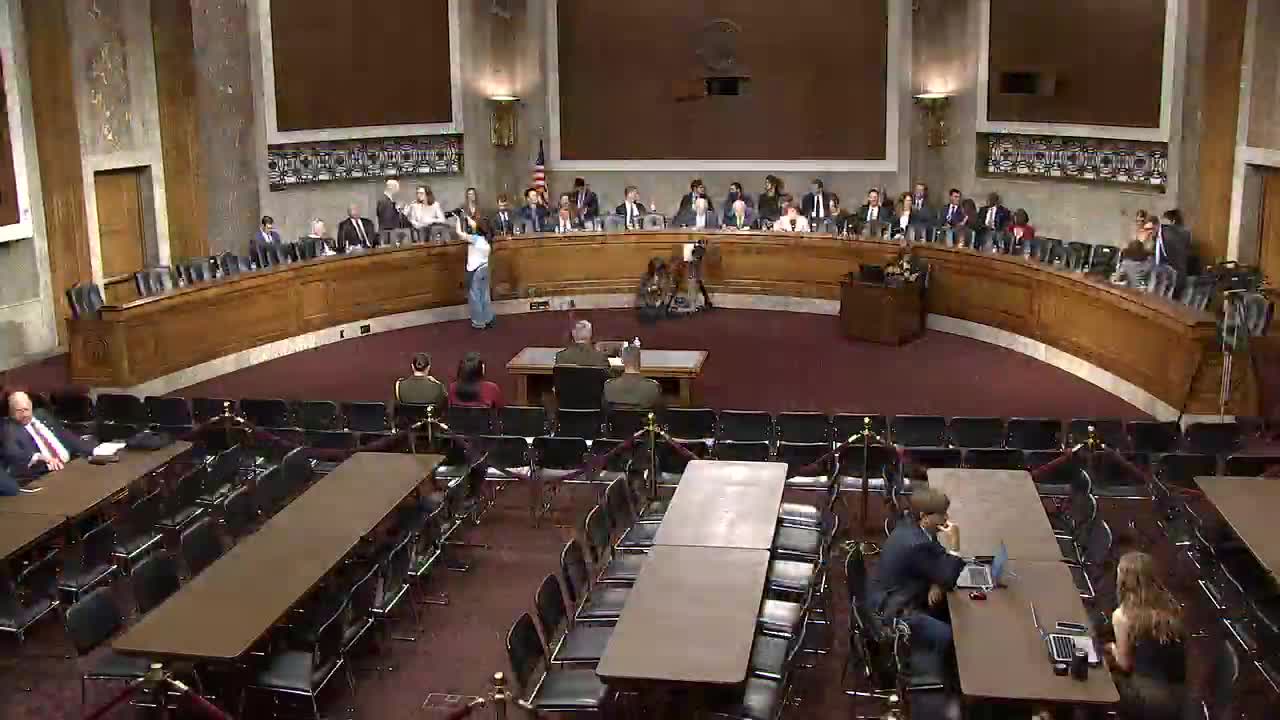
The hearing, held on the anniversary of the Sept. 11 attacks and opened with a moment of silence by the committee, focused on how the vice chairman would lead the Joint Requirements Oversight Council (JROC), accelerate procurement and advise civilian leaders about deployments and operations. Senators pressed Mahoney for commitments on candor to Congress, timeliness in document production and coordination on requirements that tie to industry capacity and readiness.

Why it matters: The vice chairman chairs the JROC and helps set requirements that drive billions in defense purchases. Senators said the current requirements-to-approval cycle—cited at about 800 days in committee remarks—slows fielding and risks leaving warfighters without timely, affordable options. Lawmakers also raised concerns that recent administration actions have politicized the military and used forces for domestic operations, which several senators said could harm readiness and civil-military norms.

Opening statements and central questions

Sen. Roger Wicker, chairman of the Senate Armed Services Committee, framed the hearing around threats from China, Russia and transnational criminal networks and said the Pentagon needs a sustained budget and acquisition reform to keep pace. Ranking member Sen. Jack Reed criticized what he called “politicize[ation] of the military,” listed a series of recent personnel actions and cited a recent strike off Venezuela that he said lacked public legal justification.

Reed said, “This was a premeditated use of lethal force carried out without congressional authorization, without clear legal justification, and without evidence of an imminent threat. I have yet to see any intelligence, legal rationale, or orders related to this attack.”

Mahoney's commitments and priorities

In his opening remarks and answers, General Mahoney emphasized joint integration, modernization and speeding acquisition. He told senators he agreed with reforms to move JROC from a paperwork-focused approval body toward designing the future force and endorsed an “end to end” reform across requirements, acquisition and resources. On Congressional oversight, he repeatedly answered in the affirmative to procedural questions about cooperation and timely production of documents and briefings.

On civil-military questions, Mahoney said multiple times he would follow the law and his oath. Asked directly whether he would advise against illegal domestic orders, he answered, “I will adhere to my oath to the Constitution,” and said he would speak out if an order conflicted with that oath.

Acquisition, JROC and industrial base

Senators pressed Mahoney about the Joint Requirements Oversight Council and the backlog in approving requirements. Committee remarks cited a 2021 Government Accountability Office report and referenced statutory and legislative efforts in the FY 2026 National Defense Authorization Act and the so-called forged act to streamline the process. Mahoney said he would continue reforms begun by his predecessor, seek best practices from prior PPBE and JCIDS reviews, and emphasize synchronizing requirements, acquisition and resources so the three operate as a system rather than separate pillars.

Several senators and the nominee discussed concrete reforms: shortening approval timelines, lowering barriers for nontraditional vendors, and accepting iterative, fieldable “80% solutions” faster rather than “gold-plated” systems that take years to deliver.

Autonomy, drones and logistics

Senators asked about attritable autonomous systems and the full lifecycle cost of fielding large numbers of drones, including flyaway, storage, maintenance and environmental protection. Mahoney said the department must “fully encumber” logistics and cyber costs when scaling autonomous systems and accelerate work on storage and sustainment so programs remain affordable in operation.

Spectrum, electronic warfare and cyber

Lawmakers emphasized the importance of the electromagnetic spectrum and electronic warfare for operations in the Western Pacific. Senators cited concern about relocating military systems from the 3.1–3.45 GHz band and the 7–8 GHz bands to shared or commercial spectrum, warning of degraded capability if those bands are vacated or shared suboptimally. Mahoney acknowledged extensive capabilities operate in those bands and said spectrum, cyber hardening and integrating cyber protections into program cost estimates must be treated as integral parts of requirements.

Readiness, force posture and allied cooperation

Members raised readiness shortfalls in naval amphibious forces and the impact of near-term deployments to the Caribbean and other regions. Senators also asked Mahoney how he would prioritize presence in Europe, the Indo-Pacific and the Middle East; he repeatedly described presence with allies as essential and said he would seek to align requirements and resources to meet the “most dangerous and most likely” scenarios.

Senators also discussed AUKUS, Northern Strike exercises, modernization of NC3 (command, control, communications, computers, and intelligence for nuclear forces), and advanced manufacturing technologies such as high-pressure cold spray for forward repair; Mahoney committed to advocate for those capabilities where he can influence decisions.

Domestic use of forces and civil-military boundaries

Multiple senators pressed Mahoney about the administration's recent use of uniformed forces for domestic missions and deployments to U.S. cities. Lawmakers including Sens. Tammy Duckworth, Elizabeth Warren and others sought assurances that the military would not be used for domestic law enforcement in ways that violate statutes such as the Posse Comitatus Act. Mahoney responded that he would “comply with the law” and said he could not imagine a situation in which he would advise violating civil rights or the Constitution.

Key figures and details cited at the hearing

- Committee discussion cited an 800‑day average for JROC approval timelines. - Chairman Wicker said the president signed deals totaling $2,000,000,000,000 during a May trip to the Gulf (described in committee remarks as roughly $2 trillion). - Senators described an amphibious squadron deployed to the Caribbean that included roughly 4,500 marines and sailors, three destroyers and other assets.

Procedural note

The committee set a deadline for questions for the record: responses are due by 12 p.m. Friday, according to the hearing record. The transcript concluded with the chair adjourning the hearing.

What remains unresolved

Lawmakers asked for follow-up on several topics Mahoney said he would return to if confirmed: implementing JROC reform and the replacement for JCIDS, specific spectrum and range authorities needed for realistic multi-domain training, and the department's plan to execute reconciliation funding included in pending legislation. Mahoney pledged to provide briefings and additional details to the committee.

Ending

The hearing highlighted bipartisan concern about acquisition speed, spectrum and readiness, together with deep unease among many senators about using active-duty forces for domestic law enforcement. General Mahoney received extensive questioning on those subjects and pledged to work with the committee, comply with legal obligations and provide candid military advice if confirmed.