Lifetime Citizen Portal Access — AI Briefings, Alerts & Unlimited Follows
Industry warns ISS reductions and launch-capacity limits could slow U.S. microgravity biotech and commercial LEO transition
Loading...
Summary
Witnesses told senators that proposed program cuts and launch infrastructure constraints risked reducing U.S. crew on the ISS and stalling microgravity manufacturing gains; Redwire highlighted medical and pharmaceutical research aboard the station.
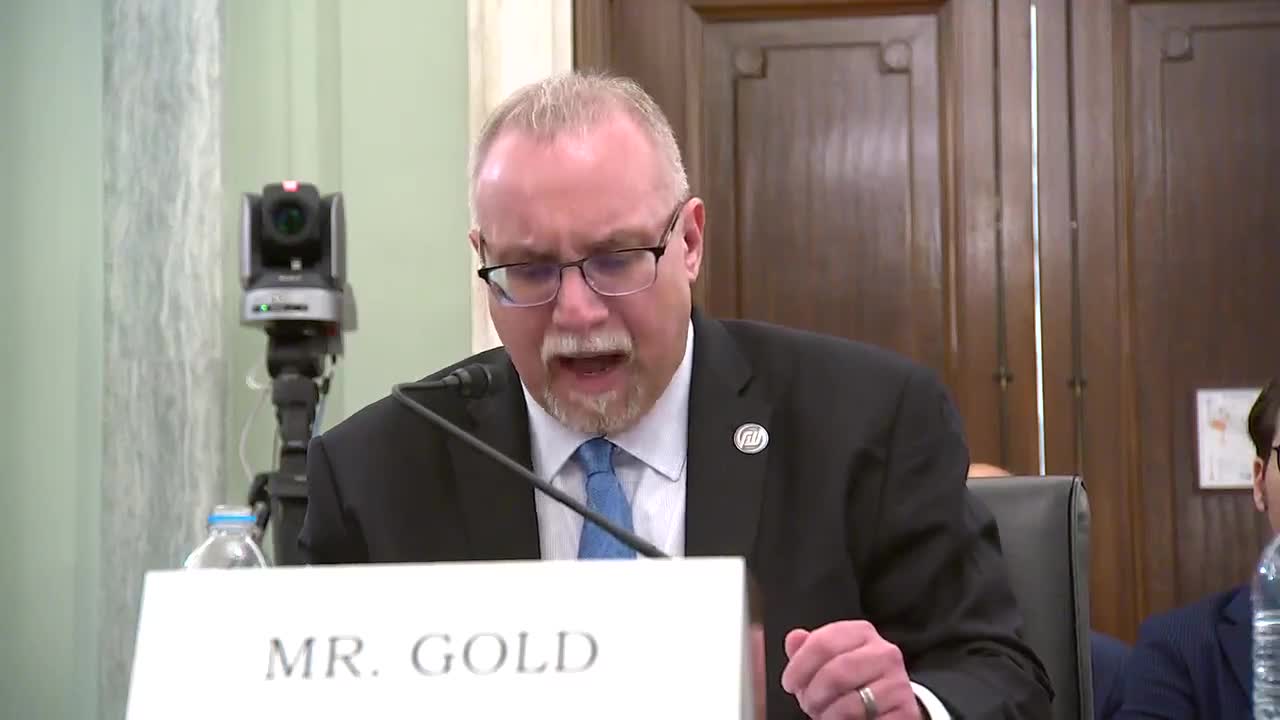
Industry witnesses and former NASA officials told the Senate Commerce Committee that continued operations in low Earth orbit (LEO) and predictable funding are critical to sustain emerging commercial microgravity industries. Michael Gold of Redwire said that without the funding and directive of recent congressional action, "we run the risk of reducing the number of American astronauts on the ISS from 4 to 3, and then down to 2." He added that such reductions would diminish U.S. presence in LEO and risk commercial and scientific momentum.
Gold described Redwire work on microgravity manufacturing, including printing human meniscal tissue and cardiovascular tissue on the International Space Station, and said the company flew a system that has developed larger, more uniform seed crystals for pharmaceuticals. "We've demonstrated how larger and more uniform seed crystals ... lead to the development of enhanced pharmaceuticals with better efficacy, longevity, and fewer side effects," he said. Jim Bridenstine echoed the significance of microgravity research for regenerative medicine and drug development.
Senators also questioned launch capacity and infrastructure. Bridenstine and others said heavy launch cadence for Starship could strain coastal launch infrastructure and that additional inland launch capacity or distributed sites will be needed to meet a high-launch future. Bridenstine estimated potential strain from hundreds of large launches per year if the architecture relies heavily on a single heavy launcher.
Why it matters: Witnesses tied research and commercial benefits — from advanced pharmaceuticals to organ printing — to a sustained human presence in LEO. Committee members and witnesses warned that funding uncertainty and launch bottlenecks could shift microgravity innovation and its economic benefits overseas.