Get Full Government Meeting Transcripts, Videos, & Alerts Forever!
Get email alerts on the Student Privacy And Accommodations topic
No spam. Unsubscribe anytime.
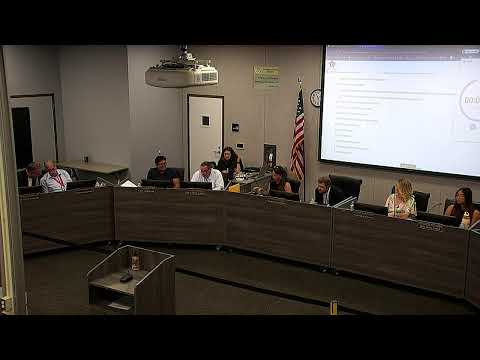
TVUSD delays vote on policy for locker‑room accommodations after hours of public comment
Summary
The board postponed action to Sept. 9 on a proposed policy that would allow religious and mental‑health accommodations for students who want privacy in shared sex‑segregated facilities, after extended legal briefing and dozens of public commenters urged changes or expressed opposition.
The Temecula Valley Unified School District Board of Education on Aug. 26 moved to postpone consideration of a proposed policy addressing religious and mental‑health accommodations for students who request privacy in shared sex‑segregated facilities, including locker rooms and changing areas.
Board President Melinda Anderson introduced a draft board policy that would allow two categories of accommodations — religious and mental‑health — to give students an option to not change in a shared facility without forcing district staff to disclose the reason for an accommodation in a student’s permanent record. Anderson said the intent was to offer privacy options for all students, religious or not.
Why it mattered: The item attracted extended public comment and legal briefing because it touches three competing concerns: existing state law that allows students to use facilities consistent with gender identity (cited in the meeting as Education Code 221.5 / AB 1266), parents’ demands for single‑sex privacy options, and the district’s statutory obligations under federal privacy rules (FERPA). Legal counsel warned that unilateral disclosure to parents or excluding students could create legal risk for the district.
What the board heard Board members heard legal summaries from district counsel Bill Diedrich and outside counsel Tony DeMarco. Counsel said California law permits students to use facilities consistent with gender identity and that school records related to accommodations are treated as confidential under FERPA and related privacy protections. Counsel also said the legal landscape is evolving and that future court decisions could require revisions.
Public comment was extensive. Speakers included students who said they felt unsafe changing in front of someone of the opposite biological sex, parents who urged stronger privacy protections for girls, community members who called the mental‑health exemption stigmatizing, and other speakers who urged the board to follow state law and avoid litigation. Several students and parents asked for a neutral “privacy” accommodation rather than language that frames privacy as a religious or mental‑health matter.
Board action and next steps After discussion and public comment the board voted to postpone action and return the item Sept. 9 for further consideration. Trustee Veil Barham moved to postpone; trustees agreed to bring a refined privacy option back to the board. Trustees said they want additional legal analysis and edits that clarify confidentiality protections so accommodations are not placed in permanent records and to consider rewording the draft to avoid stigmatizing students.
The board’s decision leaves the district without a new uniform policy for accommodations; staff and counsel will prepare revisions and a legal memo for the September meeting.