Get Full Government Meeting Transcripts, Videos, & Alerts Forever!
Get email alerts on the Native Landscaping topic
No spam. Unsubscribe anytime.
Residents urge city to allow native terrace plantings, raise permethrin-spraying concerns
Summary
Public commenters told the Kankakee ordinance committee that native plantings in terrace strips follow city landscape rules, help pollinators and stormwater infiltration, and warned that city permethrin spraying may be harming wildlife and water quality; committee legal staff will prepare materials and the item will return to next month's agenda.
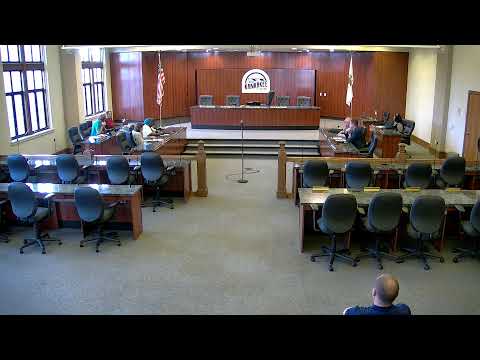
Residents told the Kankakee ordinance committee that native plantings in terrace strips comply with the city's landscape code and help pollinators and stormwater infiltration, and several speakers also urged the city to stop spraying the insecticide permethrin near waterways.
Committee context: The comments came during public comment at a Kankakee ordinance committee meeting, where residents described planting native species in the terrace (the strip between the sidewalk and curb) and said they had followed Chapter 38's landscaping provisions and code exceptions for plantings around trees and driveway aprons.
Why it matters: Speakers said terrace plantings reduce stormwater runoff, create pollinator habitat and may help water quality in the Kankakee River watershed. They also raised concerns about permethrin use and whether the city's spraying practices follow state and federal guidance.
Resident Nathan Aldrich said he and others intentionally planted native species in the terrace near his driveway apron and that they “bought a pollinator pack and a rain garden kit to help out the water quality.” Aldrich told the committee he had completed a Monarch Waystation certification for the site and said the plantings were intended to “purify[] the water before it enters the stream, the rivers.”
Aldrich said he reviewed the city code and cited “chapter 38 landscape ordinance” and a provision he identified as “Section 38 0 2 a” as the basis for his work. He also said Illinois lawmakers recently passed a law prohibiting bans on native landscaping and referenced a state Pesticide Application on Rights of Way Notification Act that requires notification when rights-of-way are sprayed.
Science educator Michael Matthews told the committee his 20 years in biology education and restoration work informed his concerns about invasive species and about the community needing more education and coordinated planning. “If we don't understand what's going on, it really it makes it difficult to make decisions,” Matthews said, offering to work with city staff and the Park District.
Ryan Curtis, who described himself as a yard owner and advocate for rewilding, read a passage endorsing a grassroots approach to native plantings and urged neighbors to persist despite criticism from others.
Speakers also raised technical concerns about the city's use of permethrin. Aldrich said the city had sprayed near the river during conditions he said violated manufacturer and federal guidance, and he cited a 450-foot buffer and a wind-speed limit of 15 miles per hour that should be observed. He provided a permethrin safety data sheet (MSDS) and told the committee he had documented instances when spraying occurred in windy conditions.
Committee response and next steps: A committee member told the meeting that legal staff is preparing a PowerPoint and that the committee would put the terrace/native-planting issue on next month's agenda for fuller discussion and possible follow-up. No ordinance or code change was approved at the meeting.
The committee also discussed related neighborhood concerns — sight-line and safety at intersections, rodents and obstructed driveways — and members said any enforcement or rule changes would be handled on a case-by-case basis or require an amendment to the municipal code.
Ending: The committee scheduled further review; legal staff and the ordinance committee will present options at the next meeting so members can consider whether to recommend a code amendment, a notification policy for pesticide spraying, or other measures.