Get Full Government Meeting Transcripts, Videos, & Alerts Forever!
Get email alerts on the Solid Waste Services topic
No spam. Unsubscribe anytime.
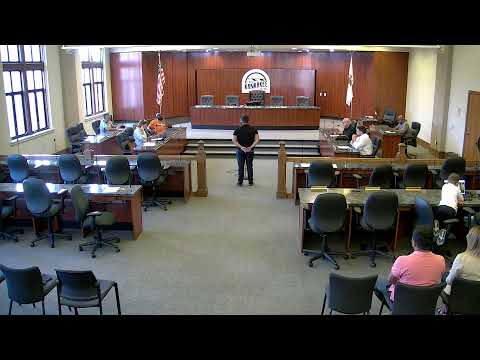
Kankakee aldermen direct staff to draft trash contract RFP with recycling alternatives
Summary
At a Sept. 4 committee meeting, Kankakee aldermen discussed options for the city's expiring trash contract and asked staff to prepare a request for proposals that includes alternates for curbside recycling, central drop-off locations, dumpster provisions and community-benefit credit for alley repairs.
KANKAKEE, Ill. (Sept. 4, 2025) City aldermen asked staff on Sept. 4 to prepare a request for proposals for the city's trash collection contract, which staff said expires Dec. 31, and to include alternate price scenarios for curbside recycling, centralized recycling drop-off sites, free dumpsters and community-benefit allowances for alley repairs.
The move follows conversations with Republic Services and other providers about the rising cost of recycling collection and growing truck sizes that aldermen said are damaging alleys. "This contract expires December 31," the City Manager said during the meeting, explaining why the city needs to get an RFP out before the holiday season.
Why it matters: the city's current contract includes provisions staff described as an annual escalation and covers curbside recycling, bulk pickups and free community dumpsters. Officials said recycling markets have changed and that high contamination rates drive costs: "It's well north of, like, 80% of our recycling in the city of Kankakee is contaminated," the Mayor said. Those operational and market changes affect how many trucks are needed, the wear on alleys and the per-household price for service.
What aldermen asked staff to include in the RFP: officials generally agreed the solicitation should offer multiple scenarios so the council can evaluate trade-offs rather than only solicit the lowest bid. Staff were asked to include (as line items or alternates) the following: continued curbside recycling vs. eliminating curbside recycling and instead providing several centralized drop-off locations (committee members suggested three to four sites), a pricing line for an opt-in recycling pickup for homeowners, the annual number of free community dumpsters, an annual community-benefit allowance (for alley repairs or beautification), specification of bulk-item pickup frequency (weekly as currently required, and a biweekly alternate), and an alternate proposal that would allow bidders to propose smaller trucks or a smaller-truck alternate.
Committee members also discussed how to structure bids so they are comparable: staff said the RFP should request apples-to-apples pricing and a breakdown of community benefits, free-dumpster counts and any capital investments bidders propose. Staff said they will score proposals on service and community benefit rather than selecting only the low bid.
Concerns and trade-offs: aldermen raised several operational and equity questions. Some said eliminating curbside recycling would anger residents who recycle responsibly; others argued that very high contamination rates mean curbside recycling currently goes to landfill anyway and creates cost pressure. Multiple aldermen raised complaints about truck turning damage to recently repaved alleys and said the city should seek either smaller vehicles for tight streets or funds to repair damaged alleys. One alderman noted that electric trucks are heavier than conventional trucks and could increase pavement stress.
Housing and billing impacts: the committee discussed how multiunit properties are classified for service. Under current city ordinance practice described at the meeting, many multiunit buildings are treated as "businesses" for trash service and may contract privately; changing that definition would be an ordinance matter and could reduce or increase the number of addresses covered by a citywide contract, with a potential effect on unit pricing. Staff said the city has historical mapping and rental-license data they can pull to show how many 2-, 3- and 4-unit properties exist and how that would affect bid pricing.
Timeline and next steps: staff told the committee they would assemble an RFP and return with a draft for the committee to review. Staff said they aim to have a proposal ready by the end of the month to give bidders roughly a 30-day turnaround and anticipated receiving bids by Nov. 1, though they warned there is a risk of receiving few or no proposals because local trash hauling is concentrated among a small number of providers.
Decisions vs. discussion: the committee did not adopt final contract terms or award a contract at the meeting. Members approved a procedural motion earlier in the agenda to reorder items and otherwise reached consensus to proceed with an RFP that includes alternates for curbside vs. centralized recycling, dumpster and community-benefit line items, and bulk-pickup frequency options.
What remains unresolved: the committee did not set the exact number of centralized recycling sites, the dollar amounts for community-benefit funds, or the precise bulk-item frequency; those details will be in the RFP and brought back for committee scoring. The committee also did not amend the city's ordinance on how multiunit buildings are classified; several aldermen said that would require a separate ordinance committee discussion.
Ending note: staff advised that if bids are scarce, the city may need to reconsider specifications; aldermen said they prefer to see multiple pricing scenarios so the council can weigh costs and community impacts before making a final decision.