Get Full Government Meeting Transcripts, Videos, & Alerts Forever!
Get email alerts on the Pprt And Pension Funding topic
No spam. Unsubscribe anytime.
Committee debates earmarking PPRT for pensions and a potential library claim; legal review requested
Summary
City legal and finance staff told the Finance & Budget Committee that PPRT receipts could legally be placed in escrow but that doing so would be a policy choice with tradeoffs; staff were asked to confirm whether a component‑library claim exists under the 1978 law.
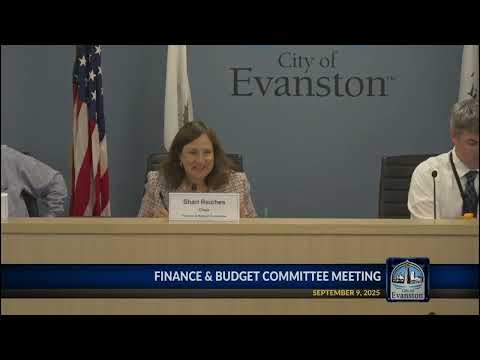
Finance staff and the city corporation counsel briefed the Finance & Budget Committee on whether Personal Property Replacement Tax (PPRT) receipts may be placed in escrow or otherwise designated to cover pension obligations and whether the Evanston library is legally entitled to a portion of PPRT under the Library Tax Act of 1978.
Alexandra Ruggie, corporation counsel, told the committee that tax liabilities tied to 1978 levies must be honored first and that PPRT money “can be placed in escrow” from a legal standpoint, but she emphasized that the question is primarily a policy decision for the city. Ruggie also said she was still confirming whether the library qualifies under the library‑tax provisions that would require a statutory allocation; staff reported an initial historic review indicating a roughly 10% library share in the 1978 levy records, and counsel said she would confirm whether statutory conditions were met.
Finance director Hitesh Clayton explained the fiscal trade‑offs: placing PPRT into an escrow or designating it for pensions would remove that revenue from the general fund and reduce the city’s flexible operating cash, which is already strained. Clayton also reported that in recent years the city used various one‑time receipts (including Northwestern stadium and academic building permit revenues) to supplement reserves; without those receipts the city’s excess reserves would be materially smaller.
Committee discussion focused on policy tradeoffs and procedural options. Some members favored a formal, binding approach to ensure future pension contributions (for example, converting the existing pension policy into an ordinance). Others argued that designating PPRT to pensions is only a partial and declining revenue stream and that locked designations could worsen general‑fund shortfalls unless alternative revenues are found. Committee member McMillan asked for legal clarification about whether the library is entitled to a PPRT share; Ruggie said the city would confirm the library’s legal status under the 1978 statute.
At the meeting the committee voted to defer the PPRT referral for further legal review and to permit additional staff analysis: one member moved to “cable” (table) the matter until a later date, the motion was seconded and the committee approved tabling the referral for further study. The committee also requested that city legal staff analyze the implications of converting the pension policy into an ordinance to determine whether additional legal authority or constraints would apply.
Ending: The committee did not adopt a formal escrow or earmark at the meeting; instead, it asked corporation counsel to confirm whether any PPRT share must go to the library under 1978 law and requested further legal and fiscal analysis before making a policy change.