Get Full Government Meeting Transcripts, Videos, & Alerts Forever!
Get email alerts on the Property Tax Circuit Breaker topic
No spam. Unsubscribe anytime.
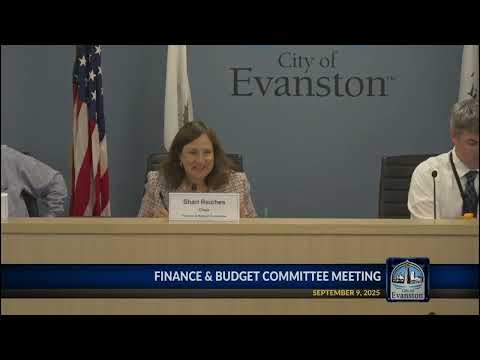
Evanston committee hears broad support for local property-tax circuit breaker; Cook County assessor outlines state bills
Summary
Supporters of a proposed Evanston property‑tax circuit breaker told the Finance & Budget Committee the program could help longtime homeowners and renters remain in the city as taxes and rents rise.
Supporters of a proposed Evanston property-tax “circuit breaker” told the Finance & Budget Committee on multiple occasions that the program would help longtime residents remain in their homes despite rising property taxes and rents, and urged the city to pursue a local pilot while a statewide bill moves through Springfield.
The proposal drew public-comment support from residents and advocates including Malika Gardner, Tricia Connolly, Mary Rosinski, Isaiah White and Meg Welch, and a presentation from James Mendez, director of policy at the Cook County assessor’s office. Mendez described pending state legislation and a Cook County approach and answered technical questions about eligibility, benefits and program duration.
The circuit breaker concept is designed to offset tax burden for households with limited incomes. In public comment, Malika Gardner, a community organizer, said the program “is a lifeline for working families and seniors who are being priced out of our … Evanston” and argued the plan “does not burden other taxpayers.” Isaiah White, a Cook County Board candidate, told the committee the proposal “makes a strike toward equity” for renters because property-tax increases are passed through in rent. Several other speakers urged the committee to advance the idea promptly, saying residents need relief now.
Mendez said the Cook County assessor’s office has drafted companion statewide bills — House Bill 3808 and Senate Bill 1978 — and that his office supports circuit-breaker programs. He described the county’s proposal as homeowner-targeted and means-tested: it would use an annual household-income threshold (he cited $100,000 as an example) plus a percentage spike in an owner’s tax bill (he described a 25% or larger increase from the prior reassessment as the eligibility trigger). “We support circuit breakers,” Mendez said, and identified HB3808 (House sponsor: Representative Justice Slaughter) and SB1978 (Senate sponsor: Senator Patrick Joyce) as the draft measures the assessor’s office has promoted to Springfield.
Mendez said the county’s program would verify incomes through an intergovernmental agreement with the Illinois Department of Revenue, that the proposed state appropriation was initially $200 million, and that a benefit design in the assessor’s office model would reduce about half of an identified spike for eligible homeowners. He also said eligibility would not be limited by age and that participation would be reviewed after three years in most cases. “We reassess tri‑annually,” he said, describing how reassessments affect ongoing eligibility.
Committee members asked about details the county proposal leaves flexible. Council member Claire Kelly — a local sponsor of the Evanston proposal — said the city should consider a local pilot while recognizing the state effort could take years. Members pressed Mendez on household income aggregation (he confirmed household incomes are combined) and on whether other municipalities run similar programs (he said most U.S. circuit breakers are state programs; counties and localities occasionally run temporary relief funds). Members also asked how the benefit is delivered; Mendez said savings would be seen on the second‑installment tax bill under the county model.
Committee discussion ended with agreement to continue work on a local pilot design. Kelly described a possible local pilot funded from the city’s existing “good neighbor” contributions earmarked for affordable housing and said the committee would present detailed eligibility, funding and implementation proposals to City Council. The committee did not take a formal vote on a final local design during the meeting.
If adopted, committee members said, a local pilot would include eligibility limits, an income threshold, residency or length‑of‑residence criteria for prioritizing assistance, and a cap on the total pilot cost. Several speakers suggested homeownership focus for an initial pilot year and asked staff to estimate program costs and the number of potential recipients before a City Council vote.
The committee directed staff and council sponsors to continue drafting detailed program rules and financial projections and to bring a formal proposal to City Council for consideration.
Ending: The committee signaled broad support in concept for a local circuit‑breaker pilot and asked staff to prepare a detailed, revenue‑neutral proposal (including funding source, eligibility criteria and cost estimates) to be considered by City Council. No final ordinance or funding allocation was adopted at the committee meeting.