Get Full Government Meeting Transcripts, Videos, & Alerts Forever!
Get email alerts on the Housing Zoning Adu topic
No spam. Unsubscribe anytime.
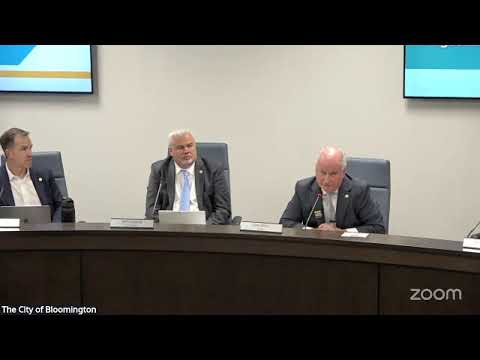
Council postpones "missing middle" zoning items to Sept. 8 after public support for ADU changes
Summary
City staff asked the council to move two housing code items to Sept. 8 for fuller consideration; the council agreed, after public comment urging approval of accessory-dwelling-unit and zoning amendments.
The Bloomington City Council voted Aug. 25 to postpone two related zoning items dealing with missing-middle housing and accessory dwelling units to the Sept. 8 meeting so staff can bundle them for fuller consideration. Noah Tang, a Bloomington High School history teacher and president of Strong Towns Blono, urged approval of item 9B, describing proposed amendments that would clarify the distinction between buildable lots and lots of record and make fee-simple ownership of small multifamily structures more feasible. "Separating use and ownership to increase the potential for owner occupied residential structures," Tang read from the proposed changes, and said the amendments would help traditional neighborhood infill and ADU opportunities.
Several resident speakers supported the ADU work. Julia Sutherland told the council she wants to build an ADU to care for an aging parent and asked the council to consider barriers to homeowners who pursue ADUs. City Manager Jurgens said staff recommended postponing the two items to Sept. 8 to allow for broader discussion and to align with related work on the Opticos report; staff told the council some projects and ADU applicants are waiting but said delaying would not jeopardize current proposals.
Council member Ward moved to postpone both items 9B and 9C to Sept. 8; the motion was seconded and passed with one no vote from Council member Kearns. The clerk recorded the motion as "Motion to postpone until September 8 for both items 9B and 9C."
Why it matters: The proposed changes aim to reduce zoning and subdivision-code barriers to smaller-scale infill housing and accessory dwelling units, which supporters say can expand affordable homeownership options and increase neighborhood stock without large apartment projects.
What happens next: Staff will return on Sept. 8 with the two items for more detailed council discussion; applicants and developers waiting for decisions were told their proposals will not be lost but may wait until the next meeting.