Get Full Government Meeting Transcripts, Videos, & Alerts Forever!
Get email alerts on the Land Use Planning topic
No spam. Unsubscribe anytime.
Raymore council adopts amended sign code after debate on inflatables, real-estate signs
Summary
Council approved the 37th amendment to the Unified Development Code (Chapter 435) tightening sign rules, removing some content-based restrictions and adding clearer temporary-sign permitting; vote was 6–2 after council debate about large yard displays and holiday inflatables.
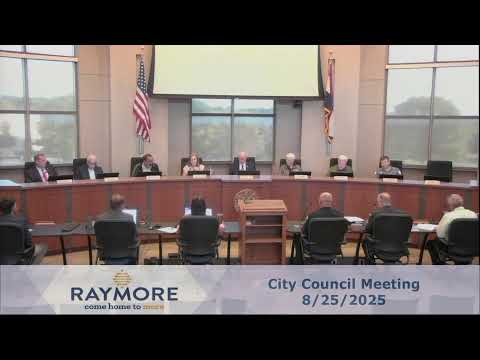
Raymore — The City Council on its second reading adopted an amendment to the Unified Development Code (UDC) that revises Chapter 435 to update the city’s sign regulations and to reflect constitutional free-speech protections. The council approved the 37th amendment by a 6–2 vote after staff described a set of revisions and answered council questions about specific elements such as home-occupation signs, real-estate signage and large temporary yard displays. City planner Mister Gress told council staff removed home-occupation signage from a list of prohibited signs and provided a redline copy showing additions and format changes. He explained that under the proposed language, real-estate signs would require a permit, could be displayed in 30-day increments and would be limited to one sign per street frontage per lot but only for the lots where the sign is located. “Under the proposed code language… that issue is one of the items that we're proposing to clean up in the code,” Gress said. Councilmember Baker asked whether a development with multiple lots could place multiple signs on major frontages; staff clarified that the limit is per lot and per street frontage and that internal lots do not transfer signage allowances to external frontages. Gress explained the permit cadence: a temporary real-estate sign may be permitted for 30 days, then must be removed for 10 days before a new permit is issued; a property may receive up to four 30-day temporary periods per calendar year. Baker and others also raised concerns about large celebratory yard displays — combinations of multiple temporary signs or large inflatable decorations that can reach many tens of square feet. Staff said the code retains a size limit for combined yard signs (12 square feet under current code) and that multiple small yard signs may be aggregated into a single temporary display but must meet the code’s size restrictions. Baker said many popular residential displays are substantially larger and warned the code would curb those displays; staff confirmed the point and said the council’s action would apply the size limits consistently. City legal counsel Mister Zurer summarized relevant case law and legal standards for distinguishing decorations from signs. He cited Construction & General Laborers Union v. Town of Grand Chute (2019) in discussing an industry and case-law distinction between inflatable “signs” and inflatable “decorations,” and he said enforcement relies on a “reasonable adult” or “reasonable officer” standard and staff discretion. “It is a very discretionary issue on the part of code enforcement, and it comes down to… trust your professional staff,” Zurer said. After council discussion, Councilmember Delgawad moved approval of the second reading; Holman seconded. The roll call recorded six yes votes and two no votes (Councilmember Baker and Councilmember Mills voted no). The ordinance will take effect on the mayor’s signature according to normal ordinance procedure. Staff said the redlined draft and a question‑and‑answer memo responding to resident and council questions were included in the meeting packet; staff also provided an updated explanation on temporary real-estate signage requirements in response to a council email. No public comments were made during the public hearing on this item at the meeting. The code change includes structural edits, clarified definitions and table revisions intended to make enforcement and public understanding easier while attempting to avoid content-based restrictions the city’s counsel said could be vulnerable to constitutional challenge.