
Kirksville staff outline revenue outlook, preliminary utility rate and grant changes ahead of 2026 budget
Get AI-powered insights, summaries, and transcripts
Subscribe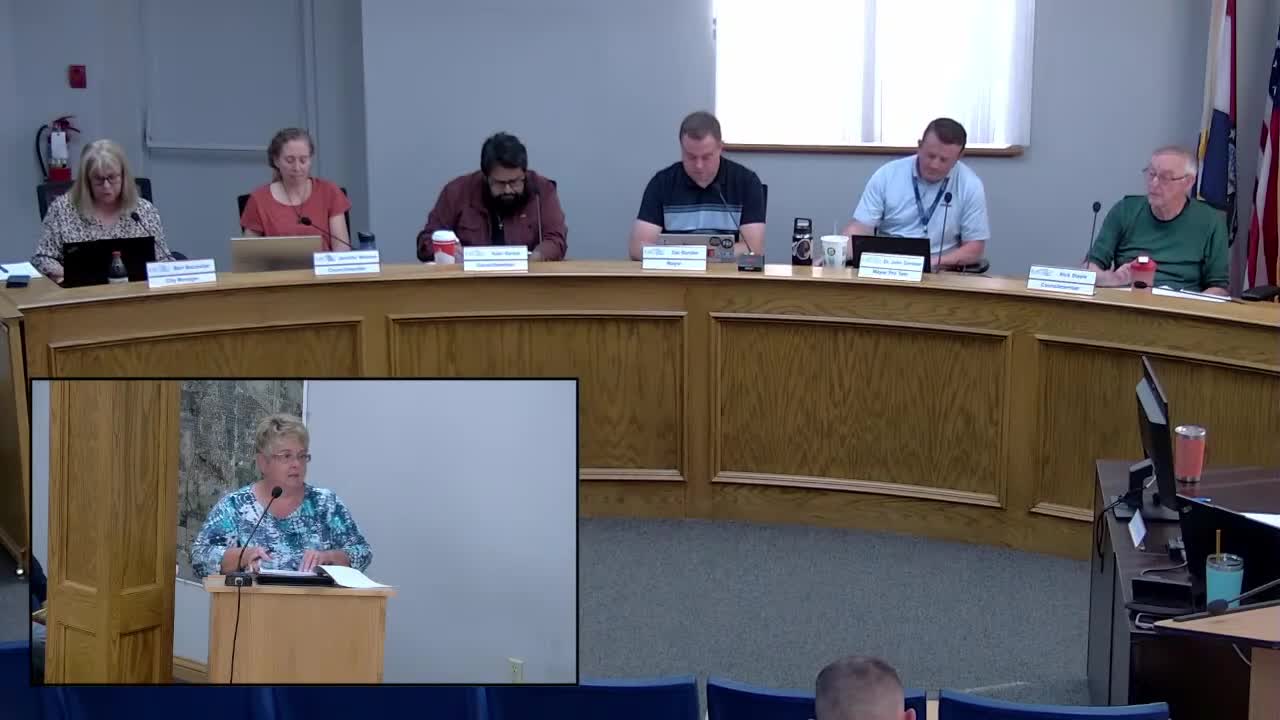
Summary
City staff told the council that most revenue lines are stable from the adopted 2025 budget, but several one-time and timing factors — including marijuana tax timing, delayed utility franchise rate approvals and a failed wastewater grant — are changing the near-term outlook. Staff presented a preliminary 5% utility rate scenario for planning.
Kirksville City Manager Mary Maycomer and finance staff presented the City Council an updated revenue outlook and preliminary utility projections as the council began budget planning for 2026. The overview emphasized items that are largely fixed by law or outside staff discretion and flagged places where council direction could change priorities.
The city’s finance presenter said revenue estimates show “no significant changes from our adopted ’25,” but called out several specific deviations. She said marijuana sales-tax collections were about $418,000 in 2024 but have dropped in the run-out because some vendors delayed registering, and she projected roughly $360,000 a year if sales remain steady. She also reminded the council that the marijuana tax allocation is split — 50% to the police department and 50% to community development projects.
Why it matters: the council will use these updated run-outs when it adopts the 2026 budget and sets priorities for discretionary spending.
Staff noted a large timing effect in the “franchise” revenue lines for electric and gas: the city had budgeted assuming Public Service Commission rate increases, but the electric increases were approved only partway through the year and the gas increase remains pending, which reduced collections this year. Similarly, some expected revenue from selling asphalt millings to contractors was lowered because planned street projects did not materialize.
On grants and one-time payments, finance staff reported the city expects total opioid settlement receipts of $88,461 by the end of 2025, and reminded the council that state and federal grant assumptions in the draft budget reflect only awards already known; new awards will change available revenues if the council approves them.
Utilities: finance and utilities staff walked the council through the utility fund outlook and explained the largest drivers. Consumption-driven utility revenues were down this year, which staff attributed to an unusually wet spring and summer. Staff presented a preliminary scenario that would raise utility rates roughly 5% for planning purposes in next year’s budget; they stressed the numbers were preliminary and would be finalized when the council sets policy.
Staff also said the city was wait‑listed and ultimately not awarded a wastewater treatment plant grant; however, a bioswale grant remains on the table and could receive additional allocations from a re‑distribution of funds. Finance staff explained how transfers between operating and capital replacement funds work in the city’s internal accounting: capital paid from the operating fund (880) must be reimbursed by the capital replacement fund (881), and the capital replacement fund must retain a level of balance tied to the adopted five‑year capital plan.
What’s next: staff said the council will review detailed revenue assumptions and fund‑by‑fund numbers during the budget meetings in November, and asked the council for direction where items are discretionary versus those that are legally required or time‑sensitive.