Get Full Government Meeting Transcripts, Videos, & Alerts Forever!
Get email alerts on the Public Safety Guns topic
No spam. Unsubscribe anytime.
Former Norfolk police chief urges tracing illegal guns, cites retailer clusters and straw purchases
Summary
A guest speaker who served as Norfolk police chief described a tracing-focused strategy that linked thousands of recovered firearms to a small number of dealers, recommended law and policy changes, and said Virginia’s new laws changed behavior around lost or stolen guns.
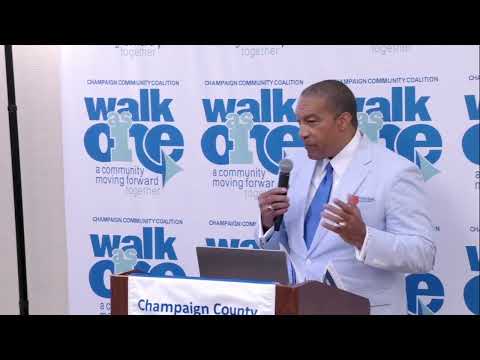
A guest speaker identified as a former Norfolk, Virginia, police chief told the Community Coalition that tracing recovered firearms — not just vouchering them — exposed where many illegal guns originate and helped shape policy interventions. The former Norfolk police chief said tracing with eTrace showed that, from his department’s 2017–2020 analysis, investigators recovered roughly 5,000 guns and that only about 4% were reported lost or stolen. “If you don't investigate the weapon, you're just chasing the tail,” he said, explaining the basis for shifting to systematic tracing. Why it matters: the chief said firing a focus on origins can point investigators to dealers and straw purchasers rather than only to end users, and that state policy changes can change possession behavior. He told the coalition that of 850 guns traced in one year, 628 originated from dealers in Virginia and that large proportions of recovered guns were not still in the hands of the original buyer — a pattern he described as consistent with straw purchasing. Details and evidence: the speaker said 641 guns were taken off people in his dataset, 256 of whom were convicted felons; he said only about 170 of 850 guns remained with the person who originally bought them. He also cited a nationwide estimate that about 22,800,000 guns were sold in 2020 and said the surge in sales paralleled increases in shootings. Policy changes described: the former chief said Virginia enacted three changes after the tracing data were publicized — a universal background-check requirement for transfers, a 24-hour lost-or-stolen reporting requirement, and a limit to one gun purchase per person per month — and added that such laws altered behavior once they were enforced. He also referenced the Giffords Law Center scorecard as a national metric that compares state law strength to gun‑death data. What he asked of local leaders: the speaker encouraged local officials and advocates in Champaign-Urbana to adopt tracing-focused practices and consider policy tools shown to change behavior. “We can't change behavior through preaching and pounding desk and table,” he said; “We change solutions or behavior through policies.” The presentation was followed by a brief question period and an invitation for discussion and local adaptation of tracing and dealer‑focused enforcement.