Get Full Government Meeting Transcripts, Videos, & Alerts Forever!
Get email alerts on the Utility Rates topic
No spam. Unsubscribe anytime.
Soda Springs council approves water, sewer and power rate increases to fund urgent infrastructure
Summary
The Soda Springs City Council on a series of votes adopted rate increases for water, sewer, power and garbage to begin funding multi‑million‑dollar infrastructure repairs; Cedar View residents pressed the council to exclude homes on a separate distribution line and requested a follow‑up meeting.
Soda Springs City Council members voted to adopt separate rate resolutions that will raise average household charges for utilities this fiscal year, part of a planned city effort to pay for failing water and sewer infrastructure without issuing a bond. The council adopted a water rate resolution that the city said will raise the average residential water user roughly $6 a month (about 12.3%); a sewer resolution raising the average by about $8 a month (about 11.5%); a power rate adjustment of roughly 5% per kilowatt hour; and a 2% increase in garbage service rates requested by the service provider.
City officials said the increases are intended to create a capital improvement fund and to cash‑flow numerous urgent projects rather than issue a bond and incur long‑term interest and issuance costs. Public works staff explained the city has an estimated $2 million in near‑term projects and an additional set of water projects totaling roughly $18 million that are currently waiting on outside funding; staff said some single projects could be several million dollars. The council was told inflow and infiltration (I&I) exceeds 50% at the wastewater treatment plant, and that fixing sewer infiltration alone would be “in the millions.”
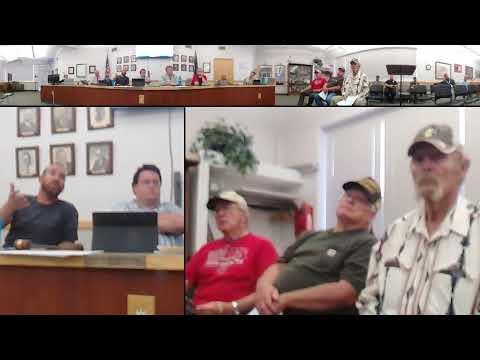
During public comment, residents of the Cedar View area asked to be removed from the new capital improvement fee, saying their homes are supplied by a separate line and that they already pay for their own line maintenance. Resident Kate Lock and other Cedar View commenters said they had just completed a contract with the city and called the fee announcement six weeks later a lack of transparency. Public works staff told Cedar View residents they could not be excluded because the transmission line that serves Cedar View is part of the capital projects the charges will support; staff also offered to schedule a specific follow‑up meeting to examine contract language and contingencies.
Council members and staff said the rate adjustments are designed to increase the city’s chance of matching funds from state grant programs by bringing utility rates closer to two percent of median household income — a qualifying threshold for some grant competitions. Council members described the decision as difficult but necessary given the risk that aging transmission and distribution lines could fail and interrupt service to large sections of town.
The council made the rate increases by motion and voice vote. The water resolution (identified in the meeting as resolution 25‑2025‑11) was moved and seconded and passed on an affirmative voice vote. The sewer resolution (25‑2025‑10) and power resolution (25‑2025‑09) passed similarly; the council also approved the garbage increase (25‑2025‑08) as requested by the provider. The meeting record does not list individual roll‑call votes by name; the resolutions were recorded as approved in open session.
The council directed staff to post the detailed materials and to hold an additional public meeting focused specifically on Cedar View rates and contracts (staff and Cedar View representatives agreed to pursue that meeting, with the council scheduling time for it). Staff said they will provide related emails and contract language in advance of that meeting. The council also clarified that the formation (bond) payment that is ending will be replaced by the new fee rather than added on top of it, but that some customers may see more than one line item shift depending on prior bond payoffs and meter charges.
Background: Council and staff emphasized they sought to avoid a bond issuance because bonds carry issuance costs and interest; instead the city intends to build a capital improvement fund through modest utility increases. Council members repeatedly framed the votes as a response to specific infrastructure risks: an aged transmission line running from Kelly Park across town, multiple sections of sewer and water pipe more than 70 years old, and very high I&I into the wastewater plant. Council members also said the Highway 30 / Second South reconstruction will be funded from reserves rather than rate revenue, so the rate actions are targeted to utility infrastructure rather than road work.