
Washington County sheriff briefs Sherwood council on jail repairs, expanded pretrial monitoring, new enforcement teams and public-safety levy
Get AI-powered insights, summaries, and transcripts
Subscribe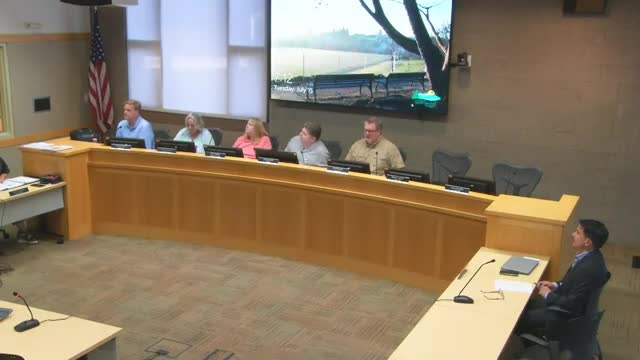
Summary
At a Sherwood City Council meeting, Washington County law‑enforcement leaders described jail infrastructure repairs, a move to bring electronic-monitoring pretrial supervision in‑house, a new Covert gun‑violence team, expanded drone and search‑and‑rescue capabilities, and a November ballot measure to raise local levy funding for public safety.
Sheriff Massey, representing the Washington County Sheriff’s Office, told the Sherwood City Council on July 15 that the office is pursuing major jail infrastructure repairs while expanding pretrial electronic monitoring, intelligence‑led enforcement and drone operations and is actively campaigning for a local public‑safety levy on the November ballot.
The sheriff said the county jail currently has three housing units closed while undergoing “critical infrastructure repairs” including a new roof, HVAC, hot and cold water piping and fire suppression. He said staffing has improved: the jail is hiring above its authorized level and the office now has conditional offers to overhire by about 15 positions while recruits complete medical, psychological and training requirements.
The county has contracted with neighboring Yamhill County to house sentenced, low‑risk adults while repairs continue; the sheriff said Washington County has had as many as about 15 people lodged there recently and five at the time of the presentation. He also described a vendor‑funded jail capacity study that will identify facility and staffing needs through 2050–2055 and said the study will be presented to the Board of Commissioners next month.
The sheriff described a new in‑house pretrial electronic‑monitoring program funded by a grant worked on with the district attorney’s office. “We are going to bring the monitoring in house to the Washington County Jail,” he said, adding that a county‑run system will enable 24/7 monitoring and immediate law‑enforcement response to violations such as proximity to victims or prohibited retail zones. The office hopes to monitor “anywhere from 20 to 40 people” pretrial under the new program, up from the historic 5–10 who were sentenced and monitored through an outside vendor.
The sheriff also highlighted enforcement and specialty teams. He said a county‑level Covert (community violence reduction) team, formed in 2024 in cooperation with the district attorney and municipal police, has made 37 arrests and seized more than 100 firearms so far. He credited intelligence‑led operations and a newly obtained ballistic‑terminal that can test recovered shell casings against a national database.
Search‑and‑rescue volunteers and Sheriff’s Office programs Project Lifesaver and Help Me Home were described as valuable resources for locating missing people with dementia or autism; officials said participation in Project Lifesaver has fallen to about 22 registered participants and they plan outreach to senior centers and partner agencies. ROVT, the county’s remotely operated vehicle/drone team, flew over 500 missions in 2024 and now uses about 25 drones for rapid aerial response, containment and evidence gathering.
On drugs and narcotics enforcement, the sheriff said multiagency narcotics efforts have recovered large quantities of methamphetamine and fentanyl in recent years and credited Narcan distribution and bystander use with reducing fatal overdoses in many cases. He warned that illicit pills and other substances can be laced with fentanyl and said county task forces, including the Westside narcotics team, partner with federal agencies when appropriate.
The sheriff spoke at length about a proposed public‑safety local option levy, a 19‑cent increase planned for the November ballot. He said the levy funding would contribute roughly 16% of the county’s public‑safety budget and support the sheriff’s office, the district attorney, juvenile and community corrections and the Family Justice Center — in particular to maintain a functioning jail, fund detectives for the Covert team and increase court security and other countywide services. “We are asking our community to increase their property taxes for this, specifically; we need to provide an elevated degree of service,” he said.
Council members and the sheriff discussed recruitment and retention. The sheriff said the office contracted with a marketing vendor, streamlined hiring while maintaining standards, introduced referral incentives and emphasized wellness supports for staff. He also described an interagency referral pipeline that allows recruits who are not successful in city patrol training to begin service in the county jail and later transfer to patrol positions.
Sheriff Massey and other speakers emphasized that certain data‑sharing and operational limits exist: Help Me Home and Project Lifesaver participant lists are voluntary and not made public except under public‑records law; the sheriff’s office will not assist Immigration and Customs Enforcement on strictly administrative immigration matters but will cooperate in federal criminal investigations with legal process.
Officials said they will present the jail capacity study to the Board of Commissioners next month and expect to return with data on the pretrial program’s effects after a year of operations.
Ending: The sheriff closed by inviting questions and said the office will continue outreach and data collection to measure the levy’s effect and the new pretrial and enforcement programs.