
Southeast Kansas Humane Society asks Crawford County for $30,000 monthly to avoid closure
Get AI-powered insights, summaries, and transcripts
Subscribe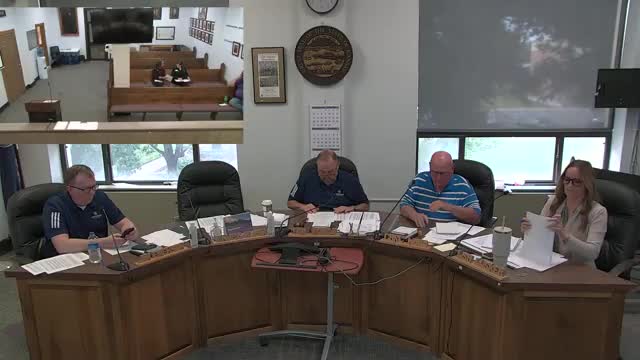
Summary
The Southeast Kansas Humane Society requested $30,000 per month from Crawford County to continue operations and avoid planned shutdown of intakes by December 2025, offering reserved kennel space and community services in return.
The Southeast Kansas Humane Society formally asked the Crawford County Commission on a county funding plan that would provide $30,000 a month to keep the shelter open and avoid shutting down intakes planned for the end of December 2025. Jasmine Kyle, director of the Southeast Kansas Humane Society, told commissioners the shelter is “at a crisis point” and said, “Without sustainable monthly funding from the county, we are looking to be forced to be shut down by the end of this year, by this December 2025.”
Kyle said the shelter — which she identified as the county’s only large open-intake facility for dogs and cats — provided five years of financial and operational data to commissioners and that the organization had taken in “over 1,000 animals” in the past four years, with roughly 93.8% of intakes coming from Crawford County during that period. She said donations and community fundraising totaled about $1,600,000 over that multi-year span but that donations fell from about $582,000 in 2021 to $94,000 in 2024 and only $18,000 in the first five months of 2025.
Kyle described rising veterinary costs and a surge in ill or injured animals, saying “in just these past 6 months, 90% of our intakes are coming in drastically hurt or sick or with illnesses.” She said the group has 11 employees (three full time and the remainder part time), limited employee benefits, and that staffing and volunteer availability have declined. Kyle said the shelter’s leadership now plans to stop taking new intakes if funds are not secured and to prioritize rehoming animals currently in care.
Sabrina Brackett, identified as the shelter’s board president, answered commissioners’ questions about staffing and finances and described the emotional and operational strain on staff and volunteers. Brackett confirmed the shelter runs adoption, vaccination and microchipping programs and said a recent grant enabled heartworm testing and treatment for dogs six months and older.
As part of the funding request, Kyle offered specific benefits to the county if the commission provided support: reserved kennel space for the Crawford County Sheriff’s Office for seizures or emergencies, continued free or low-cost vaccination and microchipping clinics, educational outreach at libraries and community centers, training support for animal control officers, and behavioral support clinics.
Commissioners asked about alternative funding and grant-writing options. Kyle and Brackett said operating costs in this sector are difficult to cover with standard grants and that, even with grants, the shelter faces a monthly operational shortfall. One county speaker recommended connecting the shelter with the county’s grant writer; Kyle said she had already spoken with that grant writer within the prior six months. A county commissioner said the commission had completed a budget hearing two weeks earlier but that the commission would review the packet and discuss possible assistance.
The request was presented as a funding appeal and not as an agenda item requesting an immediate vote. No formal motion or vote on funding for the humane society was made during the presentation. Kyle said the shelter would “effectively shut down intakes” if funding is not secured and that the organization expects to release a statement about that plan. She emphasized public-health risks she said could follow a closure, including contagious diseases, increased stray populations and more dog-bite incidents.
The presentation occurred during the commission’s new-business session; commissioners and county staff asked follow-up questions and suggested internal discussions and referrals to county grant resources. The commission did not adopt any directive, referral, or funding commitment on the record during the meeting.