
Potter County approves tax abatement for International Aerospace Coatings hangar expansion
Get AI-powered insights, summaries, and transcripts
Subscribe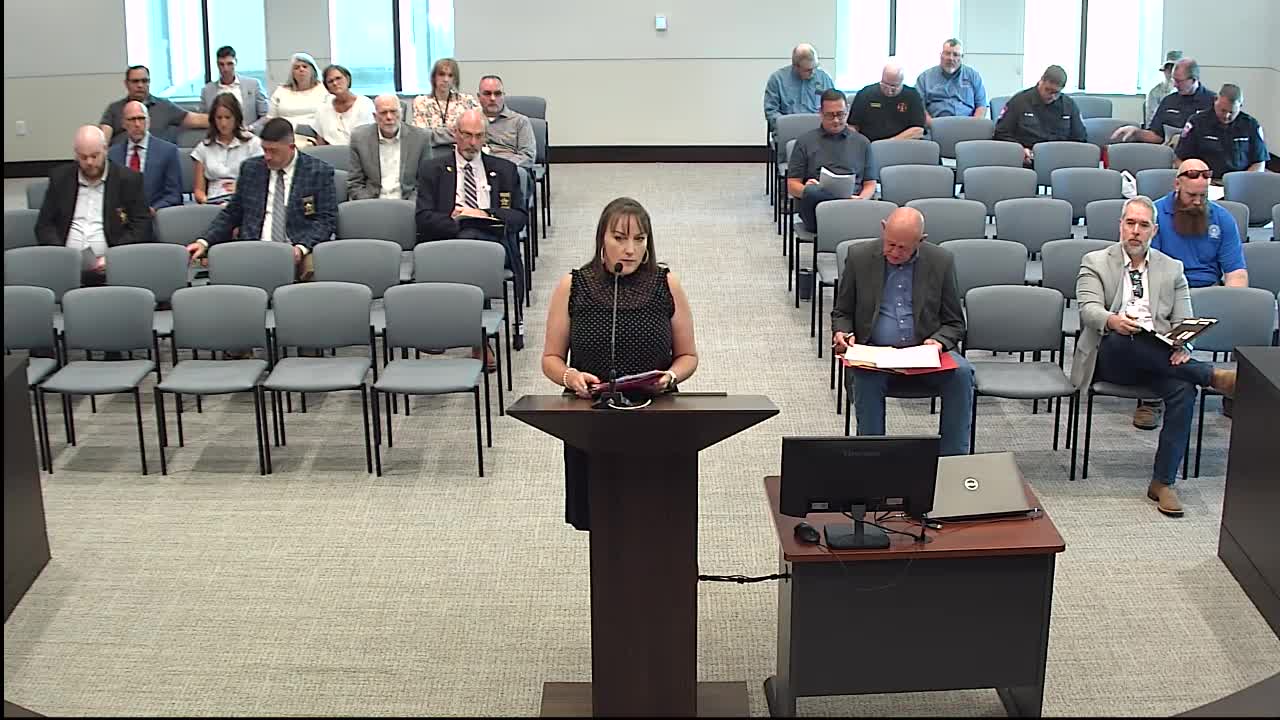
Summary
The Potter County Commissioners Court voted 4-0 July 28 to join the City of Amarillo in granting a property tax abatement to International Aerospace Coatings for a planned $27.7 million wide‑body hangar at Amarillo International Airport, a project the county and AEDC say could add up to 70 jobs.
Potter County’s commissioners voted unanimously July 28 to join the City of Amarillo in approving a property tax abatement for International Aerospace Coatings to build a 78,000‑square‑foot wide‑body hangar at Amarillo International Airport. The vote came during the Commissioners Court meeting at 9 a.m.
The county action opts Potter County into an eight‑year, step‑down property tax abatement that the presenter said applies when a project has more than $12 million in capital expenditures and creates at least 50 jobs. Under the formula described to the court, the abatement is 80% in year one then declines by 10 percentage points each year through year eight.
The project presentation described International Aerospace Coatings as an established aviation finishing company that has operated at the airport for more than 30 years and currently employs about 171 people. The company plans a $27,700,000 hangar and expects to add up to 70 full‑time equivalent positions, with a stated minimum average pay of $55,000 for those jobs. The Amarillo Economic Development Corporation (AEDC) also offered a job‑creation incentive: $10,000 per qualifying job, paid over five years, capped at $700,000, with a two‑year ramp period to reach the hiring target.
An economic analysis shown to the court estimated total tax benefits to the county over 20 years of about $3.237 million, with the county’s direct cost estimated at about $210,000. The presenter said the abatement under discussion would allow approximately $600,000 in abated taxes out of an otherwise projected $3.692 million in county collections over 20 years, leaving a net collection near $3.1 million over two decades.
Commissioners asked clarifying questions about current employment, the number of additional jobs, and whether neighboring Randall County participated; the presenter said Randall County was not involved. The motion to approve the abatement passed 4‑0.
The court’s action authorizes Potter County to “opt in” to the tax abatement consistent with the city agreement; no additional county‑level fiscal commitments beyond the abatement were included in the motion.
Why it matters: county officials framed the abatement as an economic development tool expected to expand local aviation services and increase payroll and property tax collections net of the abatement. The job‑creation incentive from AEDC adds a separate county‑adjacent cost element that county staff said would be paid only if hiring thresholds are met.
Background: The county’s action was described under Chapter 312 of the Texas Tax Code, the statutory authority that authorizes local tax abatement agreements for eligible projects.