Get Full Government Meeting Transcripts, Videos, & Alerts Forever!
Get email alerts on the Economic Development topic
No spam. Unsubscribe anytime.
JRA asks Jackson council for $15.4 million to expand housing, Ferris Street renovation and a $6.65M revolving fund
Summary
The Jackson Redevelopment Authority presented a $15.4 million fiscal‑year budget request focused on operating increases, predevelopment work for Ferris Street and a proposed $6.65 million RISE revolving loan fund to recruit businesses to urban renewal zones.
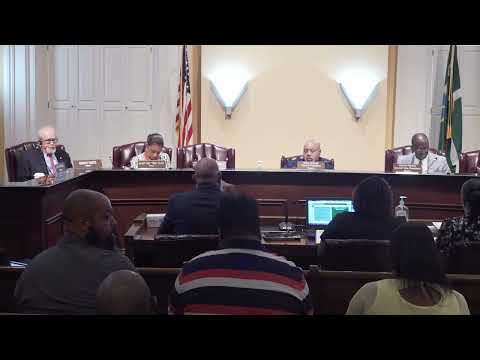
The Jackson Redevelopment Authority presented its fiscal‑year 2026 budget to the City Council, requesting $15,400,000 that includes a $2.9 million operating budget and a suite of capital and predevelopment proposals intended to revive downtown property and stem business departures. JRA officials also asked the city to consider capital support to stand up a $6.65 million revolving loan pool for business recruitment in urban renewal zones.
JRA framed the request as a mix of operating support and seed capital for redevelopment. “When people come and meet with me and they tell me their vision, that's exactly what it is. It's an idea and a vision until you bring me documentation that shows me financing, it shows me a capital stack,” the JRA representative said, describing the agency's vetting process for private projects.
The budget packet calls for a near‑term operating increase of about $1.1 million over current levels and identifies $7.4 million in capital and predevelopment activity that JRA says is not part of its direct city request. That includes nearly $3 million for new investments at Union Station and $3 million JRA says it has committed on a line of credit for predevelopment on a $30 million Ferris Street renovation. JRA reported projected non‑governmental revenues of $792,000 for the coming year tied to property work and leasing at Union Station.
Nut graf: JRA told councilors the package is intended to generate taxable property and to create incentives — including use of a state blight rebate program — that make infill housing and business retention financially viable. JRA proposed both a CHDO application to access the state's 15% HOME set‑aside and using House Bill 1201 rebates on qualifying infill housing to improve project economics.
JRA described three main program areas in the request: housing and neighborhood stabilization, business recruitment and retention, and a revolving loan fund for urban renewal zones. The housing plan would target tax‑forfeited lots and use the state’s HB1201 rebate — a statewide program JRA described as a construction cost rebate tied to building and sale of a home — to offset costs. “With this rebate, what it allows JRA to do is we can take a hit on the construction of the house and then make some money back with the rebate,” the JRA representative said.
On business recruitment, JRA said it has a master plan covering about 90% of its 100‑property portfolio and described ongoing private development talks on Ferris Street, including partners for a bistro and bookstore buildouts. The RISE fund would be a new, city‑capitalized revolving loan product to support small, “mom‑and‑pop” businesses and to catalyze investment in six urban renewal zones.
Council members pressed JRA on building maintenance and city occupancy costs. One councilor noted that city departments occupy roughly 80,000 square feet of JRA‑owned property and asked why JRA would not fund HVAC repairs in buildings the city uses. The JRA representative said the original occupancy agreements anticipated the city performing routine maintenance and disputed that JRA should cover all upkeep for city‑occupied, non‑revenue space.
The presentation included a request to be designated a Community Housing Development Organization (CHDO) so JRA can access HOME program set‑aside funds, and JRA said it had submitted the CHDO application. JRA also said it had secured some private financing for Ferris Street predevelopment and included a sample capital stack for the $30 million renovation in the packet.
Ending: JRA closed by saying the agency had increased nonassisted revenue projections by about 78% by bringing Union Station back into operation and asked councilors to weigh the operating increase alongside the long‑term tax‑revenue gains the agency argued would follow from returning blighted properties to the tax roll.