
Jackson Public Schools presents balanced FY26 budget of about $410 million; district cites investments in HVAC, staffing and vocational programs
Get AI-powered insights, summaries, and transcripts
Subscribe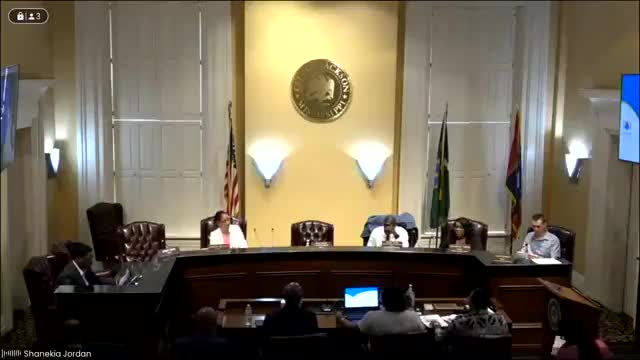
Summary
Jackson Public Schools presented a balanced FY26 budget of roughly $409–411 million, outlined investments in facilities and staffing, said administrative costs are estimated at 3.61% of operations, and reported a modest enrollment decline compared with last year.
Dr. (Superintendent) Robert Green (presentation lead) and Chief Financial/Operating Officer Burke presented Jackson Public Schools’ proposed fiscal 2026 budget to the city council, describing a roughly $409 million operating plan aligned with the district’s five strategic commitments, investments in HVAC and facilities, and ongoing recruitment and retention initiatives. "This budget and all budgets and financial decisions in Jackson Public Schools reflect our commitment to accountability and excellence," the presenters said.
The nut graf: the district’s budget determines staffing, classroom resources, facility repairs and capital projects in the city’s largest public employer; the FY26 presentation included tradeoffs on enrollment trends, deferred maintenance and capital financing that affect classroom conditions and long‑term costs.
The presentation described key figures from the packet: total budgetary resources in the $409–411 million range drawn from local, state and federal sources; a district maintenance (main operating) fund of about $220 million; instructional spending of about $187 million; debt service of about $27 million; and expected 16th‑section revenue of roughly $1.1 million. The district said it issued a limited tax note in 2025 and expects about $35 million available for capital projects from that source. Annual payroll and vendor payments were cited as major economic impacts the district makes on the local economy.
Officials described human‑capital investments as central to the budget. The district said it employs a little more than 3,000 people (approximately half certified teachers), is investing in local supplements and starting wages for classified staff, budgeting additional professional development days and continuing investments in recruitment including international teacher pipelines. The packet listed about 1,300 teachers and other certified personnel, plus counselors, interventionists and librarians. "We believe that that has been the real engine behind some of our ability to staff in almost all of our classrooms," the superintendent said when describing recent hiring and reduced classroom interruptions.
Facilities and infrastructure were a strong focus. Presenters said major investments over the prior year had reduced classroom interruptions from HVAC and other facility failures and that the district continues to invest in HVAC, wiring, security cameras and custodial training. The presenters said three shuttered buildings have had archive/heritage approvals for demolition and three buildings were under contract to be repurposed into affordable housing or other community uses; the presentation budgeted roughly $1.7 million previously estimated for demolition work but noted pricing and schedules must be finalized. On closed buildings the district said it is securing properties, mowing and hiring security while it markets or considers demolition.
On enrollment the district reported a conservative budget assumption that enrollment could decline slightly; presenters said current enrollment was about 17,621 scholars and that the current year’s count was roughly 1,000 scholars below the prior year’s peak. The district reminded council members that state funding is calculated on a lagged count and that it continues outreach to enroll returning scholars before official counts are taken.
The presentation included a note on administration and overhead: the district estimated administrative costs at about 3.61% of operations, under the state cap. Officials described the budget as balanced and aligned to strategic priorities and invited follow‑up questions.
Ending: Council members and district leaders discussed further engagement and the possibility of work sessions to dig into nonbudgetary program details; the district offered to return with further detail as the budget moves through next steps.