Get Full Government Meeting Transcripts, Videos, & Alerts Forever!
Get email alerts on the Commission Procedure Training topic
No spam. Unsubscribe anytime.
Severance planning commission receives refresher on quasi‑judicial process, conflicts and open‑meetings rules
Summary
Town Attorney Nina Williams led an extended training for new and returning commissioners on quasi‑judicial duties, ex parte communications, conflict‑of‑interest disclosure, public‑hearing procedure, deliberation and open‑meetings compliance.
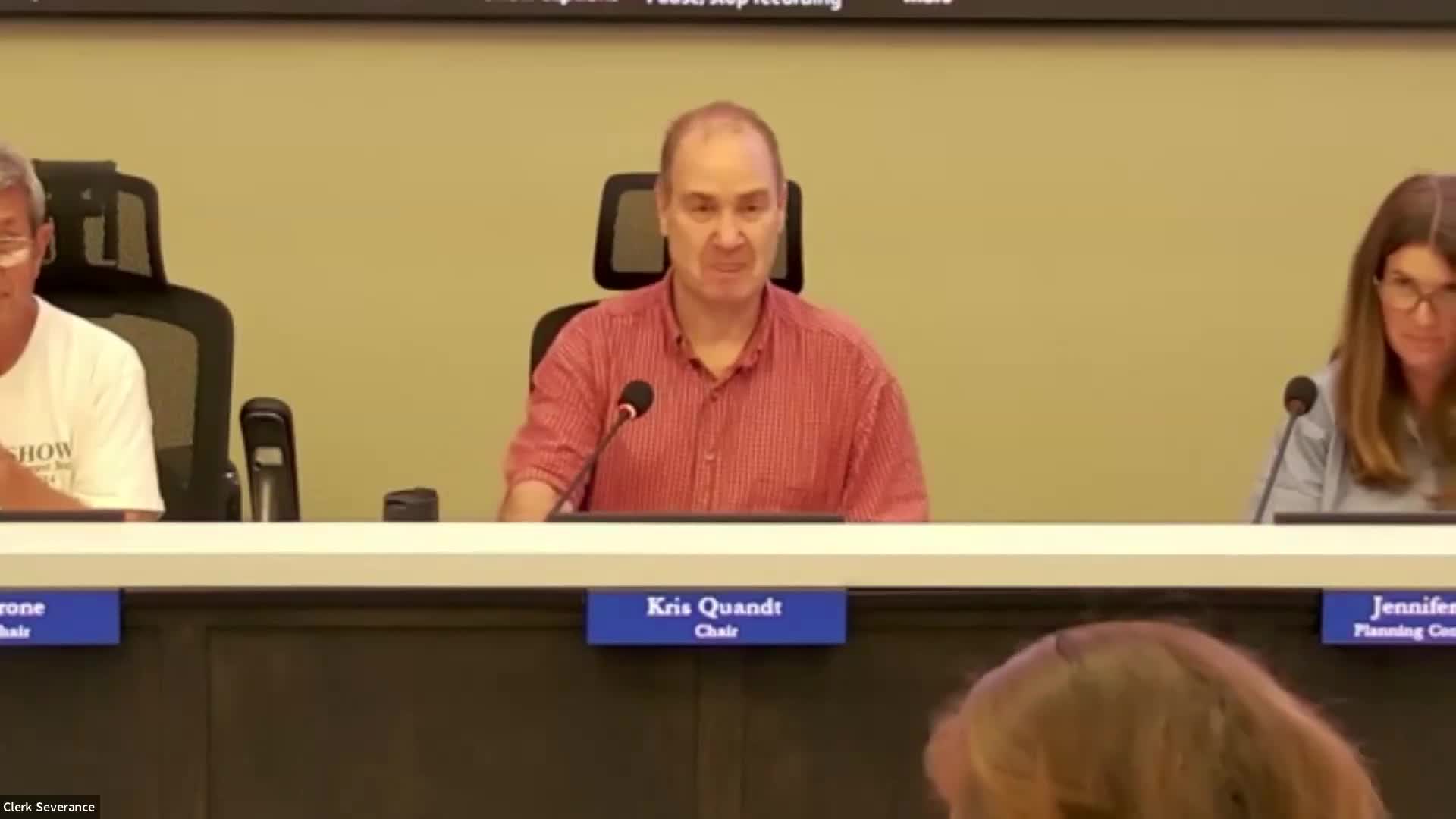
SEVERANCE, Colo. — New and returning members of the Severance Plan Commission received an in‑depth training Aug. 20 on how to handle quasi‑judicial land‑use hearings, avoid conflicts of interest and follow open‑meeting rules.
Town Attorney Nina Williams outlined three categories of impartiality concerns: ex‑parte communications, prejudgment and conflicts of interest. She said commissioners should direct members of the public who raise matters outside hearings to submit written comments or attend the public hearing so the entire commission can hear the matter. “You’re taking the facts and you’re applying it to that,” Williams said, describing the quasi‑judicial function: applying existing town code to the facts of a specific application.
Key guidance included: disclose or recuse if a commissioner has a personal or financial interest that would prevent fair consideration; avoid social‑media statements that show prejudgment; and notify staff if uncertain about a possible conflict. Williams recommended brief on‑the‑record disclosures before hearings when appropriate and urged commissioners to “think out loud” during deliberations so the public can see how findings and conditions relate to code criteria.
On hearing procedure, staff and the attorney reviewed a recommended hearing order: staff presentation, applicant presentation, public comment, applicant rebuttal and staff rebuttal, then commissioner questions and deliberation. The attorney emphasized that applicants have a right to present evidence and rebuttal and that commissioners should base findings on written record and code criteria. She also discussed continuances: finish hearings when practicable to avoid rehearing logistics, and continue only for proper, case‑specific reasons.
The training covered voting mechanics: a motion must receive a majority to pass; a failed motion has no effect and commissioners should offer alternate motions to achieve a decisive result. Williams said conditions to approval are permissible when tied to code criteria; conversely, commissioners should not deny or condition approval for reasons outside the applicable code sections.
Open‑meetings reminders included avoiding group email or chat among three or more commissioners about public business (do not “reply all”), directing packet questions through staff so answers are publicly shared, and avoiding side texting during hearings (exceptions for medical or family emergencies were noted). Planning staff encouraged commissioners to contact staff with packet questions before the meeting so answers can be given on the public record.
Williams closed by offering staff contact information for follow‑up legal questions and encouraged commissioners to call the town attorney when in doubt about conflicts or procedure.