Get Full Government Meeting Transcripts, Videos, & Alerts Forever!
Get email alerts on the Building Codes topic
No spam. Unsubscribe anytime.
Severance staff review 2024 international codes; state mandates for solar-, EV- and electric-ready drive concern over costs and enforcement
Summary
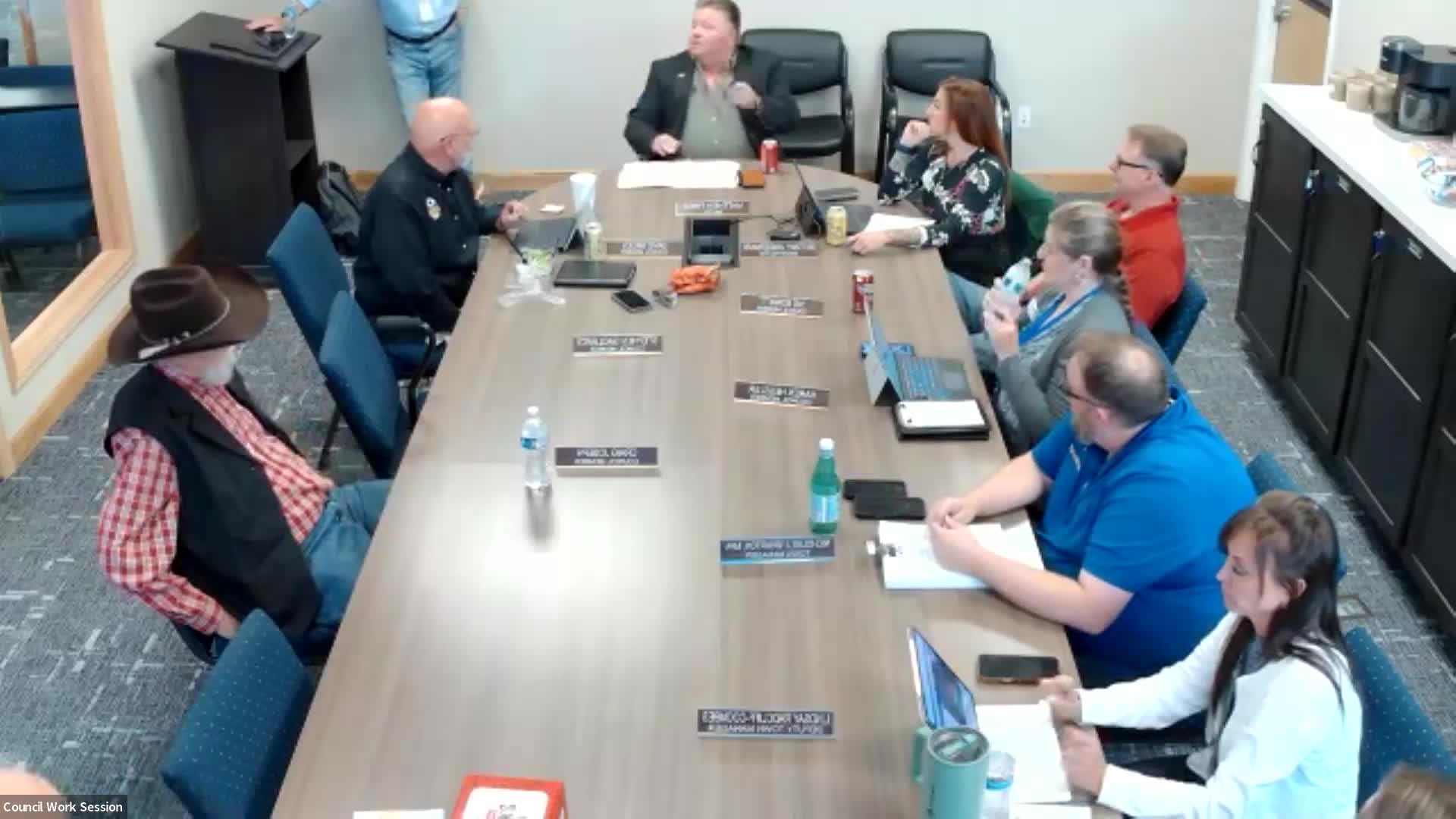
Russ Weber, building official with Safe Health, briefed the Severance Town Council at a work session on the 2024 International Code Council model codes and state-mandated changes, focusing on energy provisions, solar-ready and EV-ready requirements and several items the town plans to address separately.
Russ Weber, building official with Safe Health, briefed the Severance Town Council at a work session on the 2024 International Code Council (ICC) model codes and state-mandated changes, focusing on energy provisions, solar-ready and EV-ready requirements and several items the town plans to address separately.
Weber said the 2024 International Energy Conservation Code (IECC) generally tracks the 2018 code with clarifications and a few new compliance options, and that a regional code-adoption committee (Longmont, Loveland, Johnstown, Fort Collins, Larimer County, Greeley and Wellington) reviewed the 2024 cycle together to align local requirements. “The 24 codes were published last year about November,” Weber said. “So we went through the IBC, the IRC, the IMC, all of them.”
Why it matters: state-level mandates tied to the energy, plumbing and electric codes require municipalities that adopt a building code to accept the most current energy code. Weber told council that the 2021 energy code had raised costs for builders substantially, while the 2024 IECC has lowered some of those impacts; however, new state mandates for solar-ready, EV-ready and “electric-ready” features still add expense and raise questions about timing and enforceability.
Most important details - State mandates: Weber summarized that the state requires jurisdictions adopting a building code to also adopt the current energy code and to include provisions that make new construction “solar ready,” “EV ready,” and “electric ready.” He said these are state requirements rather than optional local add-ons. - Solar-ready: “Solar ready. So you’re gonna have to maintain an area of the roof that has a minimum of 300 square feet,” Weber said. Sections can be multiple but no single section may be smaller than 80 square feet; the code requires conduit from the roof to the electrical panel so panels can be connected later. - EV/electric-ready: Weber said the changes will often require space in the electrical panel and possibly an upgraded service. “Alex, one of our master electrician, combination inspectors…he estimates that the EV and solar and the electric ramping is gonna increase cost depending on how it’s wired about 3,000 to $6,000,” Weber said. Weber added that new construction must provide wiring provisions (not necessarily full equipment) so future electrification is simpler. - Energy-code tradeoffs and compliance pathways: The IECC retains three compliance paths — simulated building performance (ResCheck/energy modeling), prescriptive measures and HERS/HERS-like ratings — and the 2024 code allows unit sampling for blower-door/duct testing rather than testing each unit individually, which builders say reduces cost. - Clarifying methods for new products: The ICC evaluation-report/alternate means-and-methods process (AMMR) permits proven new products to be used if testing and certification exist; Weber cited a “no burn” spray product that meets fire resistance test reports as an example. - Wind and tornado design: The IRC now includes special wind-region references and an updated ASCE-7 lookup for address-specific wind speeds. Weber said the Front Range study used by local jurisdictions treats areas east of I‑25 as subject to wind speeds modeled up to 115 mph (roughly a 90‑mph three‑second gust) for design. Separately, the commercial IBC now includes a tornado-load design consideration for some risk categories.
Costs, timing and legal uncertainty Weber and staff repeatedly cautioned that even modest per-item costs accumulate. He told council the 2021 IECC increased builder costs by about $3,500; the 2024 IECC has rolled back some of that increase but still adds requirements that can raise construction costs. He also noted pending litigation: “There’s 5 municipalities that have filed lawsuit against all of these codes…saying, you can’t make us do these because we’re home rule,” Weber said, referring to suits challenging state-level code mandates.
What the town will and will not do now Weber recommended adopting the 2024 codes with local amendments where appropriate but explicitly excluded the state wildfire-resiliency code from the immediate adoption package. “We’re leaving the wildfire resiliency code out of this code adoption,” he said, citing enforcement and implementation uncertainties and saying staff will return with more information before asking the council to adopt that portion.
Questions and concerns raised Councilors asked about how solar-ready roof areas will fit with existing house styles, how conduit routing and panel upgrades will affect affordability, and whether commercial site plans could consolidate EV charging instead of forcing every building to provide dedicated spaces. Weber and staff said some flexibility exists in the code and that local review can consider consolidated solutions for constrained commercial sites.
Next steps and documentation Weber said staff will circulate the committee’s slides and resources, and he offered to provide the related house and senate bill references to councilors who want them. No formal ordinance or vote to adopt the 2024 codes occurred at the work session — the presentation was informational and council gave staff direction to return with a formal adoption package that excludes the wildfire-resiliency rules until implementation details are clarified.
Ending Council members expressed appreciation for the consolidated regional review effort and asked for clearer cost estimates and written materials before any adoption vote. Staff plans to provide the slides, source citations and a proposed adoption ordinance in a future packet so the council and public can review specific local amendments and enforcement plans.