Get Full Government Meeting Transcripts, Videos, & Alerts Forever!
Get email alerts on the Strategic Planning topic
No spam. Unsubscribe anytime.
O'Fallon begins three‑year strategic planning cycle; council members emphasize housing, downtown, parks and economic engagement
Summary
City staff led a workshop on a draft three‑year strategic plan tied to the 2040 Master Plan. Council members and staff discussed priorities including zoning/code updates, housing preservation, parks improvements, a potential new library, downtown planning, and staffing and capital needs for public safety and core city systems.
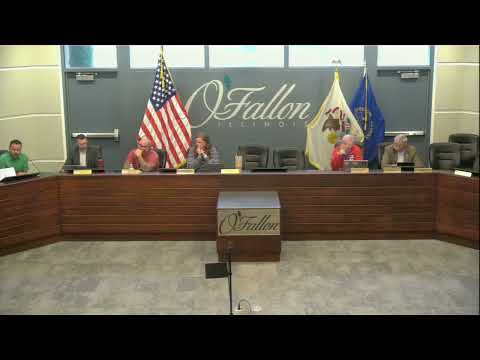
O'Fallon — City staff and the Community Development Committee convened a strategic planning workshop in which the leadership team reviewed draft priorities that would guide the city's work for fiscal years 2027–2029 (the city’s fiscal year begins May 1). The session was presented by Assistant City Administrator Grant Litikin and department directors and gathered council feedback on housing, infrastructure, parks, downtown redevelopment and public safety investments.
Grant Litikin framed the meeting as an update to the 2040 Master Plan and a chance to translate longer‑range goals into three‑year action steps. "The strategic plan is a component of the master plan," Litikin said, and he told council members the draft covers a three‑year window that staff will use to guide capital improvement planning and the annual budget cycle. He said the next strategic cycle would begin May 1, 2026.
Key priorities discussed
Housing and zoning: Staff proposed a multi‑year update to zoning and development standards aimed at making older neighborhoods more adaptable for aging residents and accommodating future needs. The committee discussed subdivision control within the city's one‑and‑one‑half mile sphere of influence and asked staff to study targeted code changes (for example, parking and facade standards) before broad rewrites. Staff also raised the need for a transition plan for aging mobile home parks and said no immediate regulatory change is intended to force conversions.
Downtown, community gathering space and tourism: Council members emphasized a shortage of reasonably priced, technology‑equipped meeting spaces for civic groups and small businesses. Staff noted upgrades to the O'Fallon Market (air conditioning and audiovisual) are already in the capital improvement plan. Several council members advocated accelerating a tourism/visitor website and better coordination among hotels, parks and events to capture visitor spending.
Parks, parking and trails: Council members raised recurring concerns about insufficient formal parking near busy venues (notably community park/Blazer fields) and suggested incremental, careful approaches — from shuttle options to reconfiguring existing spaces — that protect green space. Staff said a bike‑trail master plan exists and that trail extensions and bike racks can be folded into the broader zoning and development manual update.
Library and cultural facilities: Ryan Johnson, the library director, updated the committee on efforts to register K‑12 students for library cards under recent state guidance and said staff are working with local school districts to broaden access. The council also discussed options for a potential local history component within any new library plan and ongoing community engagement work.
Finance, systems and census considerations: Sandy Evans, director of finance and administration, said large back‑office projects are on the horizon: an enterprise resource planning (ERP) update for financial and utility billing systems and possible migration of work‑order software to a cloud platform. She noted the city previously spent more than $1 million on a software transition and said a special census — which the city would pay for — can cost roughly $100,000 when pursued to increase state revenue shares for population growth.
Public safety and staffing: Fire and EMS capital and staffing needs were raised as priorities. Fire Chief Brad White noted equipment costs have risen: "The standard fire truck is no less than a million dollars. The ladder truck is no less than 2.5" million," he said. Council members asked staff to study alternative funding and staffing models and noted repeating EMS calls for a small number of addresses as an area for social service coordination.
Economic engagement and marketing: Several council members urged creation or expansion of a city role to coordinate visitor marketing, hotel engagement and business outreach — an economic engagement position or shared role across departments — to better convert visitors into local spending and to attract business investment.
Process and next steps
Staff said the workshop was a first draft and that items would be refined based on council input, folded into the capital improvement program and considered in the next budget cycle. Litikin said staff will return a revised plan and eventually seek formal adoption via council resolution.
Why it matters: The strategic plan will guide staffing and capital decisions for the next three fiscal years, influence the CIP and inform zoning and code changes that affect development, housing and public services. The workshop highlighted trade‑offs between preserving green space and adding parking, timing of expensive IT upgrades, and the fiscal implications of expanding public safety capacity.
Ending: Staff will revise the draft based on council feedback and return to the council for further review and adoption as part of the city's budget and CIP process.