
Plan commission directs findings to approve 232‑unit townhome PUD after traffic, setbacks and public‑benefit changes
Get AI-powered insights, summaries, and transcripts
Subscribe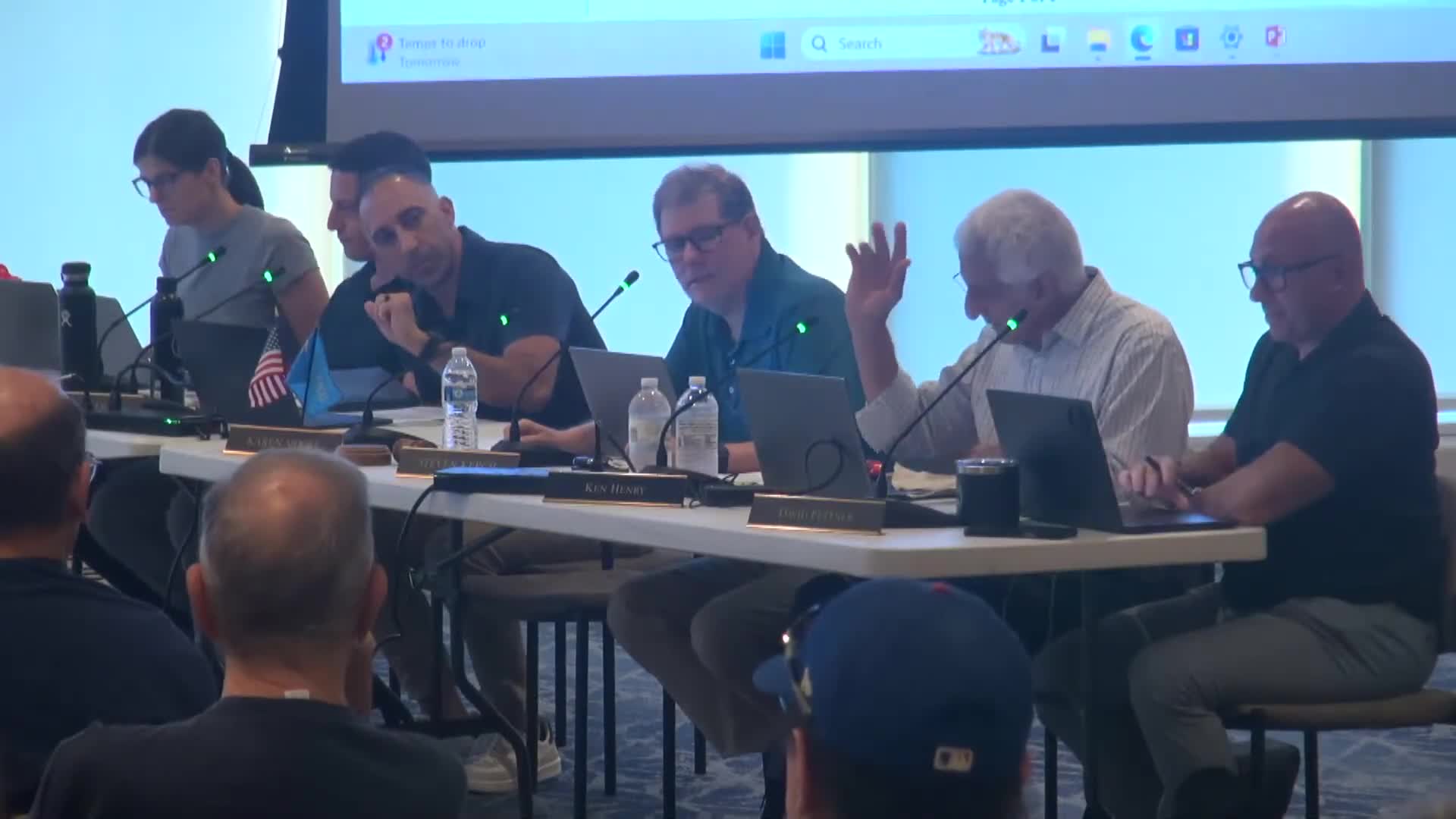
Summary
The Highland Park Plan and Design Commission on Aug. 12 reopened the public hearing on PUD202500041, a planned unit development that would rezone land at 1660 and 1700 Old Deerfield Road for a 232‑unit townhome project and associated subdivision, design review and code modifications.
The Highland Park Plan and Design Commission on Aug. 12 reopened the public hearing on PUD202500041, a planned unit development that would rezone land at 1660 and 1700 Old Deerfield Road for a 232‑unit townhome project and associated subdivision, design review and code modifications.
Senior planner Carl Berhoppe told commissioners the applicant reduced the proposal by eight units — “it’s been reduced from 240 to 232 units” — and described a series of changes to setbacks, parking and open space since earlier hearings. The commission heard updates from the applicant’s traffic and design teams, took public comment, then directed staff (4–3) to draft findings recommending approval and continued the public hearing to Aug. 26, 7 p.m.
Why it matters: The proposal would convert a long‑vacant former industrial parcel near the Old Skokie Valley bike path and Route 41 into a large clustered townhouse development, add 35 on‑site affordable units, and change zoning to RM1 with an R7 strip adjacent to commercial property. The commission’s direction to draft approval findings — and the remaining open technical issues (wetlands permitting, final design review, and traffic/access details) — set the project up for a council review and a development agreement if the city and applicant proceed.
What changed and what the city reviewed
Staff and the applicant said the plan has fewer units and several relief requests were withdrawn. Berhoppe summarized the main updates: the north setback was increased to 35 feet along the edge that abuts commercial properties; the east setback along the railroad right‑of‑way was increased to 25 feet so it now complies; the development’s on‑site parking for residents changed to 690 spaces from an earlier 713 (staff had listed 685 in a prior report and the applicant’s latest plan shows 690); and open space rose to about 42.5% of the site, above the 20% plan‑development requirement.
The applicant has proposed a permanent wetland conservation easement covering the wooded open‑space areas along the south and west of the site, and staff said that easement would be recorded on the plat and enforced through the PUD ordinance and a development agreement.
Traffic and access
The commission spent substantial time on traffic. The applicant’s traffic consultant, Michael Worthman of KLOA, summarized study findings and proposed intersection improvements, including new left‑turn lanes on Old Deerfield Road at Richfield Avenue and an improved turn radius in the southwest corner of that intersection. Worthman said the full‑access entrance the applicant proposes at Old Deerfield and Richfield “is projected to operate at a very good level of service and will operate well,” and that the intersection is expected to equal or improve its current level of service under year‑2031 conditions with the development and the proposed improvements.
Staff’s independent reviewer, CivilTech, reviewed the applicant’s traffic responses and raised no outstanding objections in its latest memo, Berhoppe said. The traffic team also evaluated alternatives that residents raised: using the spur/Northwest access road that runs along the railroad; a write‑in/write‑out primary entrance; and an additional entrance onto Ridge Road. Consultants said the spur route would route development traffic through an existing industrial area and was not preferred; a Ridge Road entrance would cross wetland and wooded areas and produce only marginal relief to Old Deerfield volumes; and a write‑in/write‑out approach would force more trips onto the industrial access and could increase circulation through commercial/industrial streets.
The applicant also proposed a limited access connection for the police station to Old Deerfield Road, which the police department requested to provide quicker egress for emergency vehicles; the applicant said that connection would be for police‑use only and would require Lake County DOT review.
Design, landscaping and public benefits
Applicant representatives said they substantially revised architecture, materials and color distribution and increased plantings and tree counts. Architect Natalie Viscuso said the team added porches to all units, diversified building assemblies (19 assembly variations across 49 buildings), and applied material and porch treatments on all four elevations of each building. Landscape architect Jeff Torrens said the reduction in units freed space for more parkway trees, additional landscaped islands, and a new central park area and woodland trail.
The applicant listed public benefits tied to the height relief request: a public trail easement providing public access to a woodland trail (top lot), off‑site crosswalk and multimodal improvements, sharrows on Old Deerfield Road, additional public parking spaces along the spur access road, and 14 spaces reserved for police department use. Berhoppe reminded commissioners that by code the commission must weigh the public benefit specifically against the height relief requested.
Height, grading and affordable units
Applicant architects explained the requested height relief: because the city measures building height from the average existing grade across the entire 28.6‑acre zoning lot (reported by the applicant as approximately elevation 652), some buildings sited on lower parts of the parcel effectively require an increase above the strict code height even though the buildings appear 38 feet from adjacent sidewalks. The applicant said the relief requested varies across the site (roughly a range of 1 to 3 feet added to measured height, depending on location) and is needed to allow 9‑ and 10‑foot interior ceilings customary for the product.
The project proposes 35 on‑site affordable units (the applicant noted that number fell by one when the overall unit total dropped from 240 to 232). The applicant said the Housing Commission had reviewed and unanimously approved the affordable housing proposal; the applicant noted it seeks flexibility to deliver units for sale, rent or a combination depending on market conditions.
Public comment and outstanding issues
The commission received multiple public comments raising traffic, safety for bicyclists and pedestrians, potential impacts on businesses that use the alley/access road north of the site, and concerns about the requested height relief and overall density. Several commenters urged limiting left‑turn movements at the primary entrance and better using the spur access road for left turns; some business owners asked for larger buffers and operational protections for deliveries on the northern alley.
Staff and the applicant acknowledged outstanding technical items: final wetland and conservation‑easement language to be recorded on the plat; Lake County permitting for any new access onto Deerfield Road; final dimensions and materials for signage; confirmation of sidewalk/driveway dimensions and private‑street standards; and finalization of some design details. Berhoppe told the commission he would reissue department and utility agency comments before the next hearing.
Commission action and next steps
After discussion and public comment the commission voted 4–3 to direct staff to prepare findings of fact recommending approval of PUD202500041 with appropriate conditions. The motion to direct findings was made by Commissioner Mantis and seconded by Commissioner Fettner; Commissioners Nannes, Henry and Vice Chair Kirsch recorded the dissent. Commissioners also voted to continue the public hearing to Tuesday, Aug. 26 at 7 p.m. The hearing remains open for additional testimony and for final technical responses before the commission issues a formal recommendation to the city council.
What remains to be resolved
- Wetlands and Lake County permitting for any encroachments or access through wetland areas. - Final design review details, including signage dimensions and some material selections. - Final traffic/access confirmations, including the police access, any mitigation for Ridge Road crossings and the operational plan for the spur access/industrial drive. - Final plat language for the wetland conservation easement and any recorded public‑access easements for the woodland trail and tot lot. - Phasing and timing—applicant said it prefers a single continuous phase but provided a three‑phase fallback; staff and the applicant will coordinate phasing and timing in the development agreement to ensure required on‑site amenities (clubhouse/park) and affordable units are delivered early in any phasing.
The commission will reconvene on Aug. 26 at 7 p.m. at Moraine, 1201 Park Avenue West, Highland Park, for continued public testimony and review of the draft findings and outstanding technical materials.
(Reporting note: quotes in this story are drawn from the Aug. 12 Plan and Design Commission meeting transcript and were attributed to listed speakers.)