
Moline rescinds portion of JCPenney redevelopment agreement after federal review cuts density
Get AI-powered insights, summaries, and transcripts
Subscribe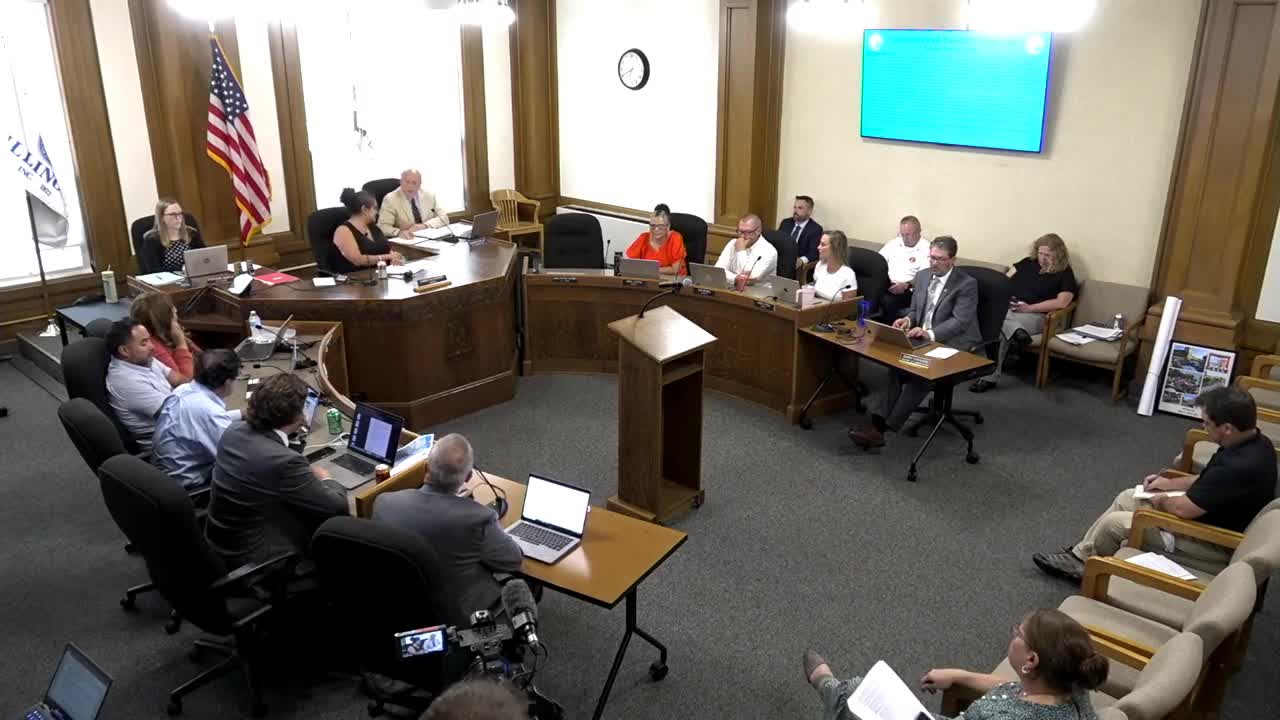
Summary
Council approved a partial rescission of a redevelopment agreement tied to a planned mixed‑use project after federal and state historic‑preservation reviews reduced the number of residential units below levels the original financing assumed.
The City of Moline on Aug. 5 approved a resolution partially rescinding a redevelopment and economic incentive agreement related to the former JCPenney site after developers reported that historic‑preservation reviews prevented the previously planned third‑floor addition.
City staff said the original redevelopment agreement —which anticipated about 32 residential units above a renovated commercial ground floor— could not proceed as originally drafted after the Illinois State Historic Preservation Office (SHPO) and reviewers at the U.S. Department of the Interior limited the addition of a third floor. City Administrator Vytas told the council the project’s potential residential density dropped from about 32 units to roughly 22 and, after further review, to between 15 and 18 units depending on ground‑floor uses.
“Historic tax credits were basically the underlying cause for the project not to get the approvals necessary as was originally planned,” Vytas said, describing months of work and multiple plan revisions.
Because the reduced unit count changes project economics, the council agreed to rescind the city’s $2.8 million financial commitment under the existing agreement. City staff said the previously budgeted $2.8 million will remain in the general fund and be held in a special capital improvement project fund for future downtown projects or discussions with developers.
City Attorney and staff said the partial rescission does not assign new obligations to the city; it merely agrees to the reassignment and altered terms proposed by the developers. Staff also said they will continue to work with the developer, Bush Construction/Renew Moline Properties and related entities, on alternative plans for the JCPenney building and other downtown parcels.
Action: the council approved the partial rescission by motion; the ordinance removes the city’s prior $2.8 million commitment under the rescinded terms and converts the project to a pay‑as‑you‑go approach if redeveloped under new terms.
Next steps: staff will continue discussions with the developer about alternative project plans and retain the $2.8 million within the special CIP fund to support future downtown redevelopment options.