
Residents, churches and health groups press commission to fund shelters, affordable housing and public health
Get AI-powered insights, summaries, and transcripts
Sign Up Free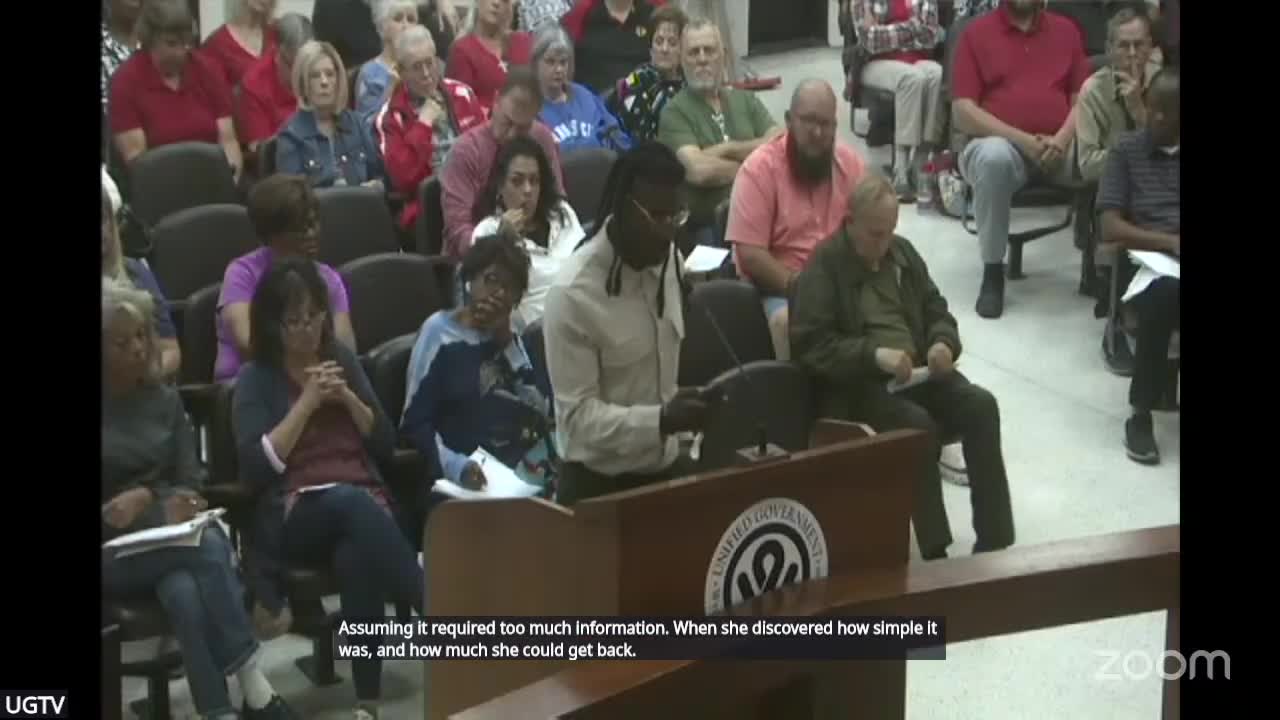
Summary
During the budget hearing dozens of residents and organizations urged stable funding for an affordable housing trust, year‑round shelter capacity, health department staffing and programs such as the "Healthy 33%" initiative and livable neighborhoods.
Dozens of residents and local organizations urged the Unified Government commission Tuesday to prioritize funding for affordable housing, homeless services and public health as the commission considered the 2026 budget.
Representatives of Churches United for Justice, community health advocates and national nonprofits delivered requests ranging from a predictable annual allocation to an Affordable Housing Trust Fund to a permanent, year‑round low‑barrier shelter and staffing for housing navigators. "Choose stability. Vote to dedicate a real revenue stream to the affordable housing trust fund," Pastor Ron King of Mason Memorial Community Church said during his public comment representing Churches United for Justice.
Speakers asked the commission to pair housing dollars with utility relief and to preserve or restore funding for the livable neighborhoods program. Kathleen Easterwood, representing Churches United for Justice, urged the commission to fund same‑day housing navigators, flexible rapid‑rehousing funds and a monthly scorecard that would measure results and bottlenecks. "Fund the basics and move people to housing and keep the focus on measurable results," she said.
Public health leaders asked the commission to restore staff positions that were cut in prior budget cycles and to invest in prevention. Kelly Nichols, community advocacy director for the American Heart Association Midwest, wrote that Wyandotte County "is one of the least healthy counties in Kansas, but with targeted investment, it doesn't have to be." Erin Gabbert of the American Heart Association told commissioners that the county's high rates of hypertension and chronic illness mean investments in neighborhood programs and public‑health staffing can reduce long‑term costs.
Nikki Richardson, executive director of Justice for Wyandotte, framed public‑health and housing investments as alternatives to rising demand on the criminal justice system: "If you allowed for our budget to hire the same number of social workers as police officers you were looking to hire, we wouldn't actually need those police officers or those sheriffs," she said.
Churches United for Justice submitted a set of concrete amendments and spending priorities in writing that were read into the record: a standing set‑aside for the Affordable Housing Trust Fund, a no‑supplanting rule to prevent local dollars being replaced by outside grants, an income‑based utility affordability program and a dedicated share of post‑abatement tax growth to support housing preservation.
Speakers also requested that interest earnings on trust‑fund balances be credited back to the fund and that staff return with fiscal‑impact memos for proposed programs. Commissioners heard repeated appeals from seniors and long‑time homeowners expressing fear of displacement as assessed values climb.
Ending: Commissioners acknowledged the requests and budget staff said they will return with detailed budget action items and analyses during the upcoming workshops; advocates said they will follow the commission’s final vote with requests to codify funding streams.