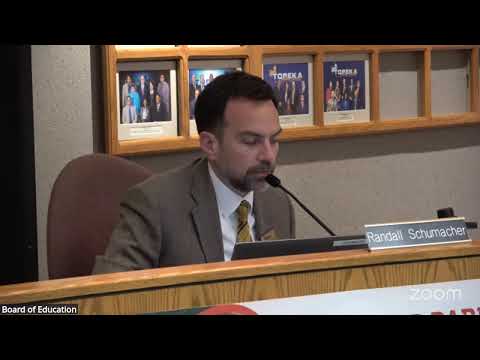
Topeka school board adopts 2025–26 budget, approves exceeding revenue-neutral rate after public hearing
Loading...
Summary
The Topeka Public Schools Board of Education voted unanimously to adopt the fiscal year 2026 budget and approved a resolution to exceed the revenue-neutral rate after a statutorily required public hearing in which residents urged property-tax relief and asked the district to expand facility access for private and homeschooled groups.
The Topeka Public Schools Board of Education voted unanimously to adopt the district—s fiscal year 2026 budget and approved a separate resolution to exceed the state—s revenue-neutral rate after holding the required public hearing.
The actions came at a regularly scheduled board meeting where the district also adopted a supplemental general-fund LOB percentage of 29.3 percent. The board voted by roll call on each measure; the motions carried unanimously.
At the public hearing required by Kansas law on exceeding the revenue-neutral rate, several residents urged the board to limit property-tax increases and look for ways to reduce the burden on taxpayers. Lynelle Griffith, a Topeka resident, told the board that rising property taxes were "a hardship to a lot of people" and urged trustees to "very seriously consider your budget and see, is there a way we can give some property tax relief?"
Justin Gilbert, a Topeka parent, asked the board to explain how state, federal and local revenues flow into district funding. He cited the district—s per-student figure and asked how property-tax increases and federal revenue changes affect the district—s per-pupil spending. Finance staff explained that state aid is largely distributed on a per-pupil base aid formula, that the first 20 mills of the general levy are remitted to the state and redistributed, and that local property-tax receipts for the district are typically in the range of the low- to mid‑$30 millions annually after abatements. The board and finance staff also explained that federal COVID-relief dollars had declined, contributing to shifts in revenue sources.
Several commenters asked the district to allow private schools and homeschoolers to rent district facilities at-cost when space is unused. "Because people are paying into taxes to fund the school and they—re not using it, can we let them use our facilities at cost instead of at a profit?" Griffith asked. Board members acknowledged private-school use already occurs in some cases and said they would take the request back to staff for further review.
Board discussion and finance staff presentations described major budget drivers: payroll and benefits are the largest expense, special-education costs exceed the state reimbursement and require local support, capital-outlay and bond-and-interest obligations are notable drivers of the levy, and federal COVID-relief funding had previously inflated federal revenue figures.
Formal motions recorded in the meeting minutes included: - Resolution 26-004: approve exceeding the revenue-neutral rate (roll-call vote; motion carried unanimously). - Resolution 26-005: adopt the supplemental general fund/LOB percentage of 29.3% for fiscal year 2026 (motion carried unanimously). - Motion to approve and adopt the fiscal year 2026 budget (motion carried unanimously).
The meeting included a prior consent vote that approved business-by-consent items; the board—s consent motion authorized the board president or superintendent to sign special projects and purchasing contracts on the board—s behalf.
Why this matters: Exceeding the revenue-neutral rate triggers additional notice and hearing requirements under Kansas statute and typically signals an increase in property-tax levies for district taxpayers. The board—s adoption of the budget sets spending and levy levels for the coming fiscal year and outlines funding for operations, special education, capital projects and employee compensation.
What—s next: The board approved the measures by roll-call vote as required. District and finance staff said they will continue to brief the public and work with community members on facility-use requests and on outreach to explain budget components.