Get Full Government Meeting Transcripts, Videos, & Alerts Forever!
Get email alerts on the Master Plan topic
No spam. Unsubscribe anytime.
Committee: Master plan maps are final for this cycle; revisions possible later
Summary
Members of the Livingston Parish Master Plan Committee said the updated master plan and land‑use map have completed this update cycle and will go to the Planning Commission and Parish Council for approval, but the group emphasized the plan can be changed later and discussed sending a revised recommendation on the economic corridor.
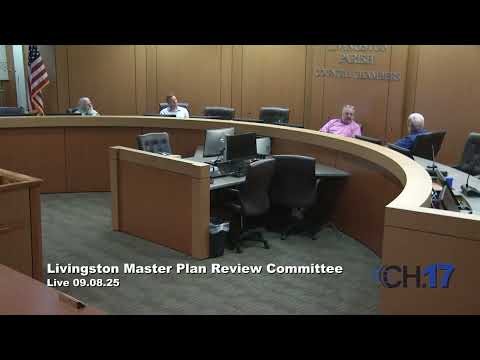
At a meeting of the Livingston Parish Master Plan Committee (date not specified), committee members reviewed the updated master plan and future land‑use map released by consultant WSP and discussed next steps now that the update cycle is complete. Committee members said the planning department and the Planning Commission will carry the approved maps forward to the Parish Council for final action.
The committee’s chair (name not specified) summarized the immediate status: “It’s out for consumption right now… It’s out. It’s over. It’s all been a matter of being approved,” and noted the Planning Commission approves by resolution and the council will act by order. The chair added that the master plan is “a living, breathing document” and can be modified after this approval cycle.
Why it matters: the future land‑use map guides where the parish anticipates residential, commercial, industrial and mixed‑use development, and rezoning requests typically are evaluated against that map.
Committee members described a sequence of approvals and limits for this cycle. The chair said the draft will appear before the Planning Commission in early October and then move to the Parish Council. Several members said substantial changes cannot be made in this cycle; major revisions would require additional consultant work, while smaller edits can be made later by the Planning Department or through the Planning Commission process.
Discussion focused on an earlier committee letter about extending an economic corridor northward and how that letter was handled by the Planning Commission. Committee member Gerald said the committee’s letter was sent to the Planning Commission but was not incorporated into the approved maps and that the commission tabled some recommendations. Gerald asked that the committee prepare a more detailed follow‑up letter; the chair said he will circulate a draft to members before the next meeting.
Committee members also debated high‑density residential designations (R‑4, R‑5 and some planned unit developments) along proposed corridors. One member said opponents at the Planning Commission were not 100% opposed to the corridor concept but were concerned that high‑density housing be placed later in a priority list. The committee agreed it can submit prioritized recommendations—for example, industrial and mixed‑use with commercial and professional frontage first—and that those recommendations can be considered after the plan cycle.
The committee discussed public participation and asked staff to create accessible exhibits for the public before the next meeting. The chair said the committee’s role is to work issues out before they reach the Planning Commission and council and encouraged members to solicit public review of the areas they want to change.
The group identified page 60 of the updated master plan, which addresses wastewater infrastructure, as an item to add to the next meeting agenda for separate discussion.
Ending: No formal motions or votes were recorded at this meeting on the master plan; the committee agreed to prepare and circulate a revised recommendation on the economic corridor and to include public exhibits ahead of the next meeting.